A brand story with a sense of continuity, not a claim of constant activity
UniqueYou dates its beginnings to 2014, when the project started with scarves and clothing. Its history includes a pause and a return after the domain was recovered; it would be misleading to describe the business as having traded without interruption throughout that period. What carries across the story is its focus on wearable accessories and the idea that an elegant addition should work with a woman’s existing clothes. That is a more useful starting point than asking an accessory to transform an entire wardrobe.
The visual identity offers a clue to the mood: an original brown wordmark with a horse motif and the words “Since 2014,” accompanied by a neutral taupe palette. Brown and taupe are quiet colours, but they are not blank. They suggest warmth, restraint and an interest in texture rather than a loud graphic statement. None of that guarantees how an individual scarf will look in person. It does, however, explain why a considered approach to choosing shape, colour and fabric feels more appropriate here than treating every accessory as a passing trend.
Think of a scarf as part of the composition
In a painting, a narrow line can direct the eye as effectively as a broad field of colour. Clothing works similarly. A scarf creates a line around the neck or across the shoulders, and its ends may draw the eye vertically down a coat. A square folded into a triangle makes a compact shape near the face; a generously draped shawl creates a wider plane across the upper body. Before choosing a pattern, consider where you want the visual emphasis. A bright scarf above a dark jacket brings attention upward, while a muted wrap can connect a contrasting top and trousers.
Try evaluating an outfit from a few steps away rather than only in a close-up mirror. At that distance, the main questions become clear: does the accessory bring balance, does it compete with another focal point, and can its shape be seen against the garment beneath it? A print that looks busy in the hand may become a pleasing accent when folded. Conversely, an intricate motif can disappear if only a narrow strip remains visible. This is why the way you intend to tie or drape a scarf matters as much as the print on the unfolded fabric.
Let the existing wardrobe set the colour brief
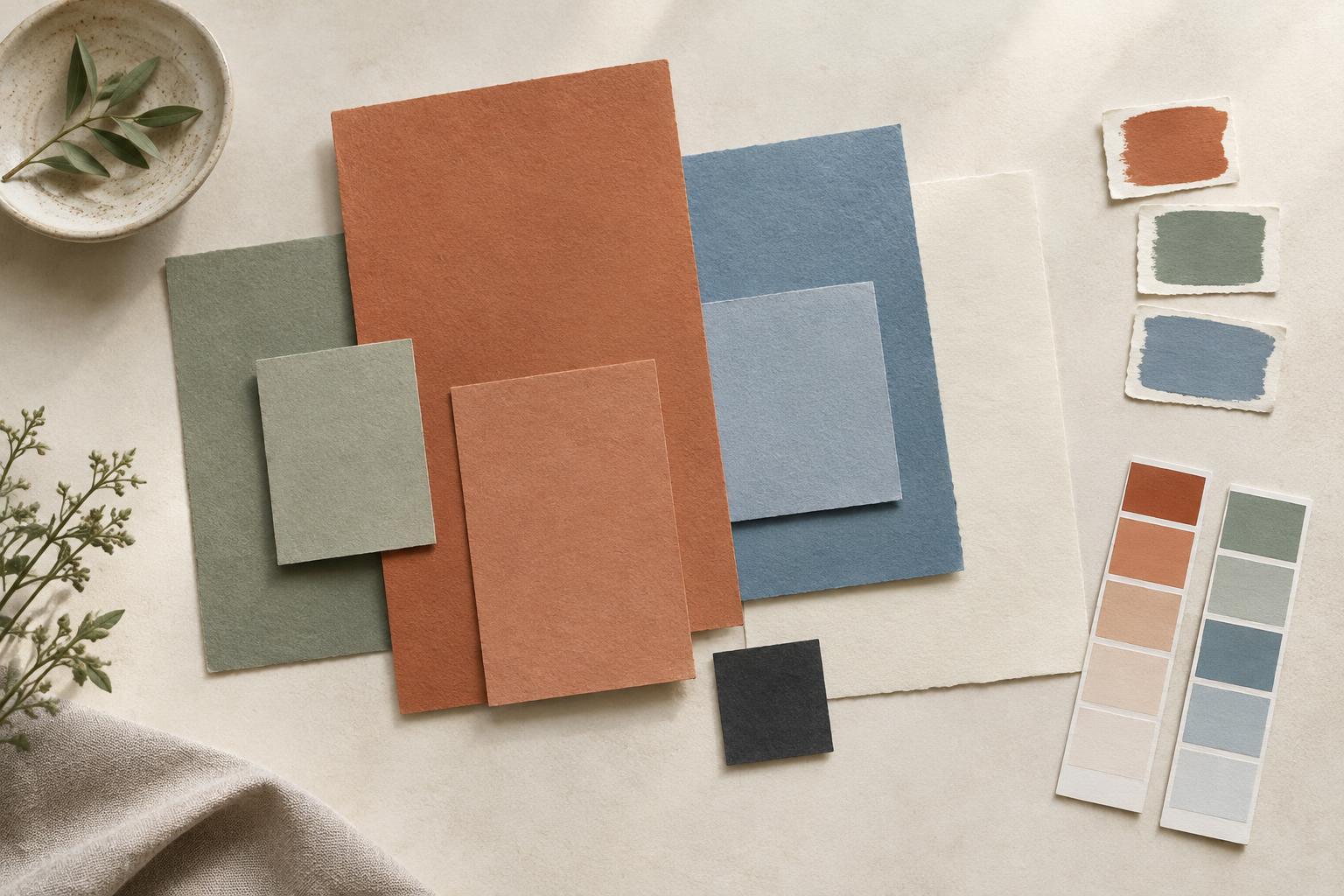
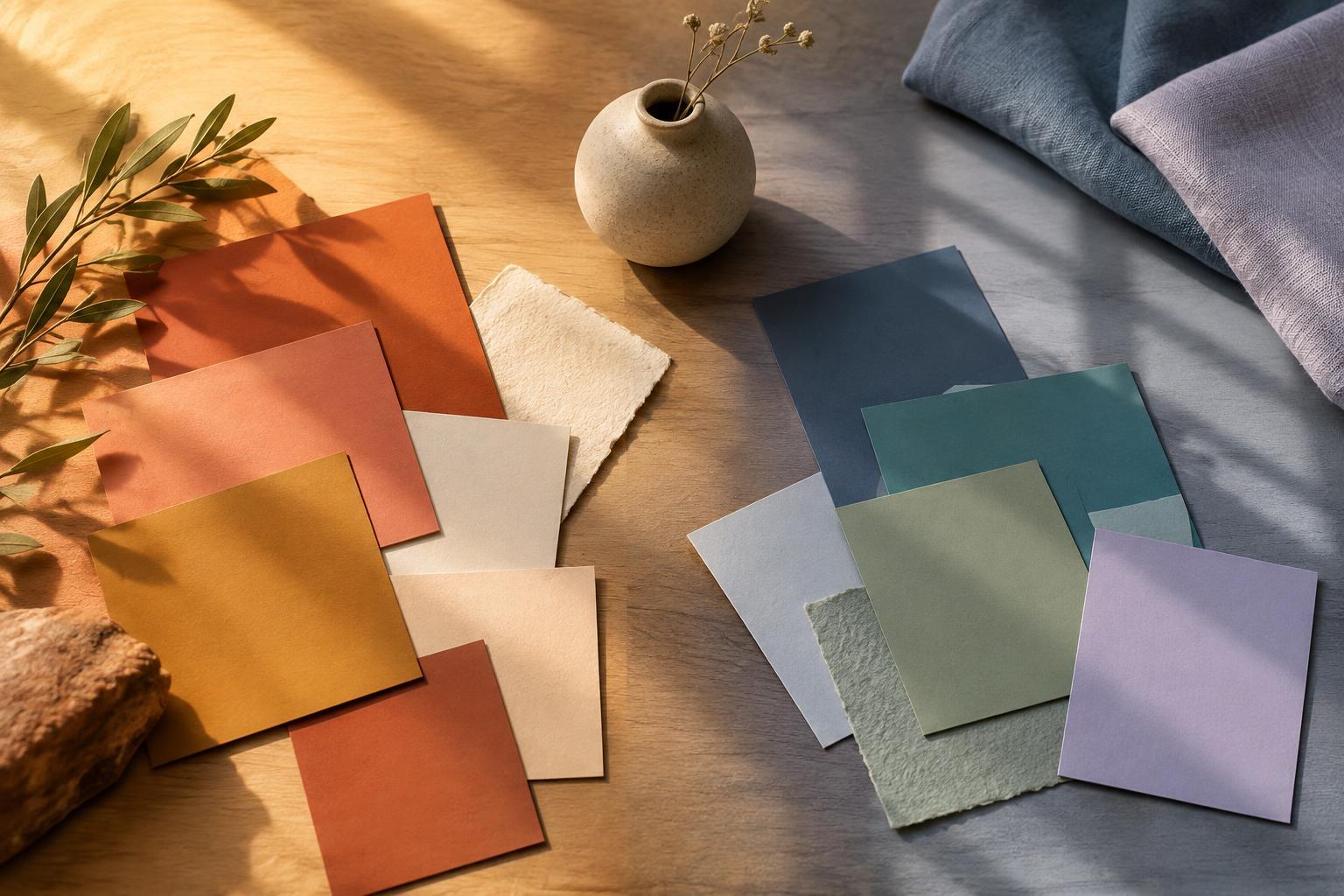
The easiest way to choose an accessory is to start with three or four pieces you actually wear: perhaps a winter coat, a favourite jacket, a frequently used knit and the shoes or bag that accompany them. Lay those colours together and note what they have in common. Are they cool and crisp, warm and earthy, or mostly neutral with one recurring accent? A scarf need not match every piece exactly. It can repeat a small colour already present, soften a strong contrast or introduce a controlled point of difference.
For example, a brown scarf can make navy feel less formal and sit comfortably beside cream or olive. A black scarf may continue the clean outline of a dark coat, while a red one can become the single vivid note in an otherwise restrained outfit. Pattern offers another option: a checked or illustrated scarf can gather two wardrobe colours into one surface. If you are uncertain, photograph the scarf beside the garments rather than relying on memory. Lighting changes colour perception, and the useful question is not whether a shade is beautiful in isolation, but whether you will reach for it with the clothes you own.
Read the material description before deciding how to wear it
UniqueYou presents categories that include silk, cashmere and wool, alongside scarves, shawls, wraps and square scarves. Those material names are helpful signposts, not a substitute for the composition listed for an individual product. Fibre content can vary from one piece to another, so read the product details rather than assuming that every item in a named category has the same composition. Also look for dimensions and care information: two accessories made with a similar fibre can behave quite differently when one is light and compact and the other is broad and substantial.
Think about fabric through touch and movement as well as through its label. A smooth, fluid surface can hold a small fold elegantly and bring a subtle change of sheen near the face. A fuller, softer fabric can create volume around a collar or fall in broad folds over a coat. Wool is often considered when warmth is part of the brief; a lighter scarf may instead be chosen for its easy drape indoors. These are styling possibilities, not guarantees about any particular product. When comparing options, ask whether you want structure, movement, warmth, or a layer that can move comfortably between settings.
Use scale and proportion to make a shape feel intentional
A square scarf, a long scarf and a broad wrap solve different visual problems. A square can be folded into a narrow band, tied close to the neck or arranged so that a triangular point remains visible. A longer shape can hang in parallel lines, loop once for volume or be placed over one shoulder. A shawl or wrap covers more of the outfit, making its colour and texture part of the main composition rather than a tiny accent. There is no universally flattering format; the right proportion depends on the wearer, the garment beneath it and the effect they want.
Consider the coat collar and neckline before choosing a tie. A high collar already creates volume, so a tight, thick knot may feel crowded. An open neckline gives a compact scarf room to become a focal point. A broad wrap can soften a sharply tailored jacket, while a neatly folded square can add definition to a simple knit. Small adjustments matter: leave one end slightly longer, move a knot away from the centre, or allow the edge of a print to show. The aim is not perfect symmetry. It is a shape that looks comfortable and stays in place as the wearer moves.
Build a few reliable styling studies
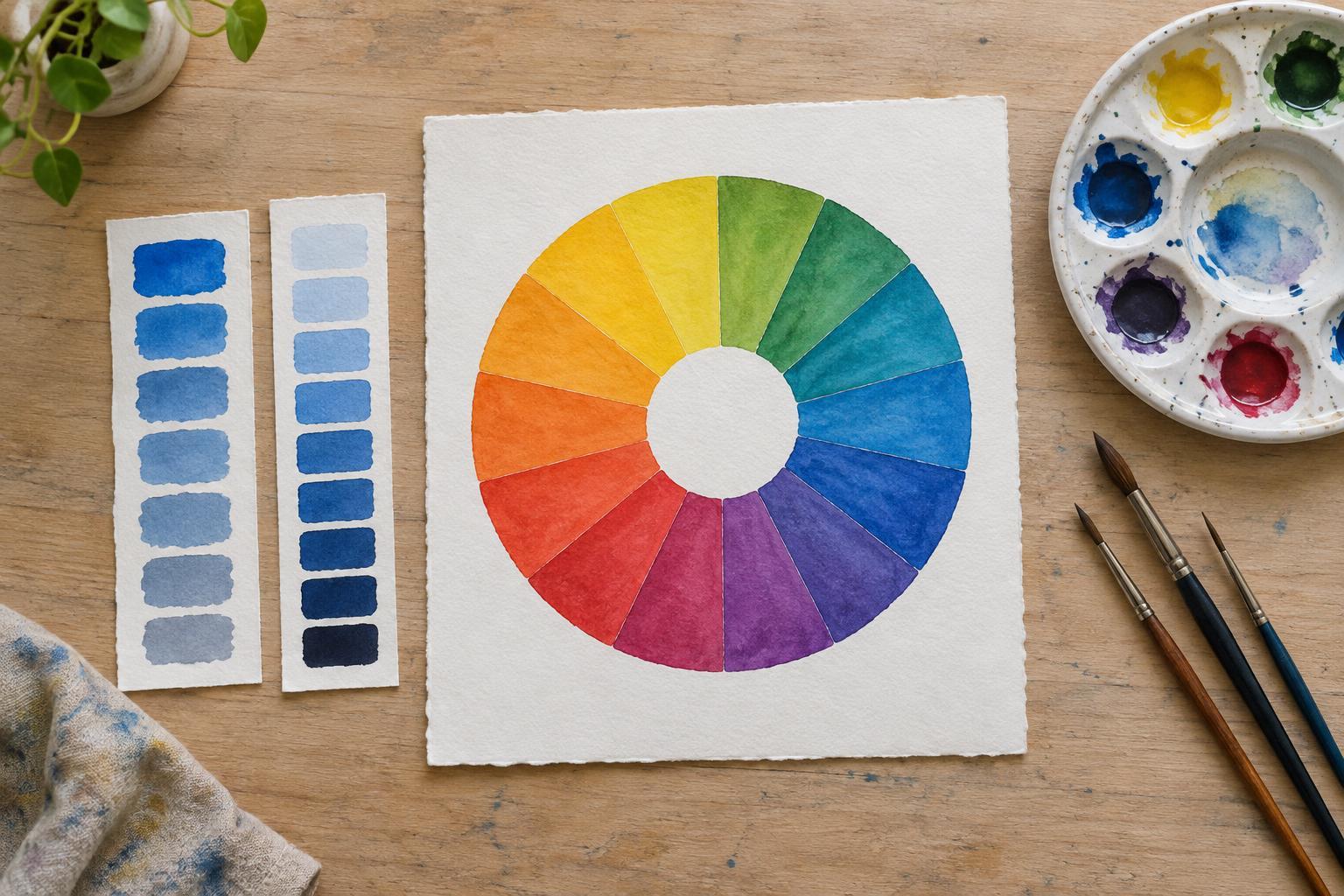
One useful exercise is to treat a scarf like a limited-palette study. Choose a plain base outfit, then change only the accessory. First try a closely related shade for a quiet, tonal result; next try a contrasting colour; finally try a pattern that contains one colour from the base. The experiment reveals more than a list of styling rules because you can see how much contrast you personally enjoy. A neutral coat, for instance, can act as a calm background for a printed square, while a patterned coat may call for a simpler scarf that gives the eye a place to rest.
A second study is about line. Let a long scarf hang loosely to emphasise vertical movement, then loop it once to concentrate colour around the face. Fold a square narrow for a graphic band, then leave it broader to reveal more of its design. If you wear earrings, glasses or a prominent collar, look at them together with the scarf; all occupy the same small visual space. The most successful arrangement is often the one that gives each detail room rather than making all of them equally loud. Photograph the combinations you like, so a good idea is easy to repeat on a busy morning.
Choose a gift for the recipient’s habits, not an imagined outfit
A scarf can be a thoughtful gift because it does not require the same fit decisions as many garments, but it still benefits from careful observation. Notice whether the recipient tends to wear close, neat accessories or prefers loose layers. Look at the coats and jackets they use most, the colours they repeat and whether they enjoy prints. Someone who reaches for a simple dark coat may appreciate an expressive accent; someone who already mixes pattern confidently may welcome a quieter piece with interesting texture. Neither choice is safer in the abstract: the recipient’s habits are the best guide.
If you do not know their taste well, begin with a colour that appears repeatedly in their wardrobe and a shape they already seem comfortable wearing. Then check the individual product’s material description, dimensions and care guidance before deciding. A generous wrap can be useful to someone who enjoys layering, while a smaller square may suit a person who likes tidy details. Avoid assuming that a named fibre alone determines comfort or maintenance. A gift feels personal when its colour, scale and practical demands have been considered together, rather than when it is simply presented as universally suitable.
Enjoy the accessory beyond the first outfit
An accessory earns its place when it can participate in several compositions. Before choosing one, imagine it with an everyday coat, a workday layer and a more dressed-up combination. These outfits need not look alike. The same scarf might add warmth of colour to a plain knit, give a jacket a softer edge and sit over the shoulders with evening clothes. That range is not a promise about every product; it is a useful test of whether a particular shape and colour suit your own routines. If you can picture only one very specific outfit, decide whether that special use is enough for you.
Care also affects how long an accessory remains pleasant to use. Follow the instructions for the particular item, especially when its material or construction calls for a gentler approach. Fold or store it so that unnecessary pressure and snagging are less likely, and let a worn scarf settle before putting it away. These simple habits are more meaningful than a general claim that one fibre is always easy to maintain. A scarf is close to the skin and often handled throughout the day; respecting its actual construction helps preserve the quality you chose it for.
Use local language as a practical part of choosing
UniqueYou has 20 regional domains, 21 regional-language versions and 16 distinct languages. The numbers differ because countries can share a language, and one country can offer more than one language version. Germany and Austria, for example, both have German-language destinations; Belgium and the Netherlands have Dutch-language destinations. The United Arab Emirates has an Arabic root destination and an English version at /en. Those distinctions are useful when you want to read category names and product information in a language that suits you.
The regional guide below identifies the destination language before each set of pointers. A local term is a way to recognise a category or starting point in that language, not a claim that every item on the destination has a particular composition or style. If a destination uses a word unfamiliar to you, compare the product’s own description, dimensions and care information with the questions raised above. The same visual principles travel well across borders, but the actual choice should remain grounded in the individual piece and the wardrobe it will join.
A regional guide to UniqueYou
Each entry names the country and the language of its destination. The pointers lead to a regional starting point or a relevant category; use the destination’s own product information to assess any individual accessory.
Poland — Polish
The destination language is Polish. Start with the regional brand page — UniqueYou — if you want to see the broader range. For a wool-focused search, the Polish term for a merino-wool scarf leads to a category — szal z wełny merino. A further brand pointer opens headscarves — UniqueYou. Compare the dimensions and composition of a particular piece before deciding how you would fold or layer it.
Germany — German
The destination language is German. A German phrase describing a shop for cashmere scarves points to the regional starting page — Shop für Kaschmirschals. For a different silhouette, the brand pointer opens a cloths and scarves category — UniqueYou. Think about whether you want a soft layer that occupies much of a coat’s neckline or a smaller accent that leaves the collar visible.
Czechia — Czech
The destination language is Czech. The local description of an online shop for scarves and shawls is the regional starting point — internetový obchod se šálami a šátky. The brand pointer leads to winter scarves — UniqueYou. If you are choosing for colder-weather outfits, look at the scarf beside the coat you wear most often, then check the individual item’s dimensions and material details.
Spain — Spanish
The destination language is Spanish. Begin at the regional brand page — UniqueYou. A Spanish phrase for a women’s leopard-print scarf leads to a patterned category — pañuelo con estampado de leopardo para mujer — while the other brand pointer opens black scarves — UniqueYou. Those two directions make a useful contrast study: one puts the pattern in the foreground, while the other can continue a darker outfit’s outline.
France — French
The destination language is French. The regional brand starting point is — UniqueYou. A French phrase describing chic brown scarves leads to a colour category — écharpes marron chics — and the additional brand pointer opens cashmere shawls — UniqueYou. Brown can connect several warm neutrals in a wardrobe; a broader shawl changes the scale of the accessory, so consider both colour and coverage.
Hungary — Hungarian
The destination language is Hungarian. A local phrase describing a silk-scarf online shop points to the regional starting page — selyemkendő webshop. The brand pointer opens stoles — UniqueYou. If you are drawn to the movement of a scarf rather than a firm knot, compare the shape and listed fabric of individual pieces and imagine how each would fall over a familiar jacket.
Italy — Italian
The destination language is Italian. The Italian phrase for a cashmere-scarf shop serves as the regional starting point — negozio di sciarpe in cashmere. The brand pointer opens a scarves category — UniqueYou. Use the category to compare formats rather than assuming one fibre or size across all items: a narrow scarf and a fuller layer can make very different marks against the same coat.
Romania — Romanian
The destination language is Romanian. The local phrase for a scarf shop takes you to the regional starting page — magazin de fulare. A brand pointer leads to white scarves — UniqueYou. White can bring light near the face and make a dark outfit feel more open, but it also draws attention to the scarf’s shape; consider whether you prefer a crisp fold or a loose drape.
Slovakia — Slovak
The destination language is Slovak. A local phrase describing a brand of scarves and shawls opens the regional starting page — značka šálov a šatiek. The second brand pointer leads to a scarves category — UniqueYou. When comparing options, try to picture the visible portion after tying: the colour at the edge and the amount of fabric around the neck may matter more than the unfolded view.
Finland — Finnish
The destination language is Finnish. Begin with the regional brand page — UniqueYou. A Finnish term for a women’s scarf points to a scarf category — naisten huivi — and the other brand pointer opens black scarves — UniqueYou. A black accessory can either blend into a dark coat or create strong contrast against a light knit; the surrounding clothes determine which effect you see.
Sweden — Swedish
The destination language is Swedish. The regional brand page is — UniqueYou. A Swedish phrase for women’s red scarves leads to a colour category — röda scarfar dam — while the additional brand pointer opens wool scarves — UniqueYou. Red can be a clear focal point in a quiet outfit; for a wool-category choice, still check the listed composition and care of the particular piece.
Denmark — Danish
The destination language is Danish. A local term meaning scarf brand points to the regional starting page — tørklædemærke. The brand pointer opens a scarves category — UniqueYou. A restrained outfit can give a scarf room to express colour or texture, but it is worth checking the item’s width: even a subtle shade can become the main visual element when draped broadly.
Belgium — Dutch
The destination language is Dutch. A local phrase describing a shop for stoles leads to the regional starting point — winkel voor stola's. The brand pointer opens silk scarves — UniqueYou. A stole and a more compact scarf occupy different amounts of visual space; compare the measurements and the product description before choosing one for a particular neckline or occasion.
Austria — German
The destination language is German. Start at the regional brand page — UniqueYou. The German word for scarf points to a general scarves category — schal — and the other brand pointer opens cashmere scarves — UniqueYou. Austria shares its destination language with Germany, but has its own regional domain; read each item’s details rather than treating category names as a full material specification.
Netherlands — Dutch
The destination language is Dutch. A local word for scarf shop opens the regional starting point — sjaalwinkel. The brand pointer leads to a category of smaller scarves — UniqueYou. If your wardrobe already has strong coats or patterned tops, a compact shape may add a deliberate detail without covering the design you want to keep visible.
United States — English
The destination language is English. Visit the regional brand starting point — UniqueYou. The phrase for an evening shawl leads to a shawls category — evening shawl — while the other brand pointer opens square scarves — UniqueYou. For a dressed-up outfit, compare the effect of a broad shoulder layer with a folded square near the neck; they frame the same clothes in markedly different ways.
United Arab Emirates — Arabic
The destination language is Arabic, and this is the root language version for the United Arab Emirates. An Arabic phrase describing a women’s scarf shop points to that regional starting page — متجر أوشحة نسائية. If you are comparing it with the country’s English version, remember that the two language versions share a regional domain, not a single destination language.
United Arab Emirates — English
The destination language is English. The brand pointer leads to the United Arab Emirates’ English version at /en — UniqueYou. The same country also has an Arabic root version, so choose the language in which you prefer to read product descriptions. Then compare individual accessories by shape, measurements and listed composition, just as you would in any other region.
Ireland — English
The destination language is English. Begin at the regional brand page — UniqueYou. The phrase for a women’s square scarf leads to a square-scarves category — women's square scarf — and the other brand pointer opens checked scarves — UniqueYou. A check can connect colours already present in an outfit; a square format lets you decide how much of that pattern to reveal through folding.
United Kingdom — English
The destination language is English. The regional brand starting point is — UniqueYou. The phrase for a cashmere wrap for women opens a wraps category — cashmere wrap for women — while the additional brand pointer leads to neckerchiefs — UniqueYou. Compare the broad coverage of a wrap with the close, graphic detail of a neckerchief, and check each item’s stated composition.
Portugal — Portuguese
The destination language is Portuguese. Start with the regional brand page — UniqueYou. A Portuguese phrase for women’s silk scarves leads to a silk-scarves category — lenços seda senhora — and the other brand pointer opens scarves — UniqueYou. Consider whether the intended outfit needs a small note of sheen or a more expansive layer, then consult the individual product details before settling on either.
The most rewarding scarf choice starts with close looking: at the clothes you wear, the colours you return to and the way fabric moves when you put it on. UniqueYou provides a range of accessory shapes and material categories to explore; your own wardrobe supplies the composition that makes one of them feel right.