Understand what makes a wash work
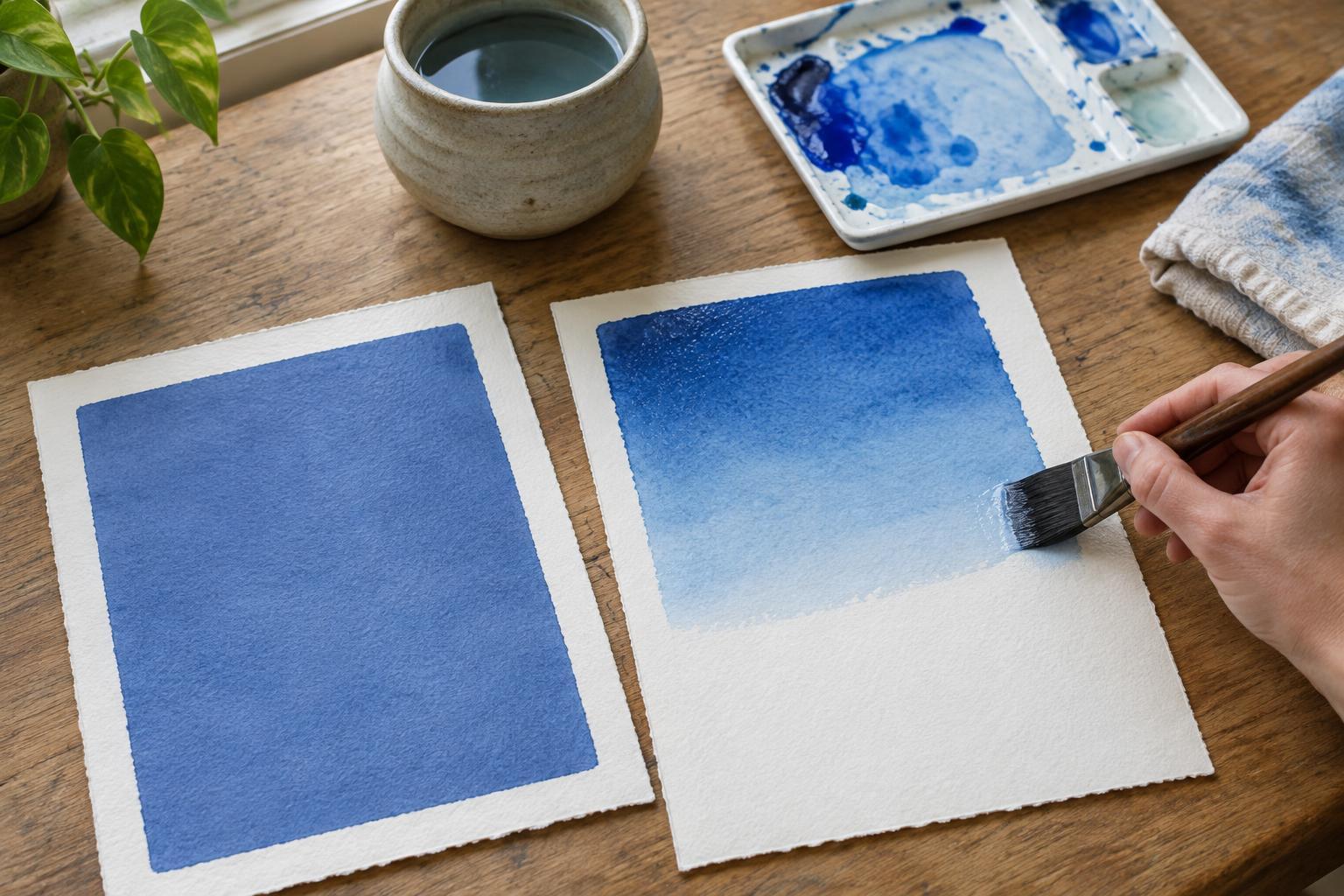
A watercolor wash is a broad area of diluted paint. In a flat wash, the color stays as even as possible across the shape. In a graded wash, it changes gradually, often from a deeper tone at the top to a lighter one at the bottom. Both rely less on individual brushstrokes than on keeping a continuous edge of wet paint moving across the paper.
That edge is sometimes called a bead: a small line of moisture that gathers along the lower edge of a stroke. Each new stroke should meet it before it dries. If part of the edge dries while another part remains wet, the paint may settle into a visible line. Washes become easier when you work at a steady pace over a manageable area.
Prepare your paper, paint, and workspace
Use watercolor paper, a brush large enough to cross much of your intended shape, two containers of water if available, and a palette with room to mix. Paper made for watercolor generally handles repeated wet strokes better than ordinary drawing paper. If your sheet tends to curl, secure its edges to a board with suitable tape, testing first if you are concerned about the surface.
Mix more paint than you expect to need for a flat wash. Trying to match a second batch halfway through can leave a change in tone. For a graded wash, prepare a generous puddle of your starting color and leave space on the palette to dilute it. Tilt the board slightly so the wet edge can move downward; a book placed beneath one end can be enough. Keep the tilt modest, since a steep angle may cause drips.
Paint an even flat wash
Start with a simple rectangle. Load the brush well, then draw a horizontal stroke across its top edge. Before that stroke loses its shine, reload the brush and paint the next stroke just below it, overlapping the wet bead. Continue from top to bottom with a similar amount of paint in each stroke. Let the brush glide rather than scrub, and try not to pause midway across the shape.
At the bottom, use a clean, lightly blotted brush to lift any large bead left hanging at the edge. Then leave the wash alone until it is dry. Reaching back into a partly drying area often creates a darker mark or a pale bloom where added water pushes pigment aside. If the wash is imperfect, let it dry and use the result to identify where your pace or brush load changed.
Turn a flat wash into a gradual fade
For a dark-to-light graded wash, begin with the strongest mixture at the top of a new rectangle. Paint one or two horizontal strokes as you would for a flat wash. Then add a little clean water to the paint on your brush or to the mixture on your palette before making the next overlapping stroke. Repeat, diluting the color in small steps as you travel downward. Near the bottom, you can finish with almost clear water.
Aim to keep the moving edge wet while making each change in strength subtle. If the color fades too suddenly, use smaller additions of water on the next attempt. You can also reverse the direction of the gradient by starting with pale paint and introducing a stronger mixture as you move down, though controlling the darker additions may take practice. Let the finished area dry before judging it: watercolor often looks different once the surface is no longer wet.
Practice control, not perfection
Divide a spare sheet into several rectangles. Try a flat wash with one color, then a dark-to-light wash beside it. Notice how the results change when you use a larger brush, a gentler tilt, or a slightly wetter mixture. Working at a consistent size makes those differences easier to see. Small practice shapes also let you learn how quickly your particular paper dries without committing to a full painting.
Streaks can mean the brush was too dry or the wet edge was lost; puddles can mean the brush or paper held too much water. Hard lines often appear where you paused or returned to a drying passage. These marks are useful feedback rather than a reason to discard the sheet. Once you can make a wash you like, try it behind a simple still life or within a landscape shape. An even field can give a subject calm, while a gentle gradient can suggest changing light.