More than a material or a function
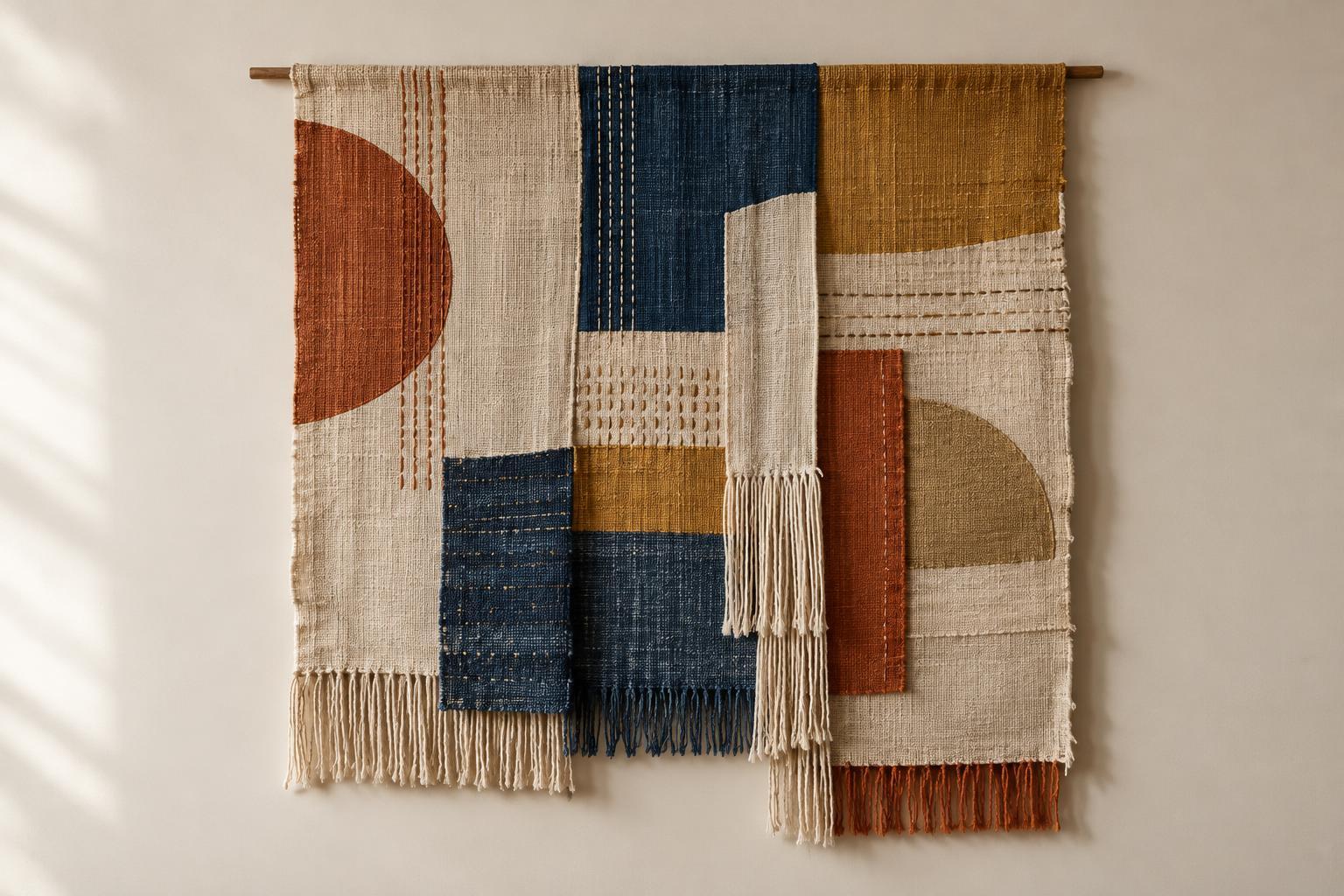
A woven wall hanging, an embroidered picture and a fabric installation may look very different, yet each can ask us to pay attention to form, color and meaning. Textile art belongs in conversations about visual art because cloth and thread can do much more than cover or decorate an object. They can build an image, shape a space or make an idea visible.
Textiles often have practical associations: clothing, blankets, upholstery and household linens. Those associations can make it easy to overlook a textile as an artwork. But a useful material does not stop being visually expressive when an artist works with it. A piece may retain a familiar form while using its pattern, scale or placement to invite a closer look. It can be appreciated for its function, its craft and its artistic choices at the same time.
Composition can be woven, stitched or assembled
The visual decisions that matter in painting also matter in textile art. An artist can place a bright shape against a quiet ground, repeat a line to create rhythm or leave an open area that gives the eye somewhere to rest. A woven grid can organize a composition; irregular stitching can interrupt it. Fabric pieces can be layered to create depth without relying on conventional perspective.
Try looking at a textile from across the room before examining its details. What catches your eye first? Do colors form large areas, or do small changes create a gradual shift? Then move closer and notice whether the image is built from thread, pieces of cloth or the structure of the fabric itself. The distance between the overall impression and the individual marks is part of the experience.
Texture changes how we see
Textile art offers a particularly direct way to think about surface. Smooth silk, dense felt, loose weave and raised embroidery each catch light differently. A rough area may appear darker because it casts tiny shadows; a shiny thread may become more noticeable as you change position. Even when a work is displayed on a wall, its physical depth can affect how the image appears.
Texture can also shape the pace of looking. A repeated stitch may encourage us to follow a path, while an unexpected knot or frayed edge asks us to pause. We may imagine how a surface would feel, even when touching the work is not appropriate. This imagined sense of touch does not replace looking; it adds another way to understand what the artist has made.
The process is part of the visual story
Making a textile often involves repeated actions: stitching, knotting, weaving, dyeing, folding or joining. Those actions can remain visible in the finished work. A row of stitches may record a change in direction; a seam may show where separate pieces meet. Instead of treating these signs as flaws to look past, we can ask what they contribute to the composition.
Materials can carry associations too. A reused garment might suggest wear or personal history, while a neatly cut length of new cloth can create a different impression. Such meanings are not automatic: the same material can serve many purposes. Looking carefully at how it is handled helps us avoid assuming that every thread has a fixed symbolic message. It also gives us a way to appreciate skill without reducing the artwork to a test of technical perfection.
Making room for textile art in everyday looking
Taking textile art seriously does not require setting it apart from other media. A fabric work can be compared with a painting for its use of color, with a drawing for its lines or with a sculpture for the way it occupies space. Those comparisons reveal shared concerns while leaving room for what cloth does differently: it bends, hangs, gathers and responds visibly to its own weight.
You can practice this kind of looking wherever you encounter textiles, including in an exhibition, a community display or your own home. Choose one object and ask how its pattern is organized, what its edges reveal and how its surface changes in different light. Not every textile is intended as art, and intention and context matter. Still, paying attention to these qualities can make a familiar material feel newly visible—and make our idea of visual art more generous.