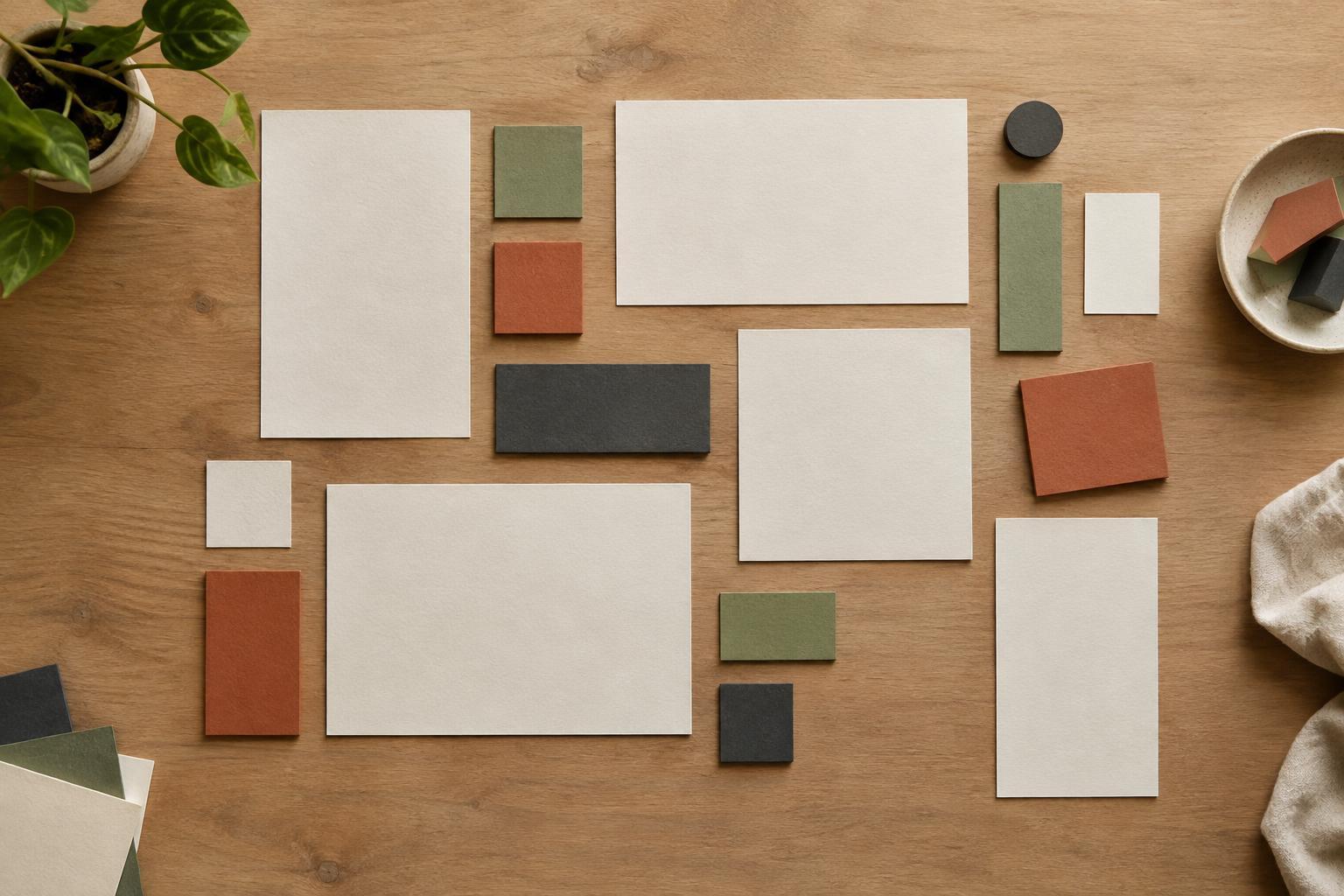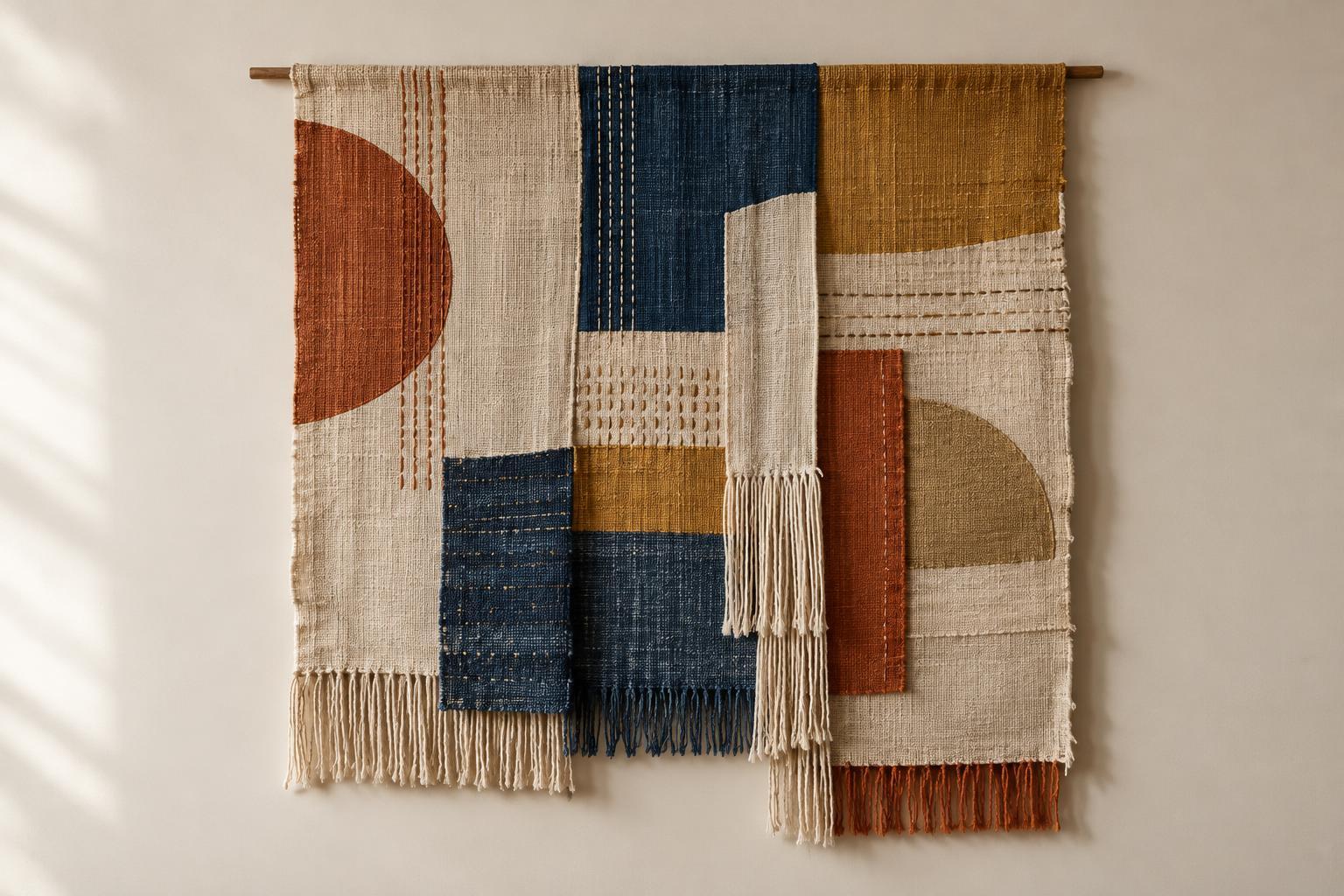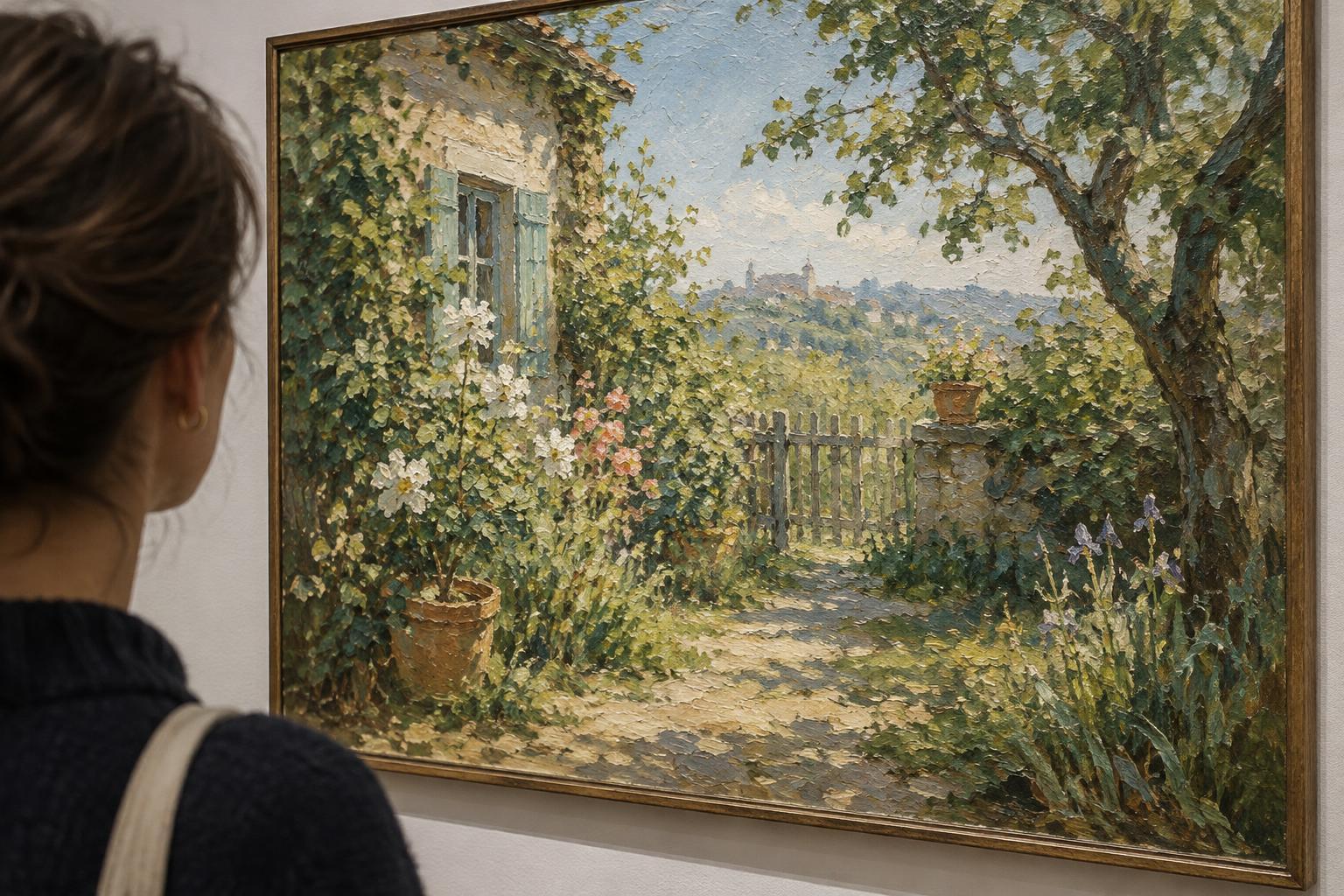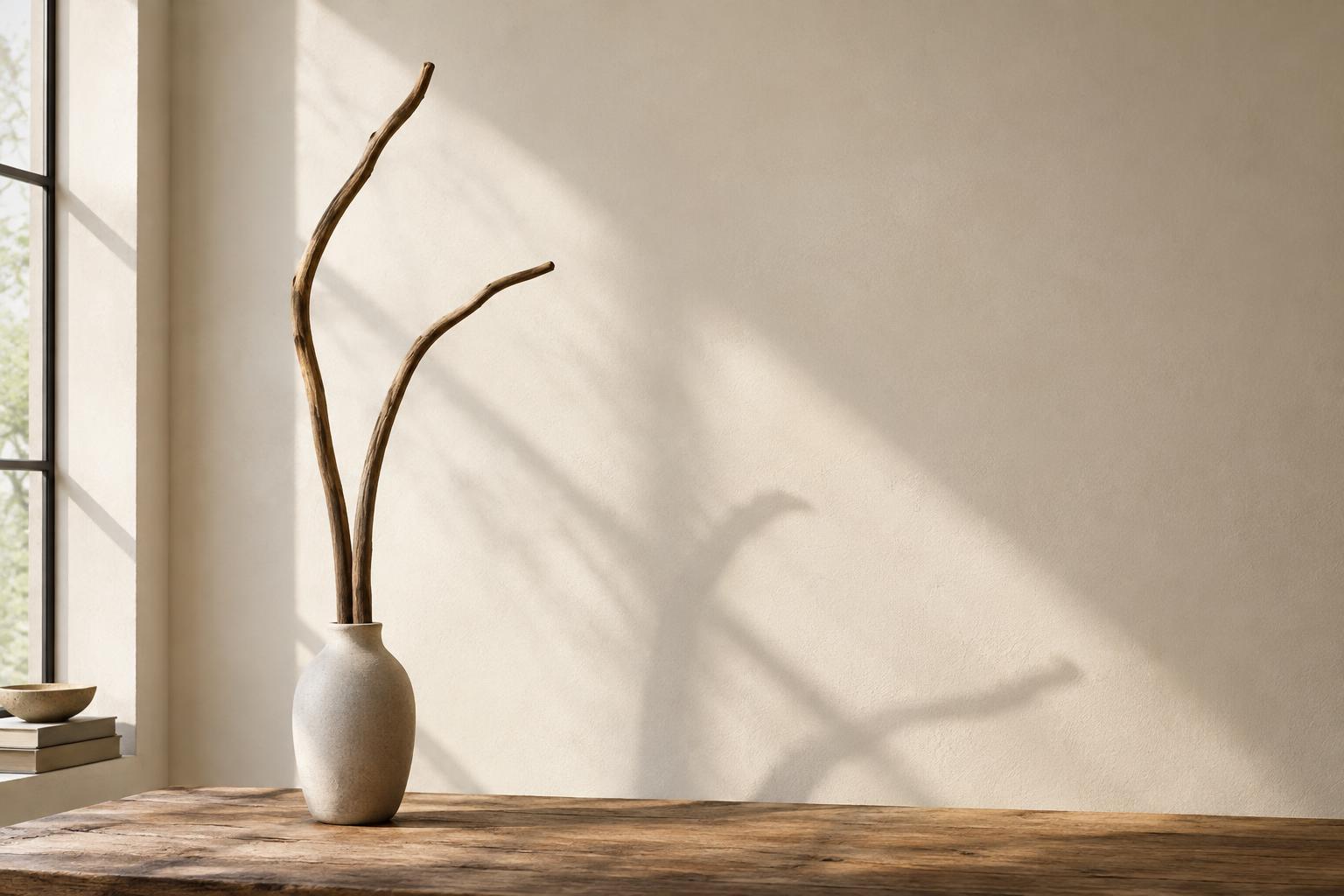
The space around the subject is part of the image
When you look at a painting of a chair, your attention probably goes to the chair first. But the patch of wall visible between its legs has a shape of its own. So does the area above its back or beside its seat. These surrounding and enclosed areas are often called negative space; the chair is the positive shape. The terms describe a relationship, not a judgment about which part matters more.
Negative space is not necessarily blank. It might contain a color, a shadow, a texture, or part of a distant view. What makes it useful to notice is its position relative to the subject. It helps establish the subject’s outline and gives your eye a way to measure where one form ends and another begins.
Look for shapes made by gaps
A useful first step is to stop naming the objects in an artwork. Instead of thinking “two people standing together,” look at the gap between their shoulders. Is it narrow and pointed, or broad and curved? Does it continue down between their arms, or close off? These questions turn an overlooked area into a shape you can compare with the figures around it.
Try the same approach with a still life. The opening beneath a jug’s handle, the strip of tabletop between two pieces of fruit, and the area above a folded cloth may each have a distinct contour. If one object moves, those contours change too. This is one reason a small adjustment to an arrangement can make the whole composition feel different, even when every object remains recognizable.
Notice how spacing changes the mood
Negative space can affect how crowded or open an image feels. A figure pressed close to the edges of a picture has little room around it; the framing may feel tight or immediate. A small figure surrounded by a wide field of sky may seem isolated, calm, or exposed. None of these responses is automatic. Color, scale, subject matter, and other choices also shape what you experience.
The distribution of space matters as much as its amount. Imagine a bird placed in the center of a photograph, with equal room on either side. Now imagine the bird near one edge, facing into a large open area. Your eye may anticipate movement into that area, even though the bird has not moved. Looking at the space can reveal why a composition seems balanced, tense, or directional.
Look beyond flat pictures
In sculpture, negative space can be an opening through a form or a gap between its parts. You may see it change shape as you walk around the work. An arch, for example, frames a different piece of the background from each viewpoint. The surrounding room is not simply a neutral backdrop: it can become visible through and around the sculpture.
In photographs and drawings, artists can also make the boundary between subject and background less certain. A dark coat against a dark wall may appear to merge with its surroundings, while a pale shape against a contrasting field stands out sharply. Rather than searching for a fixed rule, ask what the edges let you see clearly and where they invite a second look.
Try a short negative-space exercise
Choose a familiar object with openings or an irregular outline, such as a chair, a plant, or a pair of scissors. Place it where you can see both the object and the space around it. On paper, draw only the shapes of the gaps and the surrounding background. Resist the urge to draw the object’s nameable parts first. You are not trying to make a polished picture; you are practicing a different way of observing.
Afterward, compare your drawing with the object. Which gaps were wider than you expected? Where did a slight change in angle alter a shape? You can repeat the exercise while looking at an artwork, tracing the spaces with your eyes rather than a pencil. Once you begin noticing them, negative spaces become another route into a work: a way to understand how its forms relate, not just what they depict.