What the bristles actually change
A paintbrush is more than a handle with a pointed tip. Its bristles determine how much paint it picks up, how steadily it releases that paint and what kind of mark it leaves. They also affect the brush’s spring: the speed and firmness with which it returns to shape after a stroke. When choosing between natural and synthetic bristles, start with the marks you want to make rather than assuming one material is better.
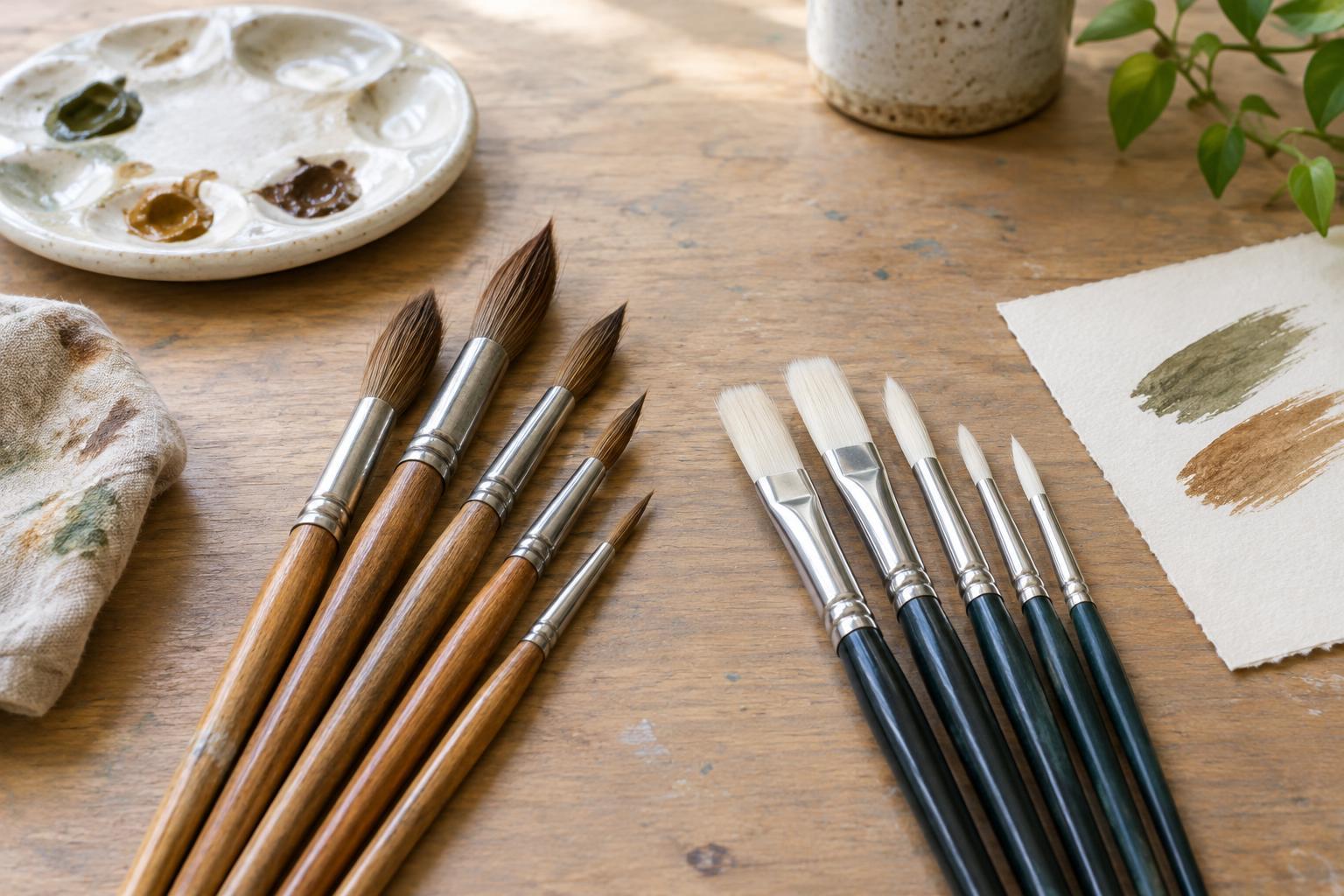
Natural bristles come from animal hair, but the label covers very different brushes. Stiff hog bristle can push thick paint and leave visible texture. Softer hairs can hold fluid paint and form a fine point. Synthetic bristles, usually made from manufactured filaments, vary just as widely. Some are soft and flexible; others are firm enough to move heavier paint. A brush’s shape, size and construction matter alongside its bristle material.
Where natural bristles work well
Natural hair often appeals to painters who enjoy a particular balance of paint holding and release. A soft natural-hair watercolor brush may carry a generous wash, allowing a longer stroke before you need to reload. Natural hog bristle is a different tool: its firmness suits scumbling, dry-brush effects and broad strokes with thicker oil paint. Neither is automatically the right choice for a crisp, controlled edge.
Natural brushes can be relatively expensive, especially when made from sought-after soft hairs. They may also need more attentive care. Some natural hairs absorb water and become less resilient with prolonged use in water-based paint, while rough handling can damage fine tips. If animal-derived materials are a concern, check product descriptions carefully: names describing a traditional brush shape do not always tell you what its bristles are made from.
Why synthetics are worth considering
Synthetic brushes are available in a broad range of prices and textures. Many hold their shape well when used with water-based paints, making them a practical starting point for acrylics, gouache and everyday watercolor practice. Firm synthetic brushes can handle thicker paint; softer ones can lay down washes or make delicate lines. Performance varies by design, so “synthetic” alone does not tell you how a brush will feel.
A synthetic brush may release paint sooner than a highly absorbent natural-hair brush, which can mean more frequent reloading during a large wash. That can also make it easier to control a small amount of paint. Try not to treat synthetic as a synonym for disposable: a well-chosen brush can serve for a long time if you clean it promptly and avoid grinding its tip into the painting surface.
Match the brush to the paint and the mark
For watercolor, look for a brush that forms a reliable point and carries enough water for the scale of your work. Soft natural hair and soft synthetics can both meet that need, though they may release a wash differently. For acrylics, synthetics are a convenient default because they are easy to find in both soft and firm varieties. Acrylic paint can dry in the bristles quickly, so cleaning habits may matter more than the natural-versus-synthetic decision.
For oils, stiff hog bristle or a firm synthetic can move substantial paint and create textured strokes. A softer brush of either type may be more useful for blending or fine details. Think about shape as well: a flat brush helps lay broad bands of color, a round can vary from line to fuller stroke, and a filbert offers a softer-edged mark. If possible, test a brush with your usual paint rather than judging it only by how it feels dry.
Choose a small set and care for it
You do not need a large collection to discover your preferences. Start with two or three brushes suited to your paint: perhaps a medium round for general work, a flat for broader areas and a smaller brush for detail. If you are curious about bristle materials, choose comparable natural and synthetic brushes and paint the same marks with each. Notice how often you reload, how the point behaves and whether you enjoy the resistance against the surface.
Clean brushes according to the paint you use, and follow the paint and brush makers’ care directions. Do not let paint dry near the metal ferrule, where it can make bristles splay. Rinse and reshape the tip gently, then let the brush dry without resting its weight on the bristles. The best choice is the brush you can use comfortably, maintain properly and reach for when you want to make a particular mark.