Begin with what you can see
Imagine two paintings of a busy street. One was made while the artist stood at a window overlooking that street; the other was painted years later from memory in another country. The subject might look similar, but knowing when and where each work was made changes the questions you ask. Which details came from direct observation? Which might reflect recollection, invention or a wish to capture a feeling rather than a precise view?
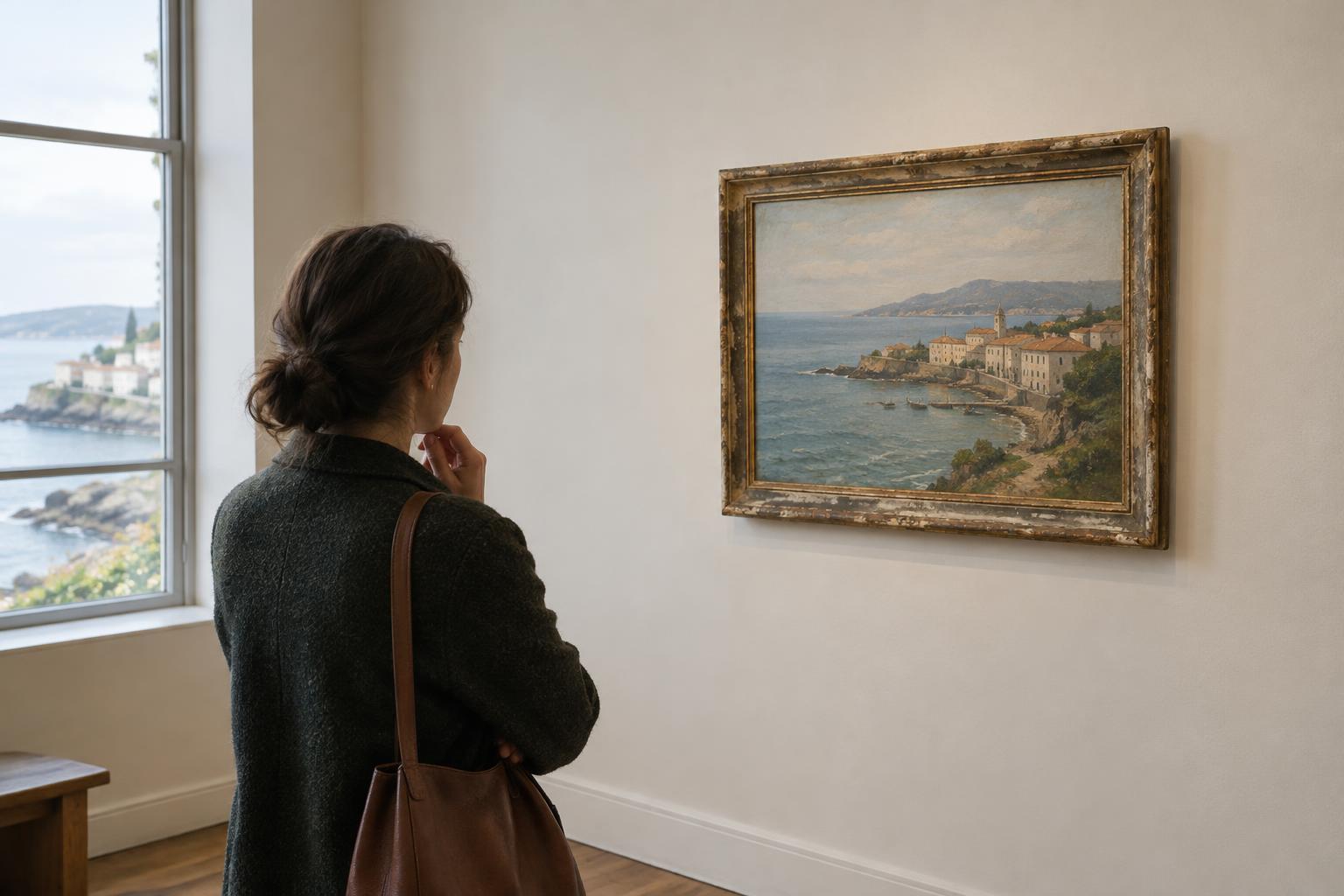
A label can offer useful context, but try looking before reading it. Notice the scale, colours, materials, composition and details that draw your eye. Then read the date and place, and look again. This sequence helps you distinguish what you observed from what you inferred. Context can deepen your response without replacing the experience of looking.
A date reveals possibilities, not a complete explanation
The date of an artwork can tell you which tools and processes may have been available to its maker. It can also prompt questions about how the work was shared: Was it intended for a private room, a public wall or reproduction in print? A work made over several years may contain decisions from different moments, so a single date on a label may be a useful starting point rather than the whole story.
Dates also help you compare works without assuming that everyone at the same time made art in the same way. An artist might embrace a familiar technique, adapt it or deliberately reject it. Rather than thinking, “This is what art from that period looked like,” ask, “What choices does this artist seem to have made, and what alternatives might they have known?”
Even an approximate date can be useful. If a work is labelled with a date range or “circa,” that uncertainty is worth keeping in mind. You can explore what the proposed period helps explain while remaining open to other readings.
Place can shape materials, subjects and audiences
Where an artwork was made may help explain what its maker could readily observe or use. Local buildings, landscapes, objects and ways of living can enter a picture directly. Materials and working conditions can matter too: a portable sketchbook invites different choices from a large work assembled in a studio. None of this means that a place dictates an artist’s style. Artists travel, exchange ideas and work from images or memories of places far away.
It helps to ask what “place” means on a label. The artist’s birthplace, the location shown in the work and the place where it was made may be three different locations. A drawing of a harbour, for example, might have been completed elsewhere from notes or sketches. Keeping those locations separate can prevent a simple label from turning into a misleading story.
Consider the intended audience as well. A work designed for a particular building or shared with a small circle may make different demands on viewers than one meant to travel. If you encounter it in a new setting, imagine how its scale, distance from the viewer or surrounding space might once have affected the experience.
Notice how a work changes location over time
The place where you see an artwork is not always the place it was made or first displayed. Moving a work into a gallery, book or home changes what surrounds it. A small drawing shown alone behind glass may receive a kind of attention it did not receive in a crowded sketchbook. A decorative panel separated from a room may be easier to study closely, but harder to understand as part of an interior.
These changes do not make your present-day response less valid. They give you another layer to consider. Ask what you can learn from the work as it is displayed now, and what you cannot know from that encounter alone. When information about its earlier setting is unavailable, it is better to hold the question open than to invent an answer.
Use context as a way to ask better questions
On your next encounter with an artwork, try a short two-pass exercise. First, describe three things you notice without explaining them: perhaps an uneven edge, a strong diagonal or a figure looking away. Next, read any available date and place information. Return to those details and ask whether the context offers a possible explanation, raises a new question or makes no difference to what you saw.
You do not need a definitive interpretation to benefit from this approach. A date and place may clarify a material choice, complicate an assumption about a subject or remind you that an artwork has had more than one setting. The aim is not to turn every image into a history lesson. It is to let context sharpen your attention while preserving the pleasure of looking.