Two questions that are easy to combine
When you look at an artwork, you may recognize something and immediately give it a meaning. A painted doorway becomes an invitation; a dark sky becomes a warning. These responses are part of enjoying art, but they join two different questions: What can I see? And what might it suggest?
Subject matter is what a work depicts or presents: a person, a street, a bowl of fruit, a pattern of shapes. Interpretation is an account of what those elements might express or invite us to consider. In abstract art, subject matter may not be a recognizable object. You can still begin with what is visible, such as overlapping circles, uneven marks or an area of bright color.
Describing first does not mean suppressing your reaction or finding the one correct answer. It gives your interpretation something to rest on. It also makes it easier to share your view with someone who sees the same work differently.
Start with details you can point to
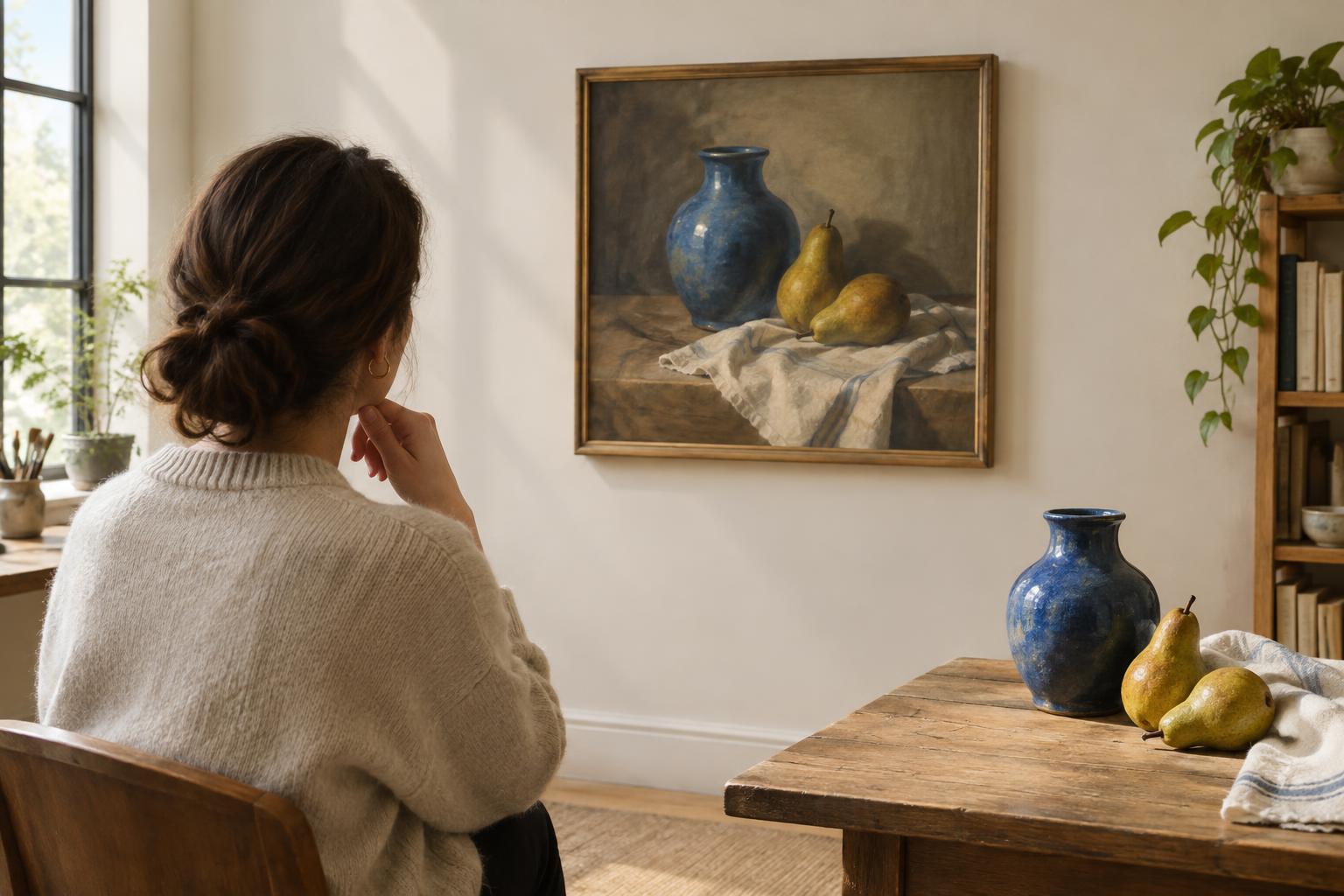
Imagine a painting of a person sitting beside a window. A useful first description might note the figure’s position, the direction they face, the light falling across the room and the objects nearby. “The person is lonely” goes a step further. Loneliness may be a plausible reading, but it is not directly visible in the way a chair or a patch of blue paint is.
Try moving your attention across the work before settling on its most noticeable feature. Look near the edges as well as the center. Notice whether figures face one another, whether a shape repeats, and whether one area is sharply detailed while another is blurred. If you are looking at a photograph, consider what falls inside the frame and what has been left out. If it is a sculpture, a change in viewing position may reveal a different relationship between its parts.
Specific language helps more than an inventory of every object. “Three small figures stand far apart beneath a wide band of sky” tells another reader more than “people outdoors.” You do not need specialist vocabulary to make a careful observation.
Notice how the work presents its subject
Subject matter alone rarely explains the whole experience. Two works can show the same vase of flowers yet feel quite different. In one, pale colors and soft edges may make the arrangement seem delicate. In another, strong contrasts and tightly cropped stems may draw attention to its structure. These effects come from choices about form, not just from the objects depicted.
As you describe a work, include some of those choices. Where does your eye go first? Are the shapes orderly or irregular? Does empty space give the subject room, or make it seem small? Does a rough surface call attention to the material? Such questions connect observation to interpretation without pretending that color, scale or texture has a fixed meaning.
Be wary of shortcuts such as “blue means sadness.” A color can contribute to a mood, but its effect depends on what surrounds it and how it is used. A bright blue shape against muted colors may draw attention before it suggests any particular feeling.
Build a reading, then test it
Once you have described a few details, try an interpretation and say why it occurred to you. For the imagined window scene, you might say, “The empty space around the seated figure makes the room feel quiet to me.” That sentence separates the visible feature from your response. Another viewer might find the same space peaceful rather than isolating.
Ask yourself what supports your reading and what complicates it. A figure turned away from others might suggest distance, but a nearby object or warm light could change how you understand the scene. If you know the work’s title or the artist’s stated intentions, those can add context. They do not replace looking, and they may not settle every question.
This habit is especially useful when a work feels unfamiliar. Instead of forcing an immediate conclusion, you can begin with “I notice,” move to “I wonder,” and then try “This might suggest.” The wording leaves room to revise your view as you notice more.
Make room for another look
Description is not perfectly neutral. You choose which details to mention, and your experiences affect what catches your eye. Still, pausing to distinguish observation from inference can keep a quick impression from becoming an unsupported claim. It lets you explain a response without insisting that everyone must share it.
The next time an artwork holds your attention, give yourself two short passes. On the first, name a handful of visible details without assigning them a mood or message. On the second, consider how those details work together and what they bring to mind. If your reading changes, you have not failed to understand the work. You have found another way to look.