Start with the kind of looking you enjoy
Enjoying art at home does not require a collection or a dedicated room. A book on a side table, an image on a screen, or a few minutes spent examining a favorite composition can make art part of an ordinary day. The best starting point is curiosity: perhaps you like bold color, quiet landscapes, unusual materials, or illustrations that tell a story. Following that interest is more useful than trying to choose what you think you ought to appreciate.
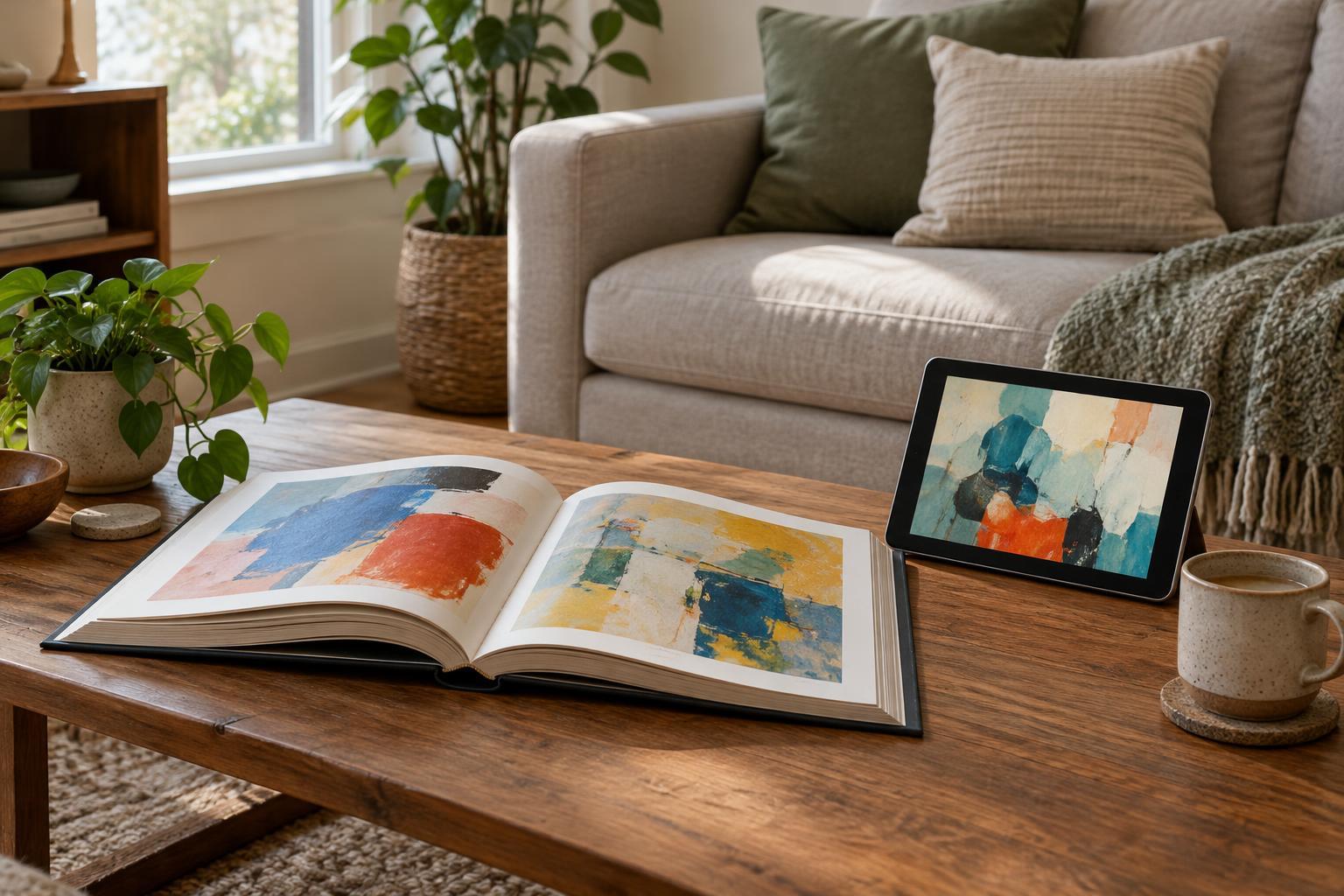
Books and digital displays invite different habits. A book asks you to turn pages and gives you a sequence to explore; it is also easy to close and return to later. A screen can show a changing selection of images without taking up shelf or wall space. Neither is a substitute for seeing an original work, with its particular surface and scale, but both can help you notice details and discover what holds your attention.
Make an art book easy to pick up
Art books are most enjoyable when they are accessible rather than treated as precious objects. Keep one where you already pause: beside a chair, on a coffee table, or near a desk. You can browse it from the beginning, open it at random, or spend a week with a single image. If a large book feels cumbersome, a smaller volume with clear reproductions may suit your space and habits better.
When choosing a book, consider more than its cover. Do you want an introduction to a technique, a close look at one artist’s work, or a broad range of images? Captions and short explanations can provide helpful context, but you need not read every page to enjoy the pictures. Notice, too, how the printed image sits on the page. Borders, neighboring images, paper color, and page size all affect the way a work appears.
A simple way to look more closely is to describe what you see before reading the accompanying text. Where does your eye go first? Which shapes repeat? Does the image feel still or active? Afterward, a caption may add information or challenge your first impression. This small exchange between observation and explanation can make browsing feel more engaging without turning it into homework.
Use a digital display with intention
A tablet, monitor, television, or digital frame can bring art into a room you already use. Instead of adding as many images as possible, begin with a short selection that works together. You might choose varied interpretations of one subject, explore a particular color palette, or alternate between detailed and spacious compositions. A modest rotation gives each image time to be seen.
Screen settings matter because brightness and reflections can change the experience. An image that looks pleasant on a laptop may feel harsh on a large television in a dim room. Try lowering brightness, reducing glare, and allowing enough time between image changes to look without distraction. Keep in mind that screens vary in how they render color, so use them as a way to enjoy an image rather than as a definitive guide to its original appearance.
Choose images from sources that make viewing or display permissions clear, particularly if you plan to download and reuse files. Permission to view an image online does not necessarily mean permission to print it, share the file, or use it publicly. For a personal display, keeping the work’s title and maker’s name alongside your selection also makes it easier to find out more when an image sparks your interest.
Let the room shape the experience
Think of art books and screens as parts of a living space, not additions that must dominate it. A book near comfortable seating encourages unhurried browsing. A display placed away from strong reflections is easier to enjoy. If a screen is already used for work or entertainment, consider whether showing art at certain times helps it feel distinct from your other screen habits.
The images you choose can respond to the room without having to match its décor. A detailed drawing may reward close viewing at a desk, while a composition with broad areas of color may remain legible across a living room. You can also change your selection as your interests shift. Moving a book to a different spot or replacing a few displayed images is often enough to make familiar work feel newly noticeable.
Build a small, sustainable habit
Art at home is most rewarding when it fits naturally into your day. Leave a book open to a page you want to revisit, or choose one digital image to live with for several days. On each encounter, look for something different: an edge, a shadow, a repeated color, or the space between objects. You do not need to arrive at a single correct interpretation.
Over time, keep a short note of the works or visual qualities you return to. You may discover that you favor a certain kind of composition, or that an unfamiliar style becomes appealing once you have spent more time with it. Books offer the pleasure of turning back; digital displays make it easy to rearrange a selection. Together, they give you simple ways to keep looking—and to let your taste develop at its own pace.