Start with the paint, not the palette shape
A palette is more than a place to put paint. Its surface affects how easily you can mix colors, while its size and layout affect how comfortably you work. A pocket palette may be ideal for a small sketchbook but cramped beside a large canvas. Before choosing one, think about how much paint you use, whether you work at a table or on the move, and how long you want mixtures to remain usable.
A useful palette has enough open space to draw two colors together without immediately muddying the rest. A light or neutral mixing surface also makes it easier to judge a mixture. Wells can keep wet colors apart; a broad, flat area is better when you need to pull out and adjust larger amounts. You do not need an elaborate palette, but you do need one that fits your paint.
Watercolor: prioritize wells and a clear mixing area
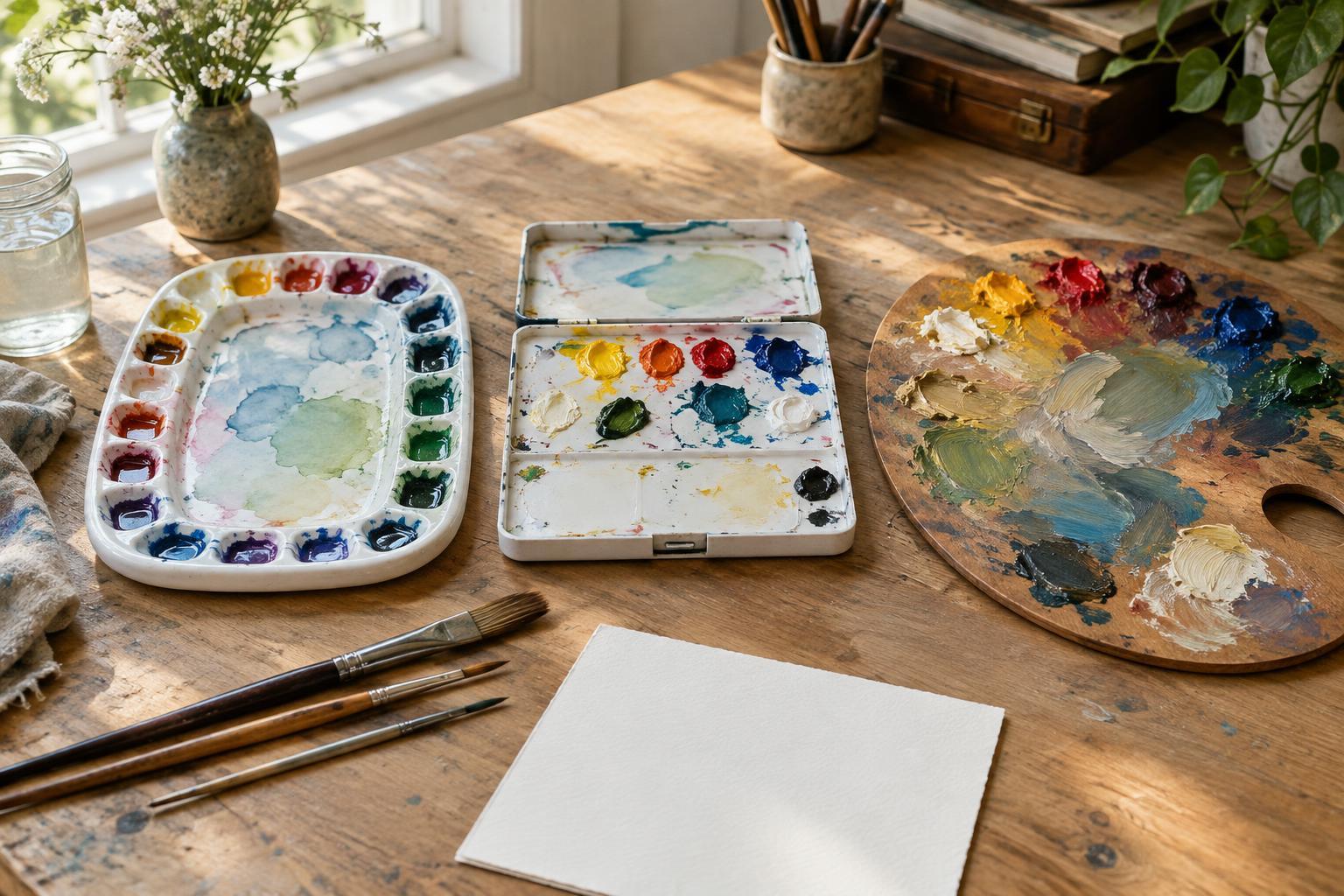
Watercolor is mixed with water and often used in small amounts, so a palette with individual wells for colors and separate, shallow areas for mixing is a practical choice. The wells help keep fresh paint distinct, while the open areas give diluted washes room to spread. A white surface lets you see the character and strength of a wash before it reaches the paper.
Ceramic palettes are sturdy and easy to wipe clean, making them useful at a desk. Lightweight plastic palettes are convenient for travel, especially when they close securely. Water may bead on some new plastic surfaces; this often becomes less noticeable with use and gentle cleaning. Metal travel palettes commonly hold removable pans and provide mixing areas inside the lid.
If you paint outdoors, check how the palette sits when open, not just how small it looks when closed. A palette that tips, offers little mixing room, or lets wet colors touch in your bag may be less useful than a slightly larger one. Let washes dry or clean them away before closing it for storage.
Acrylic: plan for paint that dries on the palette
Acrylic paint can begin drying while you work, so palette choice is partly about managing time. A flat, nonabsorbent surface offers space for mixing and is simple to use for short sessions. Plastic palettes, reusable sheets, and disposable palette paper are common options. Whichever you choose, put out modest amounts of paint and add more as needed rather than letting a large pile dry unused.
A stay-wet palette can be helpful for longer sessions. It typically uses a damp layer beneath a suitable palette sheet to slow drying. Follow the palette’s instructions, keep the damp layer clean, and avoid leaving paint stored indefinitely. Too much water can affect a mixture, so the aim is to reduce drying, not to soak the paint.
Consider cleanup before choosing a surface. Dried acrylic may lift from some smooth palettes but cling stubbornly to others. Wiping away excess paint before it hardens is usually easier than scraping it later. Collect paint residue for disposal according to local guidance rather than washing substantial amounts into a drain.
Oil: choose room to mix and a surface you can maintain
Oil painters often value a broad, flat palette because they may mix several variations of a color and return to them throughout a session. Glass provides a smooth surface that is easy to see and wipe, though it needs a stable place to rest and careful handling. A light or neutral backing beneath clear glass can make colors easier to judge. Wood is another option, but it should be prepared and maintained for use with oil paint rather than left bare and absorbent.
Disposable palette paper can make cleanup simpler, especially in a small workspace. Check that it is intended for oil paint, as not every paper surface will hold up well. Leave enough space between mixtures to keep them distinct, and arrange colors consistently if that helps you find them quickly.
Oil-paint cleanup depends on the paint and any medium you use. Follow product labels, ventilate the workspace when a product calls for it, and handle paint-soiled materials carefully. Do not assume that leftover paint or solvent belongs down the drain. A palette that is easy for you to clean safely is a better choice than one that merely looks appealing.
Match the palette to your working habits
The best choice may be two palettes: a compact one for travel and a larger one for home. Think about where the palette will sit, how much mixing room your paintings require, and whether you prefer to clean a reusable surface or replace a sheet. If you switch between water-based and oil-based paints, keeping separate palettes and cleaning tools can make maintenance simpler.
Try a modest setup before buying a specialized palette. Notice whether you run out of mixing space, lose track of colors, or spend too much time on cleanup. Those observations will tell you more than a palette’s appearance alone. A well-chosen palette makes the practical parts of painting easier, leaving more attention for the colors you want to create.