Start by watching how your kitchen works
The best place for kitchen art is often the part of the room where the least cooking happens. Before choosing a wall, notice where steam rises when you boil water, where oil might splatter from a pan and which surfaces you wipe most often. A wall that looks empty may be empty for a good reason: it may sit directly behind a worktop or beside the hob.
Think about the whole path from preparation to cleanup. The space above a sink can be damp even when it is far from the stove. A spot near a kettle or dishwasher may meet frequent bursts of steam. By contrast, a wall beside a dining nook or at the kitchen entrance may offer a view of the artwork without placing it in the busiest part of the room. If you are unsure about a location, use it for something easily cleaned before hanging a piece you value.
Look for quieter walls and corners
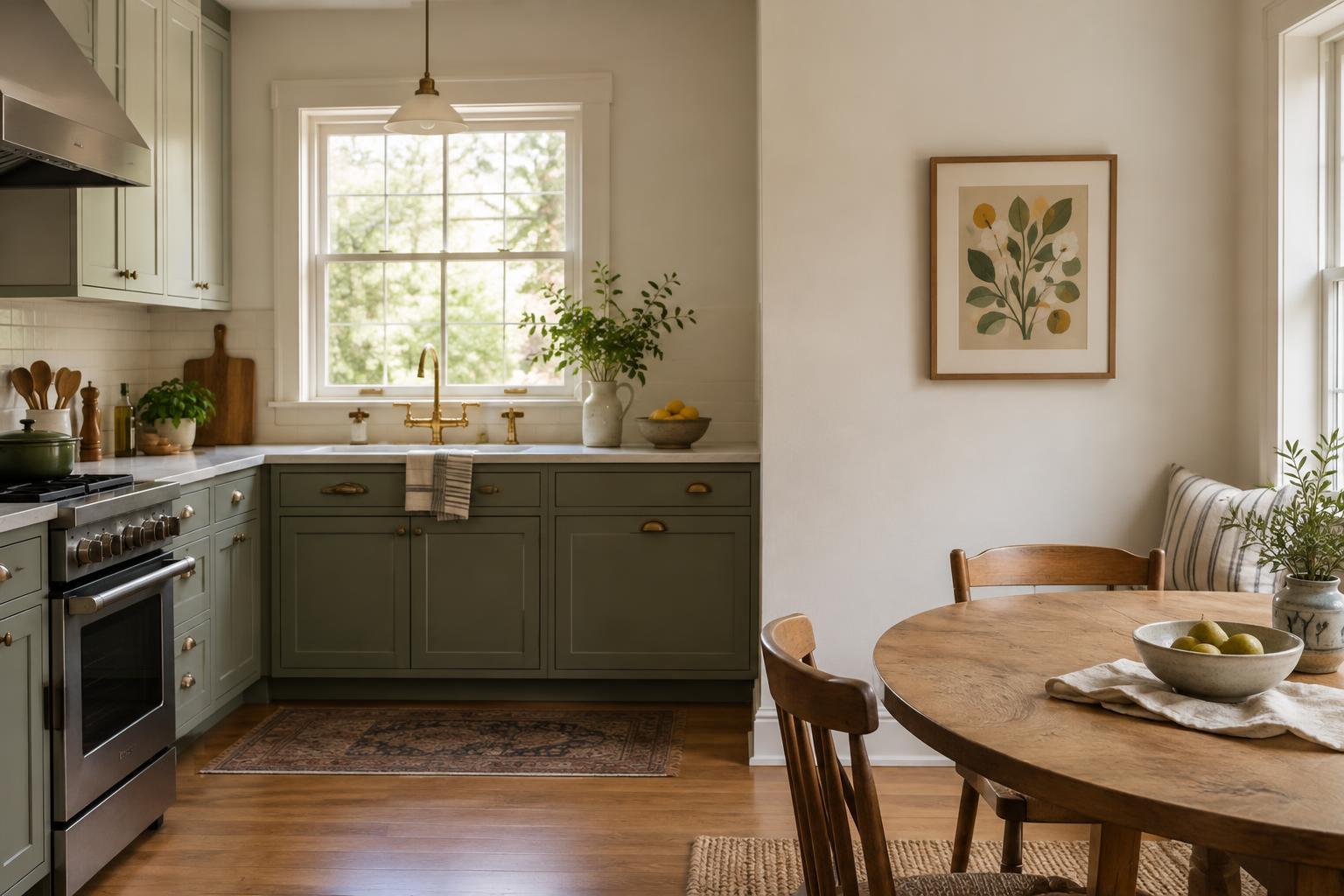
A breakfast corner is a natural place to begin. Art above a small table, bench or set of chairs can make the kitchen feel connected to the rest of the home. Choose a position where people can see the piece while seated but are unlikely to knock it when pulling out a chair. A narrow wall between the kitchen and another room can also work well, especially if it is removed from food preparation and cooking.
The side of a tall cabinet or a wall beyond the main run of counters may provide another option. Check what happens around it before hanging anything: cabinet doors should open freely, and people carrying trays or shopping bags should have room to pass. You can also use a shelf in a calm corner to lean a small framed piece, provided the shelf is stable and the artwork cannot slide or be splashed. Avoid placing it above a toaster, kettle or other appliance that gives off heat or steam.
Keep vulnerable pieces out of the cooking zone
Art directly over a stove is difficult to protect. Heat, airborne grease and repeated cleaning can affect both the artwork and its frame. A range hood may reduce what reaches the wall, but it does not make the space an ideal display area. The same caution applies to a backsplash: if you regularly wipe it after cooking, it is not a comfortable home for a work on paper or an unsealed canvas.
Consider sunlight as well as cooking conditions. Strong direct light can gradually change the appearance of some inks, dyes and papers, while condensation near windows can create another problem. You do not need a perfectly controlled room to enjoy art in a kitchen; it helps to reserve the most exposed spots for objects you can clean easily and would not mind replacing. Keep original drawings, delicate textiles and personally irreplaceable pieces in a more sheltered space.
Choose materials and framing that suit the room
For kitchen display, a framed print behind glazing is often simpler to maintain than an exposed sheet of paper. The glazing creates a barrier against casual splashes and makes the front easier to dust, though it does not protect the piece from every change in heat or humidity. A mat can keep the artwork from resting against the glazing. Check that the frame backing is secure and that the frame itself can be wiped without damaging its finish.
If you prefer an unframed look, consider a washable surface such as a decorative tile or a print made for display on a rigid panel. Check the maker’s care guidance before cleaning any artwork; water and household cleaners can damage some finishes. Even with durable materials, location matters more than a promise of easy cleaning. Moving a piece away from splatter usually makes more sense than planning to scrub it regularly.
Hang it securely, then adjust if needed
Use fixings suited to the wall and the weight of the piece, and keep frames clear of doors, drawers and appliance vents. In a rental, a small, lightweight work may suit a removable hanging product if the wall surface and product directions allow it. Do not assume an adhesive hook will hold every frame or work well on a textured or frequently damp wall. For a shelf display, make sure the shelf is firmly installed and the art has a secure resting position.
Once the piece is up, live with it through a few ordinary cooking and cleaning routines. Look for a film on the glazing, droplets on the frame or signs that you keep brushing against it. Those are useful clues, not a failed decorating decision. Shift the artwork to a calmer wall if necessary. The right spot lets you enjoy it while making everyday kitchen tasks—and the care of the piece—easier.