What is in a tube of oil paint?
Oil paint is made primarily from pigment dispersed in a drying oil, often linseed oil. Pigment gives the paint its colour; the oil holds the particles together and helps the painted layer form a film as it dries. Manufacturers may also add ingredients to adjust texture or consistency. That is why two colours from the same range can feel different under a brush.
Pigments affect more than hue. Some colours cover a surface readily, while others are naturally transparent. An opaque colour can be useful for blocking in a shape; a transparent one can add depth over a dry layer. Paint labels may describe opacity and lightfastness, which refers to how well a colour resists fading under light. These properties are useful guides, but making a small test swatch is often the clearest way to see how a paint behaves.
Why oil paint dries slowly
Unlike water-based paint, oil paint does not dry mainly because liquid evaporates. Its oil reacts with oxygen and gradually forms a firmer film. A thin layer may become touch-dry in days, while a thicker passage can remain soft much longer. Touch-dry does not mean fully hardened, so a painting may need considerably more time before it is ready for varnishing or tight packing.
Drying speed also depends on the pigment, the oil in the paint, added mediums, layer thickness and the conditions in the room. A heavily textured mark can stay soft after a nearby thin brushstroke feels dry. If you plan to add layers, work patiently and follow the paint and medium makers’ guidance. For a first project, thin applications are easier to judge than deep piles of paint.
Start with a simple, manageable palette
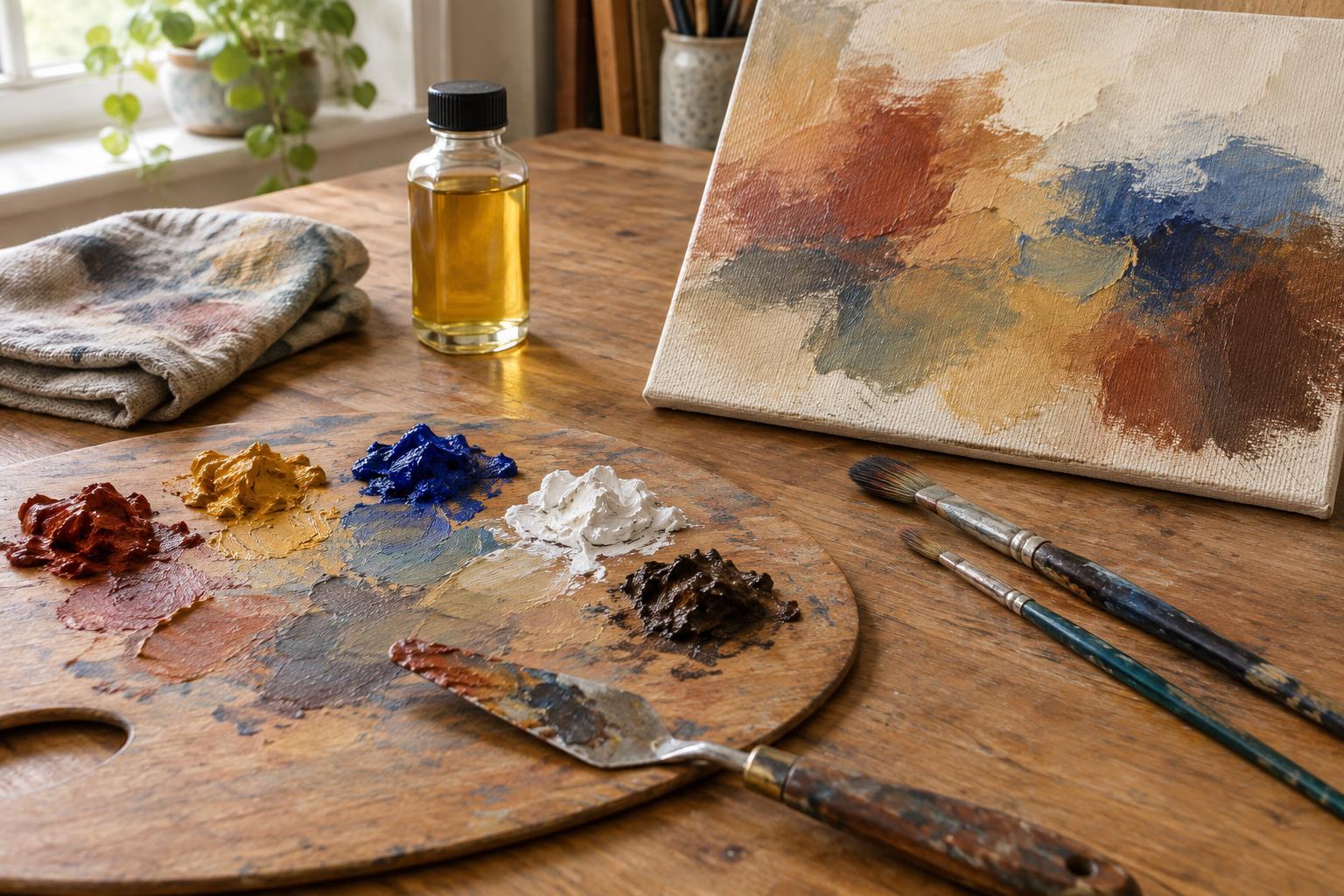
You do not need a large collection of tubes to explore oil paint. A small selection of colours, a suitable painting surface, a palette, a few brushes and a rag or paper towel are enough to practise mixing and mark-making. Begin by placing modest amounts of paint on the palette. You can add more as needed, and there is less material to clean up at the end.
Try painting a familiar object in broad shapes before pursuing fine detail. Notice which colours hide the surface and which let it show through. To make a colour lighter, mix in a little light paint rather than loading the brush with a large amount at once. Keeping mixtures small makes it easier to understand what each addition changes and helps preserve a clean range of colours.
Use mediums and solvents deliberately
A medium changes how paint flows, looks or dries. Some add gloss or transparency; others can affect drying speed. Solvents are used to thin paint or clean equipment, but they are not essential to every painting session. If you are starting out, try paint straight from the tube before adding anything. This gives you a useful baseline for judging whether a medium would help.
If you do use a medium or solvent, read its label and use only the amount you need. Work with good ventilation, keep containers closed when not in use and avoid bringing food or drinks into the painting area. A solvent-free routine may suit a small home workspace: wipe excess paint from brushes first, then clean them with a product intended for that purpose, following its instructions. Do not pour paint residue or cleaning products down a drain.
Build safer habits into your cleanup
Treat pigments and additives as materials to handle thoughtfully, even when a product is described as low-odour. Check labels for particular hazards, avoid breathing in dry pigment or sanding dust, and wash your hands after painting. If paint tends to get on your skin, consider suitable protective gloves. Keep supplies away from children and pets, and store them in their original, labelled containers.
Oily rags and paper towels need special attention because oil-soaked material can heat as it dries, particularly when piled together. Do not leave used wipes crumpled in a bin. Follow the product guidance and local disposal rules for storing and discarding them; a suitable fire-resistant container may be needed. A few minutes spent wiping tools, closing containers and dealing with waste carefully can make the next painting session easier to begin.