Why edges matter
An edge is the boundary where one painted area meets another. In watercolor, that boundary can be crisp enough to define a window frame or soft enough to suggest a cloud fading into the sky. Neither kind is inherently better. What matters is whether the edge helps the viewer understand the shape, light or atmosphere you want to show.
The main difference between wet-on-wet and wet-on-dry is the condition of the paper when paint touches it. Wet-on-wet means adding paint to a surface that is already damp or wet. Wet-on-dry means applying paint to dry paper. The first generally encourages soft transitions; the second makes a firm edge easier to place. You can use both in one painting, shifting between them as the image calls for more or less definition.
Wet-on-wet: making a soft edge
To try wet-on-wet, brush clean water over a small area, then touch a loaded brush to it. The pigment spreads through the moisture rather than staying exactly where the brush lands. On evenly damp paper, this can create a gentle, feathered boundary. A very wet surface may let the color travel farther than intended, while a nearly dry surface may hold it in place or produce an uneven edge.
Watch the surface before adding color. A shiny layer of water usually gives pigment room to move; a dull, slightly damp surface often allows a narrower soft edge. The exact timing depends on the paper, how much water you applied and the conditions in the room, so use the surface rather than a clock as your guide. To keep a wash within a chosen area, wet only that area and leave the surrounding paper dry. A slight tilt can encourage color to flow in one direction, but too much tilt may draw it away from the shape you planned.
Wet-on-dry: placing a sharp edge
On dry paper, a brushstroke tends to stop where you place it, making wet-on-dry useful for silhouettes, small details and shapes that need a clear outline. Load the brush with enough paint for a continuous stroke, and guide its tip along the boundary you want. If the brush runs nearly empty, the edge may become broken or textured. That effect can be useful for rough surfaces, but it is less reliable when you want a smooth line.
Dry paper does not guarantee a crisp edge forever. A new stroke can soften or disturb an earlier one if the earlier paint is still damp. Before adding a neighboring shape or another layer, check that the first area has lost its sheen and feels dry. Try not to repeatedly brush over a drying wash: extra water and movement can unsettle pigment and create marks you did not intend.
Working between soft and sharp
Many useful edges fall between the two extremes. For a controlled fade, paint a shape on dry paper, rinse your brush, blot it until it is damp rather than dripping, and draw it gently along one side of the fresh paint. This introduces a little moisture at the boundary, allowing color to move outward. Work while the paint is still wet; once it dries, brushing the edge may lift color instead of making an even fade.
You can also place a defined subject over a soft background. First paint a loose wet-on-wet wash and let it dry completely. Then add the subject with wet-on-dry strokes. The contrast gives the subject clarity without requiring every part of the painting to be sharply outlined. Conversely, softening one edge of an otherwise crisp shape can help it blend into its surroundings. Choose which boundaries deserve attention rather than treating them all alike.
A small study to build control
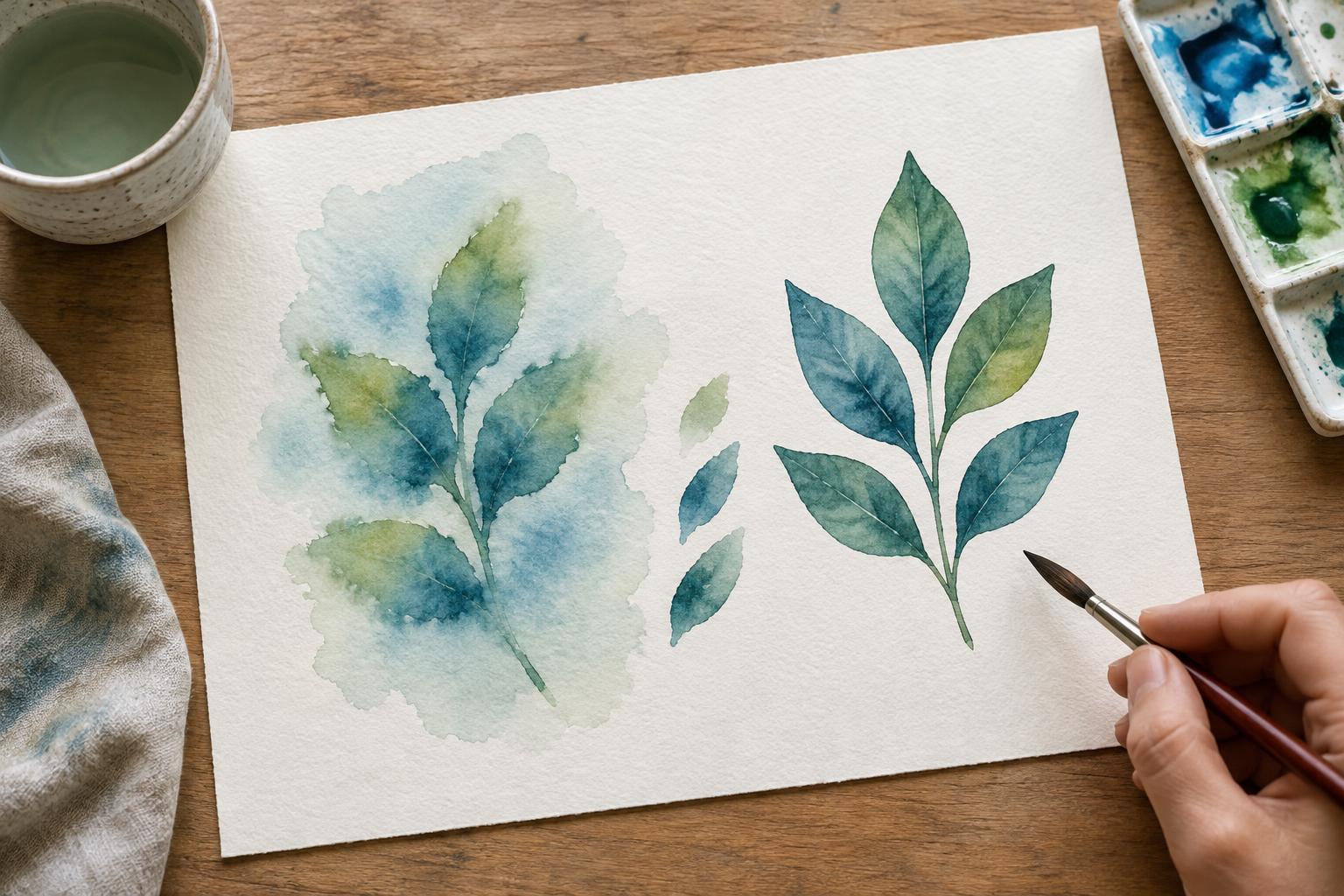
Divide a sheet into three areas and paint the same simple shape, such as a leaf, in each one. For the first, paint clean water inside the shape and drop in color while it is shiny. For the second, wait until the water looks only slightly damp before adding color. For the third, paint directly onto dry paper. Let all three areas dry before comparing them: wet watercolor often looks different from a wash still in motion.
Notice how far the color traveled, which edges stayed clear and where any unexpected marks appeared. If paint spread beyond a shape, try less water next time. If a soft edge stayed too hard, add color sooner or dampen a slightly wider area. Repeat the study with one change at a time. This makes edge control less a matter of guessing and more a habit of observing the paper, the brush and the moisture between them.