Why sunlight matters
Art is often displayed where people will see it most: above a sofa, beside a desk, or along a bright hallway. Those spots may also receive hours of direct sunlight. Over time, light can fade dyes and pigments, yellow or weaken paper, and alter the appearance of photographs and textiles. Some materials are more light-sensitive than others, and it is not always possible to tell how quickly a particular work will change just by looking at it.
Sunlight brings several concerns together. Ultraviolet light can contribute to deterioration, while visible light can also cause fading. Sun falling on a surface may heat the work and its frame, adding to changes in materials. Damage from light is generally cumulative and cannot be reversed by moving the work later. The practical goal at home is not to keep every piece in darkness, but to avoid unnecessary exposure while still enjoying it.
Check the wall before hanging
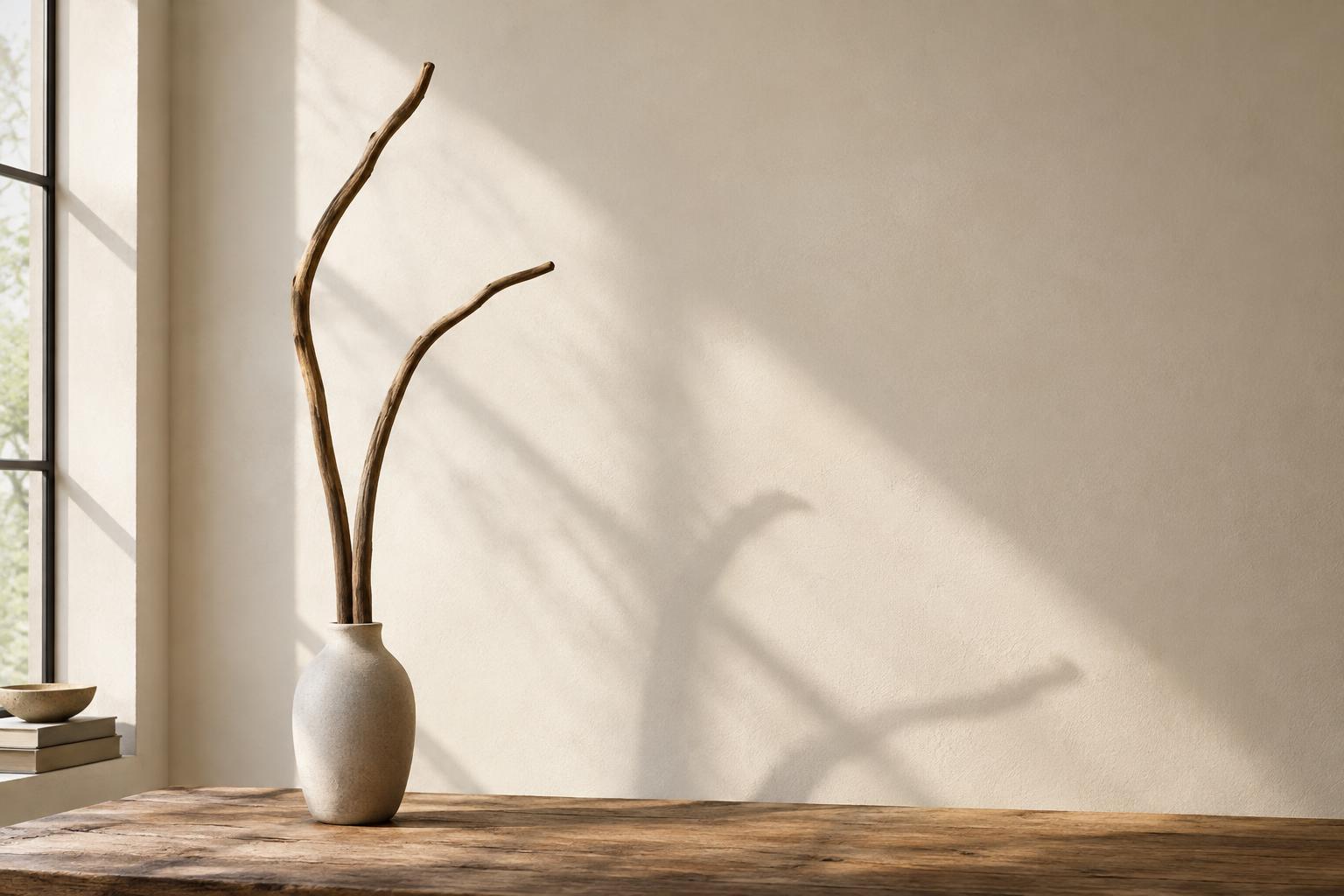
Before choosing a spot, watch how daylight moves through the room. A wall that looks shaded in the morning may receive a strong patch of sun in the afternoon. Notice whether the patch reaches the proposed hanging area and how long it stays there. Remember that the sun’s path changes through the year, so a location that seems safe in one season may need another look later.
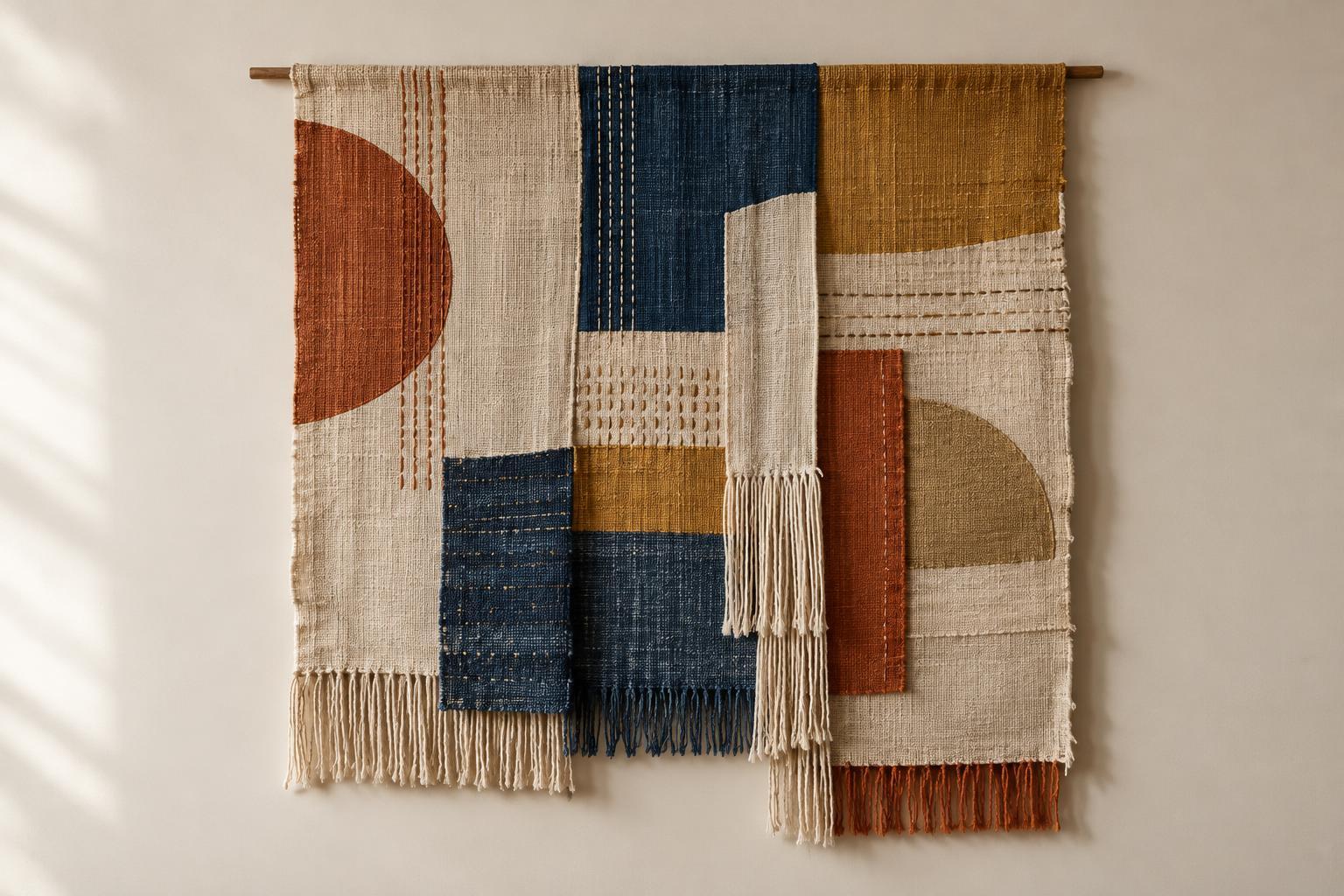
A wall outside the path of direct sun is usually a better starting point than one opposite a large window. Consider side walls, interior walls, or parts of a room lit mainly by reflected daylight. Be especially cautious with watercolors, drawings, prints, photographs, and fabric pieces, which may contain light-sensitive colorants or supports. If a piece is meaningful to you and you do not know how it was made, treating it as light-sensitive is a sensible precaution.
Use window coverings to control exposure
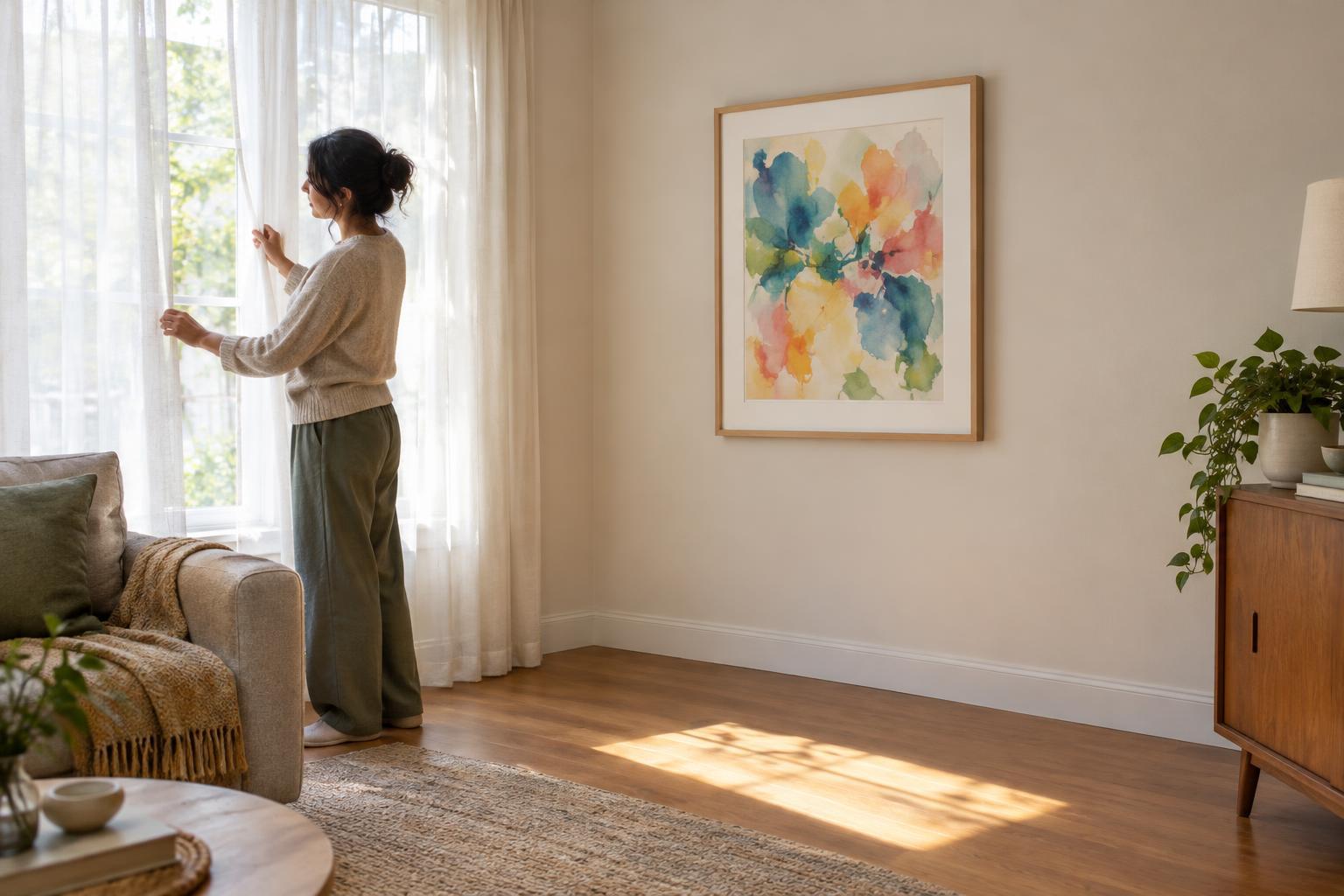
Curtains, blinds, and shades offer a flexible way to reduce direct sun without giving up a bright room. A sheer curtain can soften daylight, though it may not block all of it; a more opaque covering can keep a sunbeam off the wall during its strongest hours. Adjustable blinds are useful when the angle of light changes over the day. The most effective arrangement is one you will actually use, whether that means closing a shade at a predictable time or choosing a wall that needs no daily attention.
Window film is another option for some spaces. Products differ in how much ultraviolet light and visible light they reduce, and a film that cuts ultraviolet light does not make sustained bright exposure harmless. Check that any film is suitable for your window before applying it. Whatever window treatment you choose, look at the displayed work occasionally: a strip of sunlight can shift onto a frame as the season changes.
Understand what framing can and cannot do
Glazing labeled as ultraviolet-filtering can reduce one source of light-related damage for framed works. It is most useful as part of a wider plan that also limits direct sun. Visible light still passes through glazing, and some materials can fade under that exposure. Standard glass or acrylic may offer some protection, but the amount varies; a clear cover should not be assumed to make a sunny wall safe.
Good framing also considers the work’s physical placement. A mat or spacer can keep a work on paper from resting directly against the glazing, while suitable backing helps protect it from dust and handling. If a valued piece needs reframing, a framer can help you discuss materials and display options. For an inexpensive or easily replaceable print, you may decide that the pleasure of a particular location outweighs the risk. For an original or irreplaceable work, a shadier location is the more cautious choice.
Build protection into everyday habits
Small habits make a difference. Recheck hanging spots when you rearrange furniture or uncover a window, and keep art away from intense lamps or other sources of heat as well as direct sun. If you rotate pieces on display, give more light-sensitive works shorter periods in brighter rooms and store them carefully when they are off the wall. Rotation reduces each piece’s exposure; it does not undo fading that has already happened.
You can also enjoy a sunny spot without placing an original work there. A reproduction, a replaceable poster, or a piece made for changing displays may be a comfortable choice for a difficult wall. Keep the work you most want to preserve in gentler light, where you can still pause and look at it every day. Protecting displayed art is less about creating a perfect room than about making thoughtful choices about where the light falls.