What changes when the canvas fiber changes?
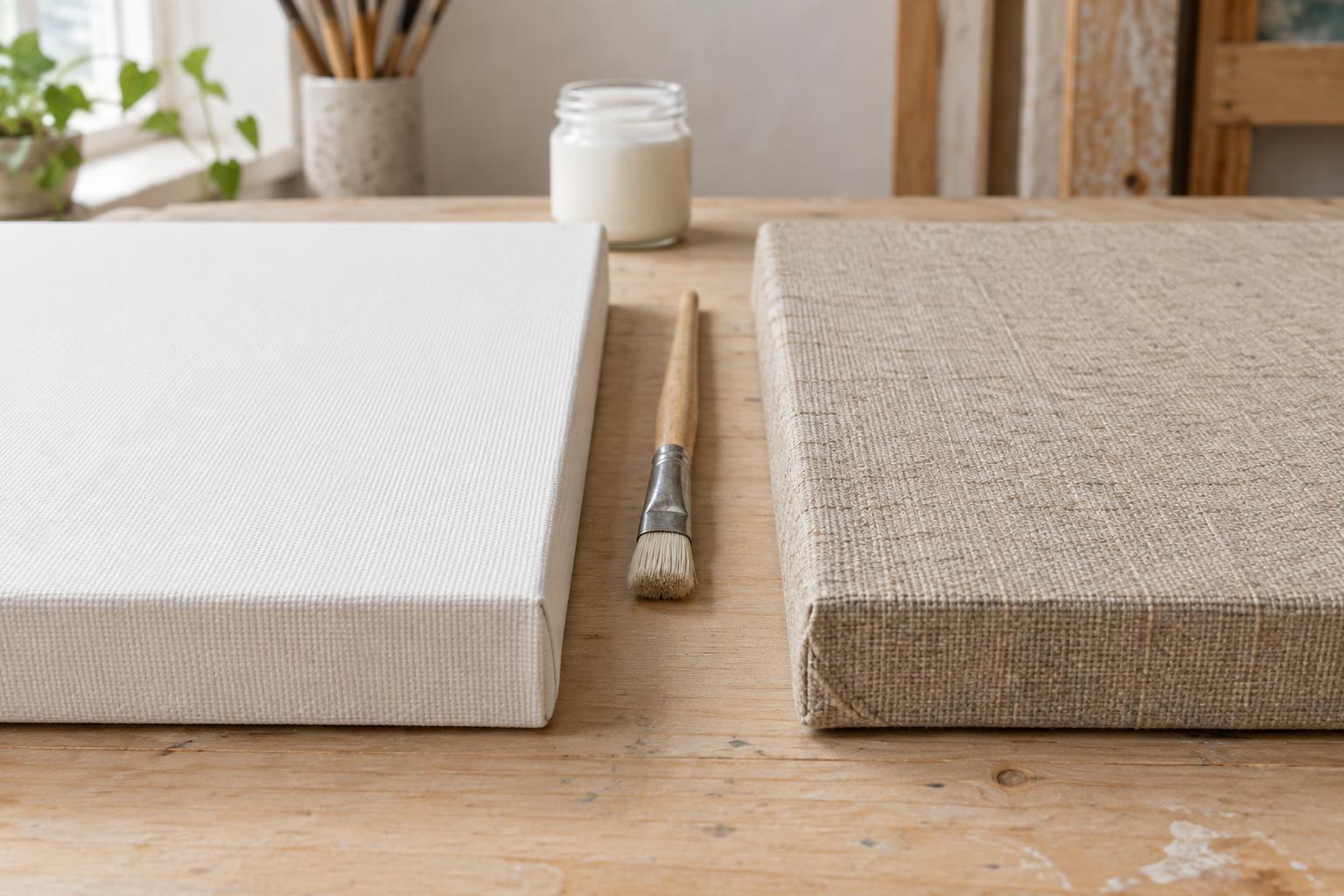
Cotton and linen are both woven fabrics used as supports for paintings. Cotton canvas is commonly available in affordable pre-stretched formats, making it an easy place to start. Linen is usually more expensive and is often chosen for its strength and distinctive surface feel. Neither fiber automatically makes a better painting: the quality of the fabric, the way it is prepared and the way you work all matter.
A canvas’s weight and weave can be as noticeable as its fiber. A coarse weave leaves a visible pattern beneath thin paint, while a fine weave offers a smoother path for small marks. Cotton and linen are each sold in different textures, so it helps to look closely rather than rely on the label alone. If possible, run a hand across a sample and imagine how your brush or palette knife would move over it.
How cotton and linen feel while painting
Cotton canvas often has a relatively even, familiar texture. It can be a comfortable choice for experiments, studies and larger paintings where material cost matters. It also comes in many ready-to-use stretched canvases and canvas boards. Depending on the weave and preparation, cotton may have more give under the brush than a tightly stretched linen surface. That springiness can feel lively, although painters seeking a firm surface may prefer a board or a well-supported canvas.
Linen can feel crisp and responsive, particularly in a fine weave. Some painters like the subtle irregularities of its threads and the way those marks remain visible through thin layers of paint. Others find a prominent weave distracting, especially when painting precise edges or small details. Surface preparation makes a substantial difference: several layers of primer can soften the texture of either fabric, while a lightly prepared canvas keeps more of the weave in view.
Preparation matters as much as the fabric
Raw canvas should not be treated as interchangeable with a primed painting surface. Sizing and primer create a working layer between the fabric and the paint. This is especially important for oil painting, because oil should not soak directly into unprotected fabric. When buying a prepared canvas, check whether its primer is intended for oil, acrylic or both. A clear product description is more useful than an assumption based on whether the canvas is cotton or linen.
Acrylic painters also benefit from considering the prepared surface. An absorbent ground may make paint settle quickly; a smoother, less absorbent one can give it more time to move. If you dislike the feel of a purchased canvas, you may be able to adjust it with a suitable additional ground, following the product directions. Try that change on a small surface first. It is simpler to learn what you enjoy from a modest test than to prepare a large canvas and discover the texture fights your approach.
Tension, support and longevity
Stretched canvas behaves differently from canvas attached to a rigid panel. Either cotton or linen can respond to changes in the surrounding environment, and tension may shift over time. A firmly stretched surface should not feel loose or heavily puckered when you buy it. For large works, sturdy stretcher bars and appropriate support become especially important. If you press hard while painting, a canvas panel or another rigid support may feel steadier than fabric suspended over an open frame.
Linen is often valued for its strength, but fiber alone cannot guarantee how long a painting will last. Poor preparation, weak construction, rough handling or unsuitable storage can undermine either option. Keep finished paintings away from persistent dampness and avoid leaning objects against the painted surface. If long-term durability is a priority, pay attention to the whole assembly: fabric, preparation, stretcher or panel, and the paint system you plan to use.
A simple way to make the choice
Choose cotton when you want an accessible, versatile surface for practice, exploration or a project with a limited materials budget. Consider linen when you want a particular weave or firmer-feeling fabric and are comfortable with the added cost. For detailed work, compare fine-weave options in both fibers. For expressive marks and visible texture, try a coarser weave before deciding which fabric you prefer.
The most useful comparison is a small, fair test. Pick cotton and linen surfaces with similar preparation and paint the same subject on each using your usual tools. Notice how easily you can make a thin line, cover the weave, blend an area and build a textured mark. Let those observations guide your next purchase. The right canvas is not a badge of seriousness; it is the surface that helps you make the painting you have in mind.