Start with the artwork and the surface
A no-drill display works best when you choose the method for the piece, rather than trying to make every picture hang the same way. A lightweight print in a simple frame gives you more options than a large work behind glass. Check the weight of the complete framed piece, not just the artwork, and consider whether a fall could damage it or anything below it.
Look closely at the place you want to use. A smooth, sound painted wall may be suitable for a removable hanger, while textured paint, wallpaper or a fragile finish may not be. Rental agreements and building rules vary, so check yours before attaching anything. If the artwork is valuable or delicate, a freestanding display may be the more cautious choice.
Use furniture as your gallery
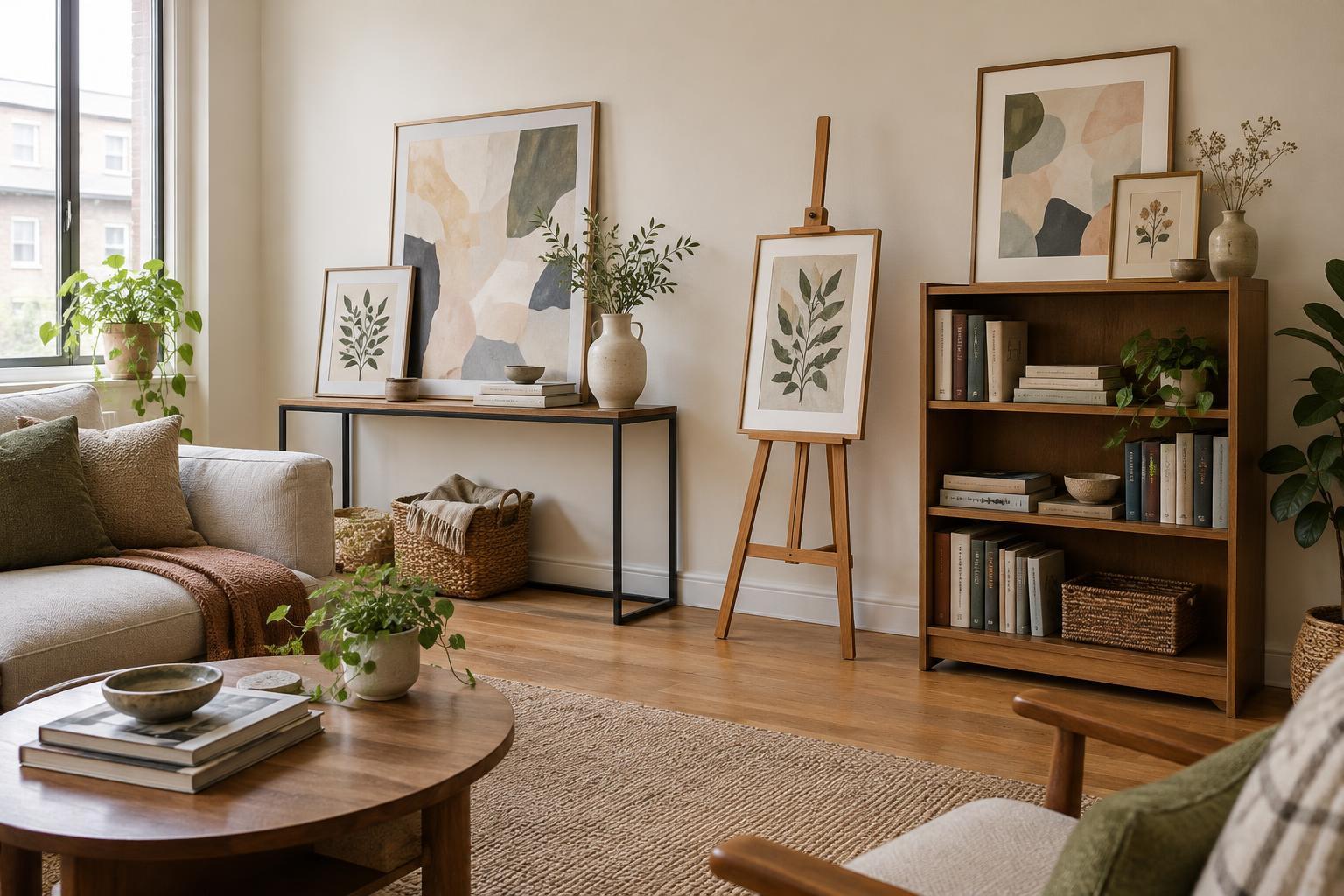
A bookcase, sideboard or mantel can hold framed art without any wall attachment. Start with one larger piece at the back, then place a smaller frame or object in front to create depth. Leave part of the surface clear so the arrangement feels intentional and the furniture remains useful. On a busy shelf, repeating a frame colour or keeping a little space between objects can bring the display together.
Leaning art is especially flexible: you can move it when you rearrange a room. Choose a stable surface, keep frames away from edges and use suitable non-slip pads if needed. Avoid placing glass-fronted frames where children or pets could knock them over. A floor-standing easel can also turn a single artwork into a focal point, provided it has room to stand securely without blocking a walkway.
Consider removable hanging products carefully
Adhesive picture strips and removable hooks can help you put lightweight art on a wall without drilling, but “removable” does not mean risk-free. Follow the product’s instructions for surface preparation, weight limits, waiting time and removal. Those limits may apply to a particular surface and setup; adding extra strips is not a reliable way to make an unsuitable piece safe to hang.
Test an inconspicuous spot if you are unsure about the finish, and avoid using adhesives on peeling paint, wallpaper or a surface the product excludes. Pulling a hanger away from the wall instead of removing it as directed can damage paint. For small unframed prints, a removable clip or light display rail may be an option, but protect the paper from anything that could leave a mark.
Try displays that do not rely on the wall
A freestanding room divider can provide a backdrop for light artwork while helping define a corner of a room. A tabletop photo stand, plate stand or small easel can give a postcard, illustration or compact frame its own place. These options work well when you like to rotate what is on view: changing one or two pieces can refresh a space without remaking the whole arrangement.
You can also use an existing ledge or shelf, as long as it is sturdy and deep enough for the frame. Take care with over-door hangers: check that the door closes freely, the hanger fits properly and the art will not swing into nearby furniture. Whatever method you choose, keep exits, switches and frequently used surfaces clear.
Make the arrangement feel considered
Before setting anything in place, lay the pieces on the floor or move paper templates around to compare positions. For a small collection, choose a simple connection such as a shared colour, subject or frame style. You do not need perfect symmetry: varying frame sizes can feel balanced when the gaps between them are consistent and the overall grouping has a clear centre.
Think about how the art looks from the places you actually use, such as a sofa, desk or dining table. Daylight can make colours easier to enjoy, but prolonged direct sun may fade some materials, and damp or heat can be hard on paper and frames. A good display is one you can enjoy comfortably and adjust easily. Starting with a single shelf or stable easel lets you find the right spot before adding more.