Start with a place to pause
A small sculpture is easy to tuck onto a shelf, but that does not always make it easy to notice. Before choosing a spot, walk through the room and look for places where your eye naturally pauses: the end of a bookcase, a side table beside a chair or a clear section of a mantel. A sculpture placed at one of these moments can become part of how you experience the room rather than one more object competing for attention.
Think about the space around the piece as part of the display. Leave enough room to see its outline from your usual viewpoint, whether you are sitting on a sofa or passing through a doorway. If a shelf already holds books, plants and framed photographs, try removing or relocating one or two items before adding the sculpture. Making space is often more effective than finding a clever way to fit everything in.
Choose a surface that suits the piece
The right surface supports both the sculpture and the room’s daily use. A narrow ledge might suit a compact, stable piece but not one with a wide base or projecting parts. Check that the surface is level and that the sculpture is not close to an edge where a bag, sleeve or curious hand could knock it. In busy households, a higher shelf or a protected niche may be a better choice than a coffee table.
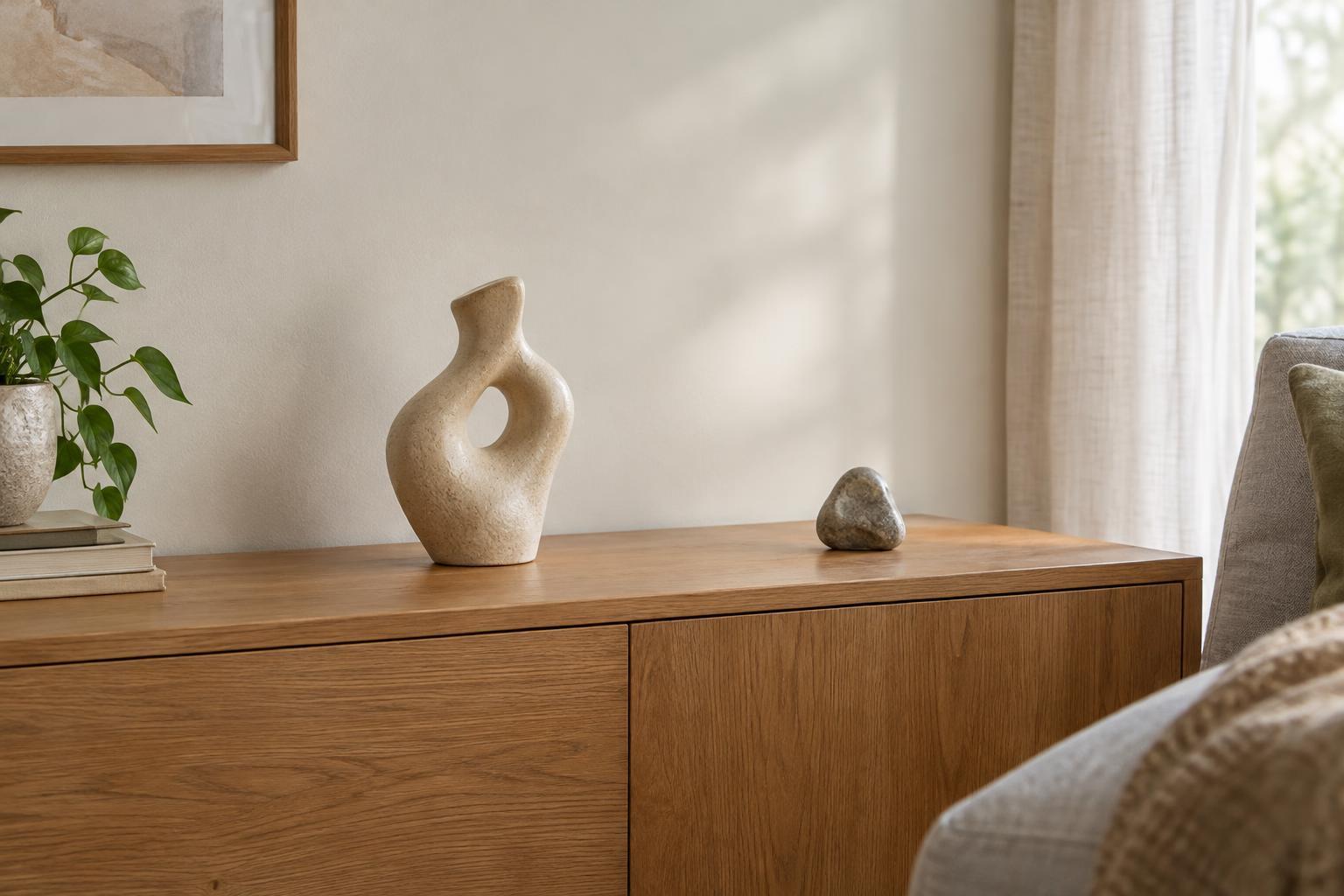
Consider the background, too. A piece with a detailed silhouette may stand out against a plain wall, while a simple rounded form can hold its own among books. You can use a tray or low plinth to give a small work a defined area, but keep the addition quieter than the sculpture itself. If the support becomes the first thing you notice, try a simpler one or let the piece stand on its own.
Group with intention, not by default
Displaying several small sculptures together can create a satisfying conversation between forms. Begin with two or three pieces that share something visible, such as material, color or a repeated curve. They do not need to match. A smooth ceramic form beside a rough stone piece, for example, can invite a closer look at both textures when the grouping has enough room around it.
Varying height can help each piece remain visible, but avoid lining up objects so closely that their outlines merge. Try placing the tallest work slightly behind the others, then step back to check the arrangement from across the room. If a collection feels crowded, divide it between two locations or display a few pieces at a time. Rotating what is on view lets you enjoy the collection without asking one shelf to hold its full visual weight.
Let light reveal the form
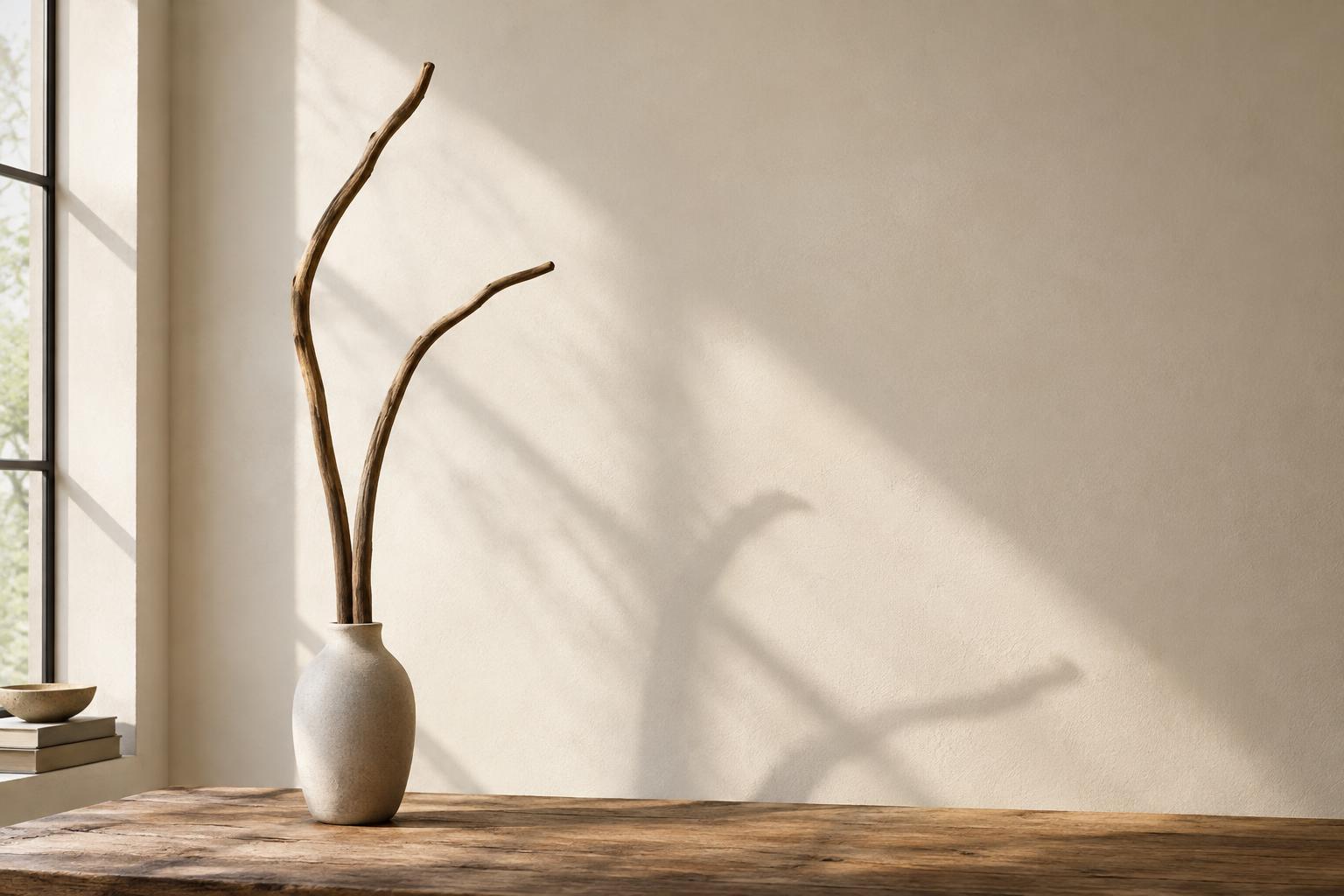
Sculpture changes as you move around it. Light can reveal an indentation, cast a gentle shadow or show the difference between a matte and glossy surface. Start with the light already in the room. Place the piece where you can see its form clearly at the times you usually spend there, then adjust its position or angle before considering another lamp.
Be mindful that strong direct sun, heat and moisture may not suit every material or finish. A windowsill that looks beautiful for an hour may be a poor long-term home for a delicate painted piece. If you do not know how a sculpture was made, a steady indoor location away from obvious extremes is a sensible starting point. Lighting should make the object easier to enjoy, not put it in the way of daily life.
Edit the display as the room changes
A display that feels open today may feel crowded after new books, plants or keepsakes arrive. Every so often, look at the sculpture and its surroundings as if you were seeing them for the first time. Can you still make out the shape? Is there space to clean around it without moving several other objects? If not, removing a neighboring item may be all the adjustment needed.
Small sculptures do not need a formal setting to matter. One piece on a clear bedside shelf or at the far end of a desk can offer a brief moment of attention during an ordinary day. Give it a secure place, a little visual breathing room and a reason to be there. The result can feel considered without making the room feel staged.