Why bathrooms are challenging for art
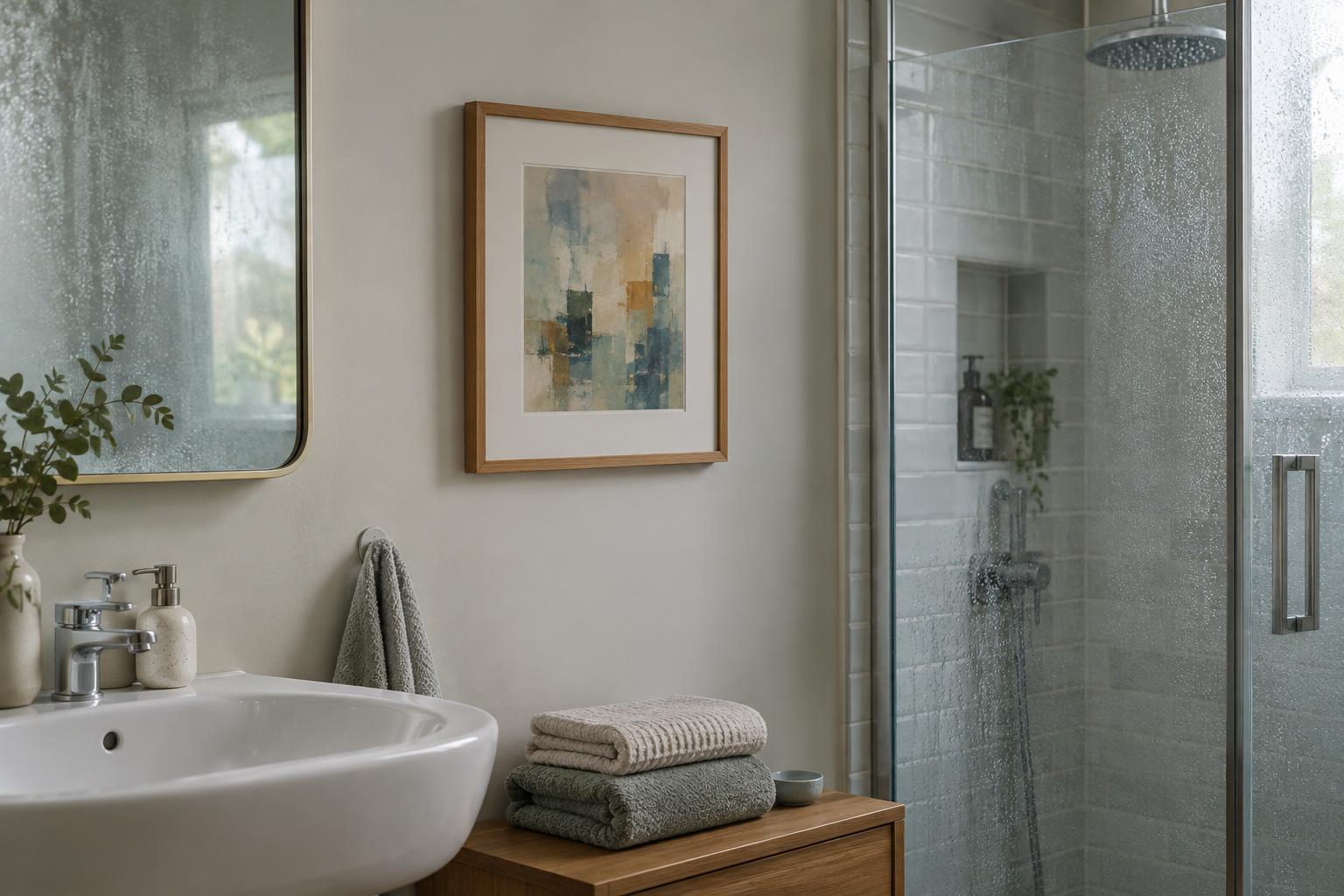
A bathroom may seem like an inviting spot for a small print or painting. The difficulty is not simply that the room contains water. Steam from a shower can raise humidity, while cooler walls and surfaces may collect condensation. A sink or bath adds the more direct risk of splashes. These conditions can change from hour to hour, exposing an artwork to repeated cycles of dampness and drying.
Those cycles matter because art is often made from several materials that react differently. A sheet of paper may expand while its backing stays relatively stable. A wooden frame may swell around a glazed print. Even when a piece never gets visibly wet, persistent dampness can encourage staining, warping or mould. How much risk a bathroom presents depends on ventilation, room size, placement and how the space is used.
Paper, photographs and textiles absorb moisture
Works on paper are especially vulnerable. Drawings, watercolours, posters and prints can develop ripples or curled edges as paper takes up moisture. Dampness may also cause discolouration, and some inks or paints may run if water reaches the surface. A paper artwork pressed against glass can stick to it when condensation forms inside the frame, making later removal difficult.
Photographs can be affected in different ways depending on how they were printed and mounted. Their surfaces may stick to glazing, and paper-based photographs may curl or distort. Fabric art, embroidery and other textiles can absorb moisture too, leaving them prone to sagging, staining or mould if they cannot dry thoroughly. Sentimental or irreplaceable pieces are better kept in a more stable room, even if they look appealing on a bathroom wall.
Canvas, wood and metal are not automatically safe
A painting on canvas might appear more robust than a paper print, but its canvas, paint layers and wooden stretcher can respond differently to changing humidity. The fabric may loosen or tighten, while the wood may expand or warp. Paint and coatings vary, so it is unwise to assume that a finished canvas can tolerate steam or a direct splash. Adhesives used in mounted works or collages may also weaken in damp conditions.
Frames deserve attention of their own. Wood can swell or develop a distorted finish. Metal fittings may corrode, particularly if water collects behind the frame, and that corrosion can stain nearby materials. Glass and acrylic glazing can protect an artwork from an accidental touch or splash, but an ordinary frame is not an airtight moisture barrier. If damp air enters and condensation forms inside, the glazing may hold moisture close to the work rather than keep it safe.
Choose a spot, then consider the artwork
If you want art in a bathroom, start by looking for the driest wall. Avoid positions beside a shower, over a bath or sink, or anywhere towels and wet hands routinely brush past. Notice whether a wall stays damp after use or whether a mirror regularly fogs nearby. A well-ventilated position away from these areas is a more sensible choice than a prominent spot that catches spray.
Consider what you would feel comfortable replacing. A reproduction print or another easily replaceable piece may be a better bathroom choice than an original drawing, a family photograph or a delicate textile. A sealed, wipeable decorative object may suit the space, but check its materials: a washable surface does not guarantee that its backing, frame or hanging hardware resists moisture. Do not hang a valuable piece just because it is behind glass.
Make a simple care routine
Good ventilation can reduce the time moisture lingers. Use the bathroom’s ventilation where available, and allow the room to dry after bathing. Keep artwork clear of direct water, and check it occasionally rather than assuming a frame has protected it. Look for ripples, fogging inside the glazing, spots, a musty smell, or changes in the frame or its fittings.
If you notice moisture trapped inside a frame, move the piece to a drier area rather than leaving it on the wall. Avoid rubbing a damp artwork or trying to flatten distorted paper yourself; handling can make damage worse. For an important or irreplaceable piece, seek advice from a qualified conservator. The simplest approach is to treat bathroom art as a considered choice of material and location, not as a test of how much steam a favourite artwork can withstand.