Start with the view from your chair
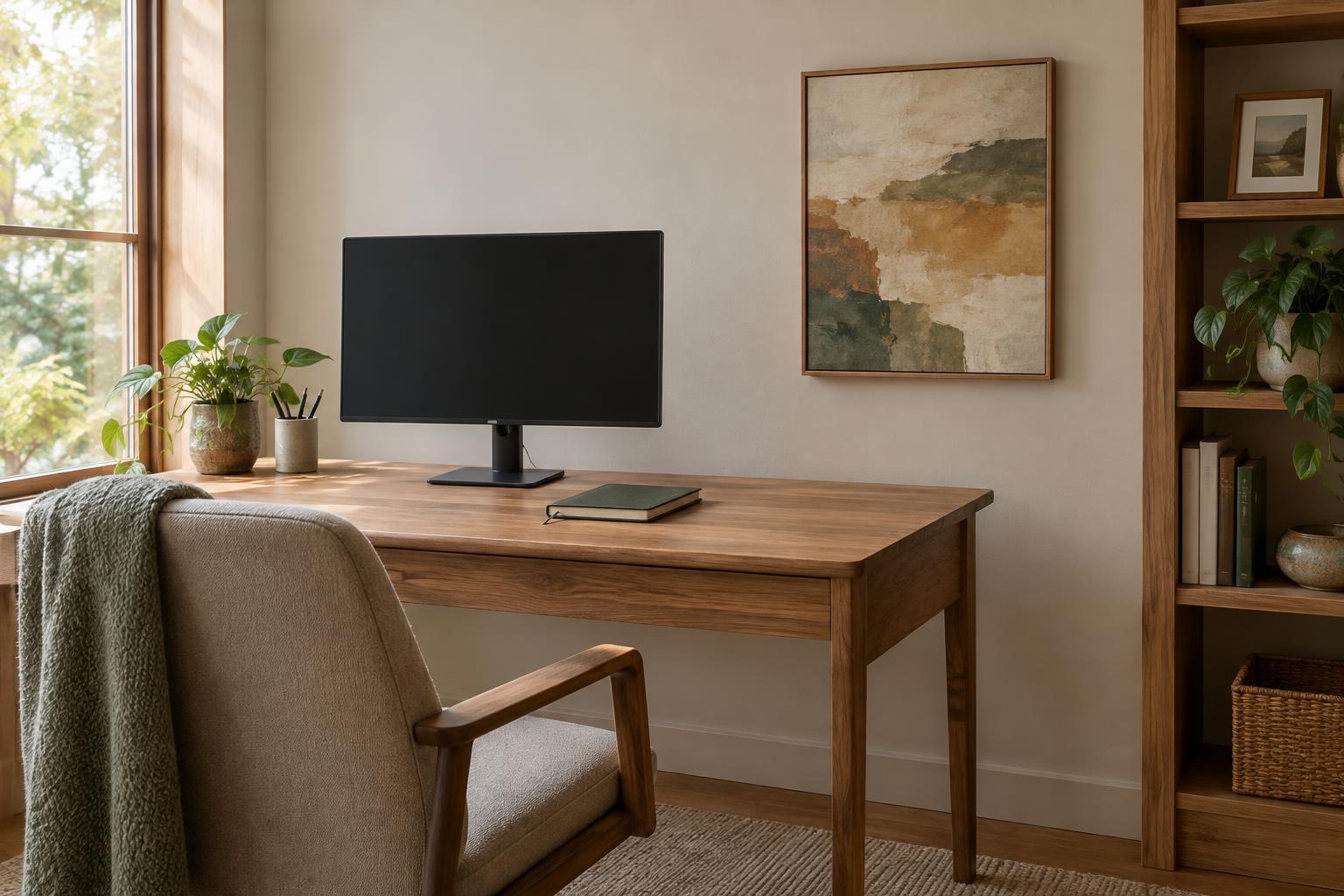
Before hanging anything, sit where you normally work and notice what falls within your direct line of sight. A piece placed immediately behind a screen or beside a document holder may draw your eye whenever you pause to think. That might be pleasant, but it can also make a visually busy desk feel busier. If you want a calmer working view, try placing art on a side wall, where you can look toward it deliberately rather than seeing it throughout every task.
Think about how you use the room at different times. Someone who spends much of the day reading on a monitor may welcome a distinct view to turn toward during breaks. Someone who moves between a desk and a worktable might prefer art along the route between them. There is no universal distraction-free position: a useful test is whether the piece feels like a welcome pause when you look up, rather than something you keep trying to ignore.
Choose a level of visual energy that suits the space
Subject matter is only one part of an artwork’s effect. Scale, contrast, pattern and color all influence how strongly it attracts attention. A small, detailed print may invite close inspection, while a large work with broad areas of color may feel restful from a distance. Neither is inherently better for an office. Consider what else is already visible: shelves, notes, cables and supplies can add plenty of visual texture before art enters the room.
If the workspace feels crowded, give a single piece some open wall around it instead of filling every gap. If the room feels bare, a grouped arrangement may bring warmth without covering the wall behind your monitor. You can also move a vivid or intricate work to a wall you see when entering or leaving the office. It remains part of the room’s character without becoming a constant backdrop to concentrated work.
Use placement and lighting to avoid competition with the screen
Light matters as much as location. Glass-fronted frames may reflect a window or lamp, and a bright reflection can be more noticeable than the artwork itself. Before committing to a hanging spot, hold the piece against the wall and check it from your seated position at the times you usually work. Shifting the frame, changing the angle of a lamp or using a less reflective presentation may help. Avoid placing delicate works where strong direct sunlight could affect their appearance over time.
Leave room for practical desk equipment. A frame above a desk should not interfere with an adjustable monitor, a lamp or items you reach for regularly. Secure wall-mounted pieces appropriately for the wall and frame, particularly above a place where you sit. If hanging art is impractical, a small framed work on a shelf can be an alternative, provided it sits steadily and does not take over valuable work surface.
Make an arrangement that feels intentional
An office gallery wall works best when it has a clear relationship to the furniture beneath it. You might align the outer edges of a group roughly with a cabinet, or arrange several pieces around one larger work. Similar spacing between frames can make different images feel connected. For a quieter result, repeat an element such as frame finish, color or subject matter. The pieces do not need to match; the aim is to make the group easy to take in at a glance.
Small spaces can benefit from restraint. One artwork above a low cabinet, a pair of prints on a side wall or a piece on a shelf may be enough. Keep frequently used notes separate from the display if possible. When reminders and art overlap, both can become harder to notice for their intended purpose.
Test the room before making the choice permanent
You do not have to decide on a finished layout in one afternoon. Prop a piece securely in a potential position, or mark its approximate outline on the wall with removable painter’s tape that is suitable for the surface. Spend a few work sessions noticing when you look at it and whether it interrupts anything. A placement that looks good from the doorway may feel different after hours at the desk.
Once the art is in place, allow yourself to revise the arrangement. A home office serves both as a working area and a room you spend time in. The most useful artwork is not necessarily the quietest piece you own; it is the one you enjoy seeing in a position that lets you return to your work when you need to.