Start with the space you want to feel
Art can make a small apartment feel personal, but filling every available patch of wall can make individual pieces harder to notice. Before hanging anything, stand in the places where you spend the most time: the sofa, dining table, desk or doorway. Notice which walls are already busy with windows, shelves, lamps and furniture. A relatively quiet stretch of wall may offer more impact than a larger area crowded with other objects.
Decide what you want the room to feel like. A single bold print can give a calm room a point of energy, while a few related works can make a corner feel collected and warm. You do not need art on every wall to achieve either effect. Empty space around a piece is part of its display: it gives your eye somewhere to rest and helps the work stand apart from its surroundings.
Choose one focal point instead of several competing displays
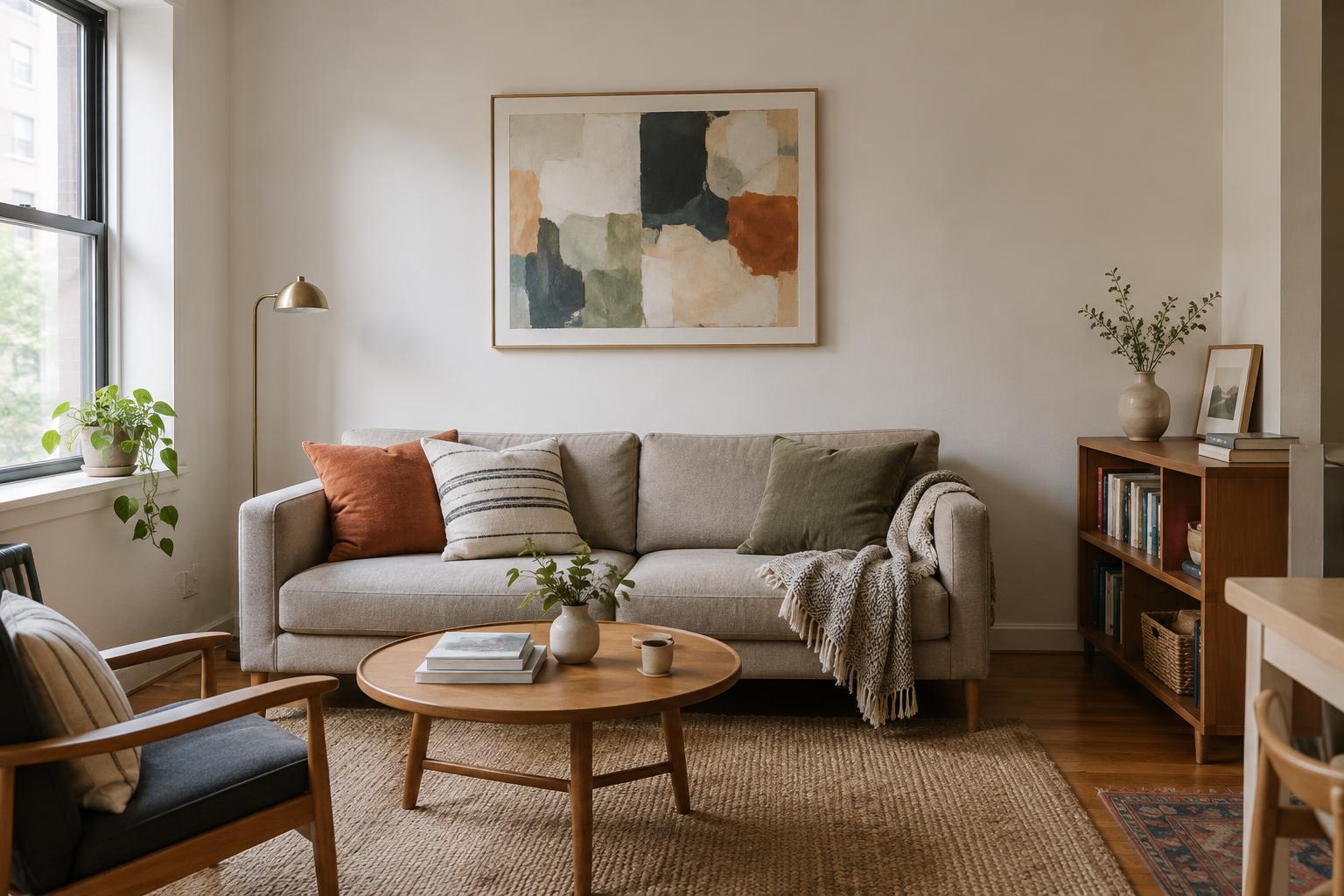
In a compact room, it often helps to give one area the leading role. This might be the wall above a sofa, a narrow space beside a reading chair or the first wall visible when you enter. Place your most engaging piece there, then let nearby objects play supporting roles. If a colorful painting is the focus, simpler frames or quieter colors elsewhere can keep the room from feeling visually crowded.
A focal point does not have to be large. A small work can draw attention when it has a little space around it or sits near a lamp that makes the area inviting. Think about what is visible in one glance. If you can see the sofa wall, a bookshelf and the entryway at the same time, three dense arrangements may compete with one another. Try a display in one location and leave the others lighter.
Use scale and spacing to make each piece count
The relationship between art and furniture matters more than a rule about frame size. A tiny picture can look stranded above a wide sofa, while a very broad arrangement may seem to press against the room’s edges. If one work feels too small for its spot, consider a pair or a compact group rather than adding pictures across the entire wall. You can also move the work to a narrower space where its scale feels more natural.
For a group of pieces, consistent spacing can help them read as one display rather than scattered decoration. Lay the arrangement out on the floor first, or use paper shapes to test it on the wall. Keep the gaps deliberate, even if the frames differ. You might align their centers, outer edges or lower edges; choosing one approach gives the group a sense of order without requiring every piece to match.
Pay attention to viewing distance, too. A detailed drawing may reward a close look near a desk or hallway, while a piece with broad shapes may be easier to enjoy from across the room. Whenever possible, place art where it is comfortable to see rather than simply where there is an empty hook.
Let shelves and furniture share the work
Walls are not the only places to display art. A framed print on a sturdy shelf, a small work on a sideboard or a piece resting on a mantel can bring art into the room without committing another wall to a full arrangement. Leaned frames are also easy to change as your tastes or furniture layout shifts. Place them where they will not be knocked over, and avoid letting them block frequently used surfaces.
A picture ledge can hold a small, edited selection, but it works best when you leave some open space rather than packing frames edge to edge. Try overlapping two works of different sizes and adding one object with a distinct shape, such as a ceramic vessel. If the shelf starts to feel crowded, remove something before adding more. The aim is to give the art a setting, not to turn every surface into storage.
Edit the display as you live with it
You do not have to display everything you own at once. Keeping a few pieces safely stored allows you to change the mood of a room without buying more or finding more wall space. A seasonal swap can be as simple as exchanging one print on a shelf or moving a small painting from the bedroom to the living area.
After arranging your art, live with it for a few days and look at the room during your usual routines. Does your eye have a clear place to land? Can you still enjoy the shapes of the furniture and the open areas of wall? If the room feels busy, try removing one piece before rearranging everything. In a small apartment, a thoughtful edit can give both the artwork and the room more presence.