Why paper warps when you attach it
Paper collage invites you to combine delicate scraps, sturdy card, printed images, and textured sheets. The challenge is that they do not all respond to adhesive in the same way. Water-based glue dampens paper fibres, which expand and then contract as they dry. If one side changes more than the other, the sheet may curl or develop ripples. Even a dry adhesive can leave a visible ridge if it is applied unevenly beneath thin paper.
No adhesive guarantees a perfectly flat result. A useful first step is to consider the thickness of each piece, how much of its surface needs to be attached, and whether its edges must stay flush. Try a small offcut of each paper with your intended adhesive before committing to the composition. A test can reveal staining, show-through, wrinkles, or a bond that is too weak for the job.
Match the adhesive to the paper
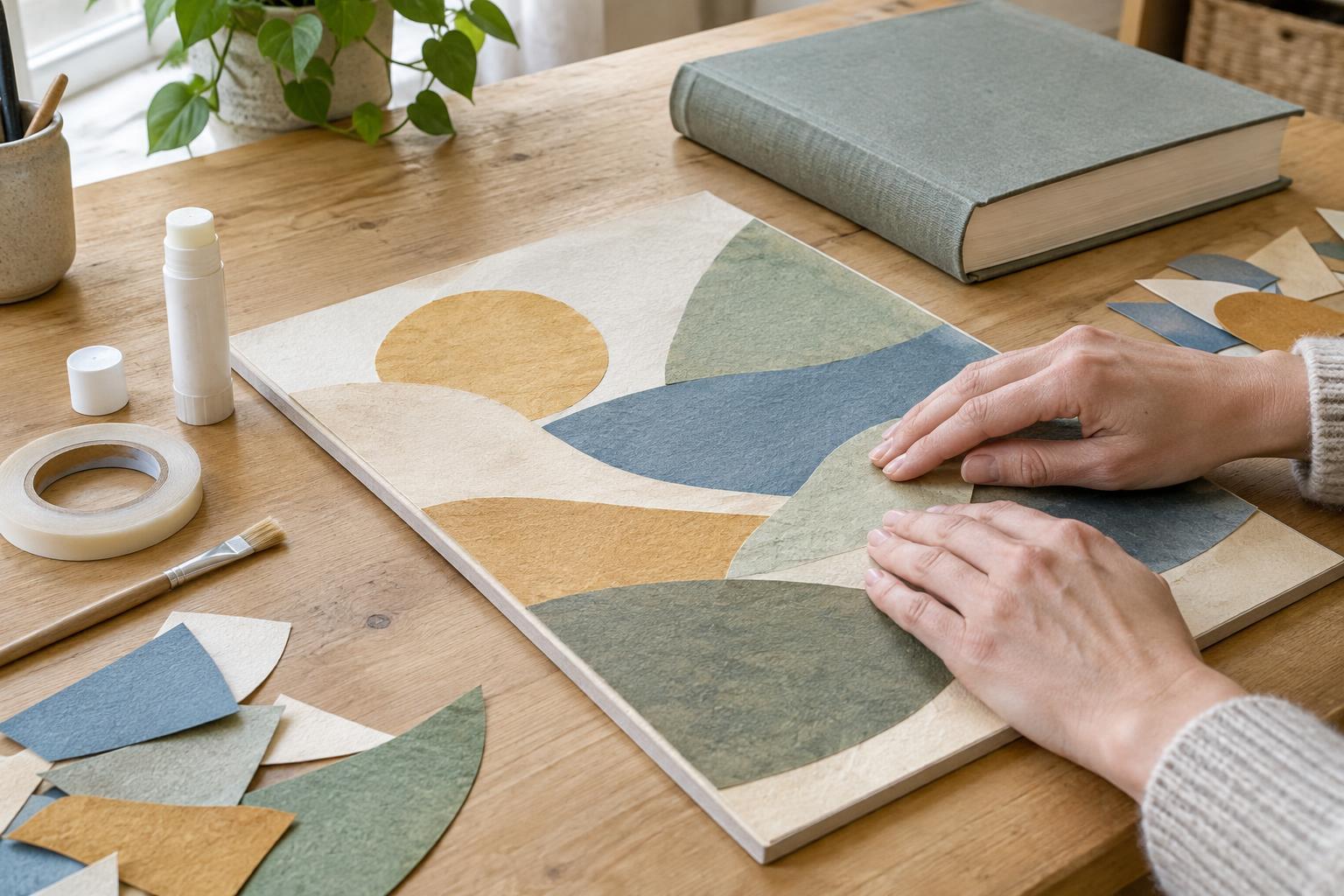
A glue stick is a convenient starting point for lightweight paper on a firm backing. It adds relatively little moisture and gives you time to position a piece. Cover the area evenly, paying attention to corners, and press it down before the glue begins to dry. Glue sticks vary in strength, so test one before relying on it for heavy or heavily textured materials.
PVA glue can make a stronger bond, but its water content calls for restraint. Spread a very thin, even coat with a brush or scrap of card rather than leaving lines or puddles. Matte acrylic medium is another option for artists who want to attach and coat paper, though it can change the surface appearance and may still cause buckling. For either wet adhesive, a sturdy backing and a small test are especially helpful. Avoid assuming that a product described as suitable for crafts will dry invisibly on translucent paper.
When tape is the better choice
Double-sided adhesive tape or adhesive sheets can attach pieces without adding water. They are useful for smooth, lightweight papers and precise shapes. Sheets offer broad, even coverage; narrow tape works well for small elements but may create raised lines beneath thin paper. Apply tape to a clean, dry surface, then lower the collage piece gradually so it does not trap air or land crooked.
Not every tape is meant to hold a finished collage together. Masking tape and decorative washi tape are handy for temporary positioning, but their grip may loosen or their edges may lift over time. If longevity matters, look for products described as acid-free or intended for paper artwork, while remembering that such labels do not promise a permanent or easily reversible bond. For a valuable or irreplaceable work, ask a qualified conservator before applying adhesive.
Build on a stable foundation
A flimsy base will show every change in its attached layers. For a collage that should remain flat, choose a backing stiffer than most of the pieces you plan to add, such as substantial drawing paper or board. Store the backing and collage papers together in the room where you will work so they begin at similar conditions. If a sheet is already curled, flatten it gently before attaching anything to it.
Plan the layout before opening the glue. Attaching one large, wet sheet to the centre of a thin backing creates more opportunity for uneven movement than securing several small, lightly glued pieces. When possible, apply adhesive across the area that needs to lie flat rather than at a few isolated spots. If the design calls for loose, lifted edges, embrace that texture deliberately instead of trying to force every layer into the same plane.
Press and dry with patience
Work on a clean, flat surface. After placing a glued piece, cover it with a clean scrap of paper and smooth gently from the centre outward with your hand or a soft tool. This helps move out air without rubbing the collage surface. Keep pressure light on fragile or printed papers, which may tear or transfer colour when damp.
Let wet adhesives dry before enclosing the work under a weight. Once the surface no longer feels tacky, place clean protective sheets above and below the collage and add a flat board with an even weight. Check that no adhesive is squeezing beyond the edges, where it could stick to the protective sheets. If ripples remain, resist adding more glue immediately: extra moisture often makes them worse. Small tests, thin applications, and patient drying will do more to keep a collage flat than a heavy coat of any single product.