Start with what you mean by “original” and “print”
An original artwork is a work made by the artist, such as a painting, drawing or collage. Its surface may show brush marks, pencil pressure or layers of material that are part of the experience of seeing it. A print, however, is not always simply a copy. In printmaking, an artist creates an image through a process such as etching, screen printing or relief printing. Each impression is an original work in that medium, though several impressions may come from the same image.
A reproduction is different: it is a printed image of an existing artwork, rather than a work produced through the artist’s printmaking process. Reproductions can still be lovely objects for a home. Before comparing prices, check which kind of work you are considering. A clear description of the medium, paper, dimensions and, where relevant, edition size tells you more than the word “print” alone.
Compare the whole cost, not just the artwork
A one-of-a-kind work often costs more than a reproduction, but there is no fixed price ladder. Size, materials, process and the artist’s pricing all affect the amount. Small drawings and studies may be more approachable than large paintings, while an editioned print made through a demanding process may cost more than a modest original. Set a comfortable spending limit before browsing, then compare works you genuinely like within it.
Leave room in that limit for making the piece ready to display. A frame, mat, mounting materials, delivery or hanging hardware can change the total noticeably. Unusual dimensions may call for custom framing; standard sizes can offer simpler options. If a work is sold unframed, ask for its exact dimensions and whether those refer to the image or the full sheet. The most satisfying choice is one you can bring home and display without an unwelcome second round of expense.
Let the room help you decide
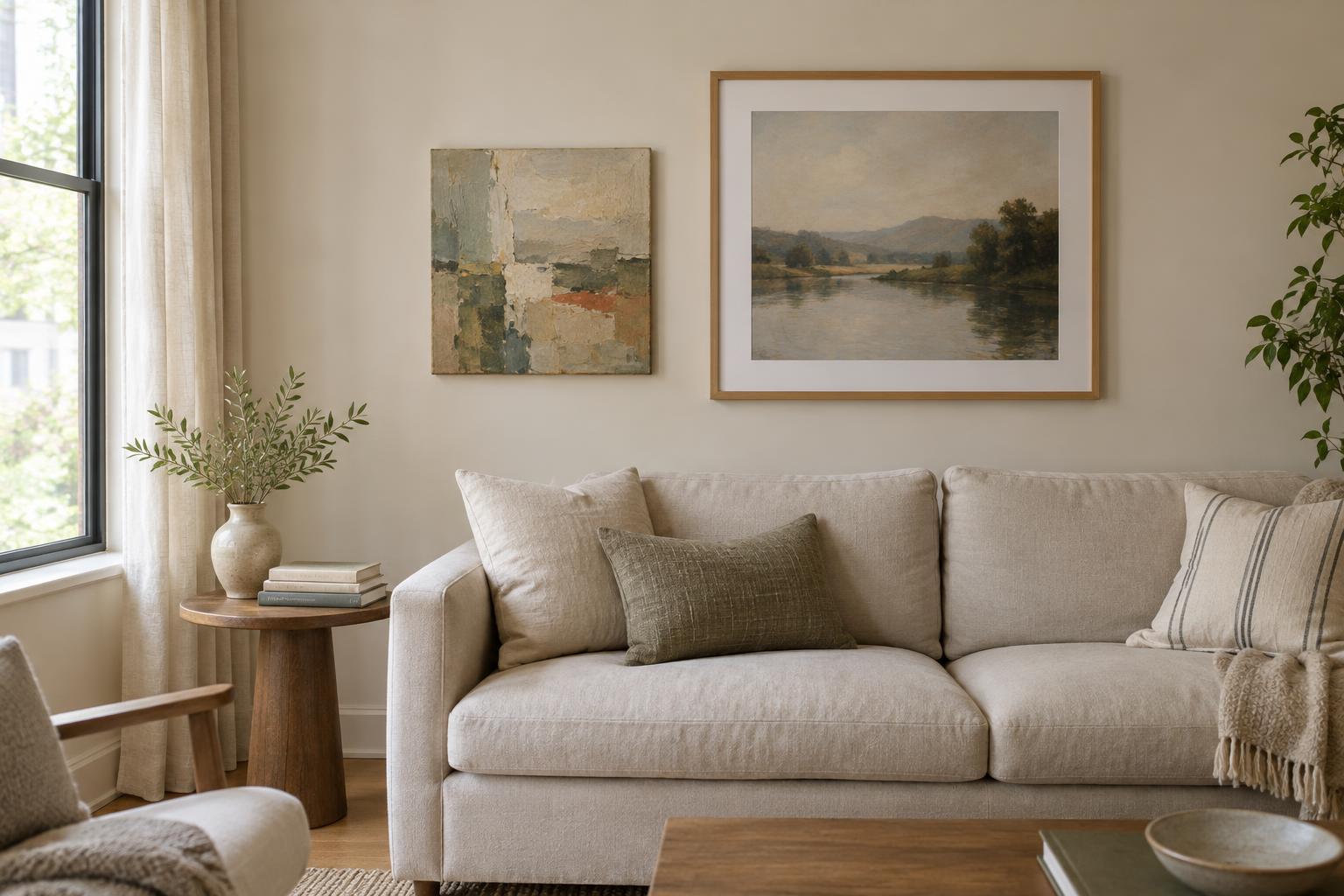
Think about where you will see the work, how close you will stand and what the space asks of it. Texture and small details can reward a close look in a reading corner or hallway. A bold print may hold its own across a living room. Neither needs to match the furniture exactly: a shared color, an echo of a shape or a deliberate contrast can be enough to make the arrangement feel considered.
Placement matters for care as well as appearance. Strong direct sunlight can fade some pigments and papers over time, while damp or frequently steamy spaces may be hard on paper-based work. If a room presents those conditions, consider a different location or a piece better suited to it. Before buying, mark the artwork’s dimensions on the wall with removable tape or paper. That simple trial can reveal whether the scale feels calm, crowded or lost.
Choose the qualities you want to live with
An original work may appeal because its particular marks and surface cannot be repeated in quite the same way. An editioned print may appeal because you enjoy the printmaking technique and can choose a size or price that fits your space. A reproduction can let you live with an image you love when the original is unavailable or beyond your budget. None of these reasons is less thoughtful than another.
Look beyond the first impression. If shopping in person, step close enough to notice the surface, then move back to see how the image reads from across a room. If shopping from photographs, check the listed dimensions and materials rather than judging scale or texture from a screen. Ask what is included with the work and what is not. You do not need to predict whether a piece will gain value; the more useful question is whether you expect to enjoy seeing it regularly.
Build a collection gradually
You do not have to settle on originals or prints as a rule for your entire home. A small original can sit beside an editioned print, a reproduction or a piece you made yourself. Mixing them can give a room variety in scale, texture and subject without asking every purchase to carry the same weight.
If you are unsure, start with one place you would like to make more inviting and choose a work for that spot. Live with it before filling the next wall. Over time, you may find that you prefer quiet drawings, vivid graphic images or a combination you could not have planned in advance. A home collection becomes more personal when each choice reflects both what you love looking at and what comfortably fits your life.