The basic difference
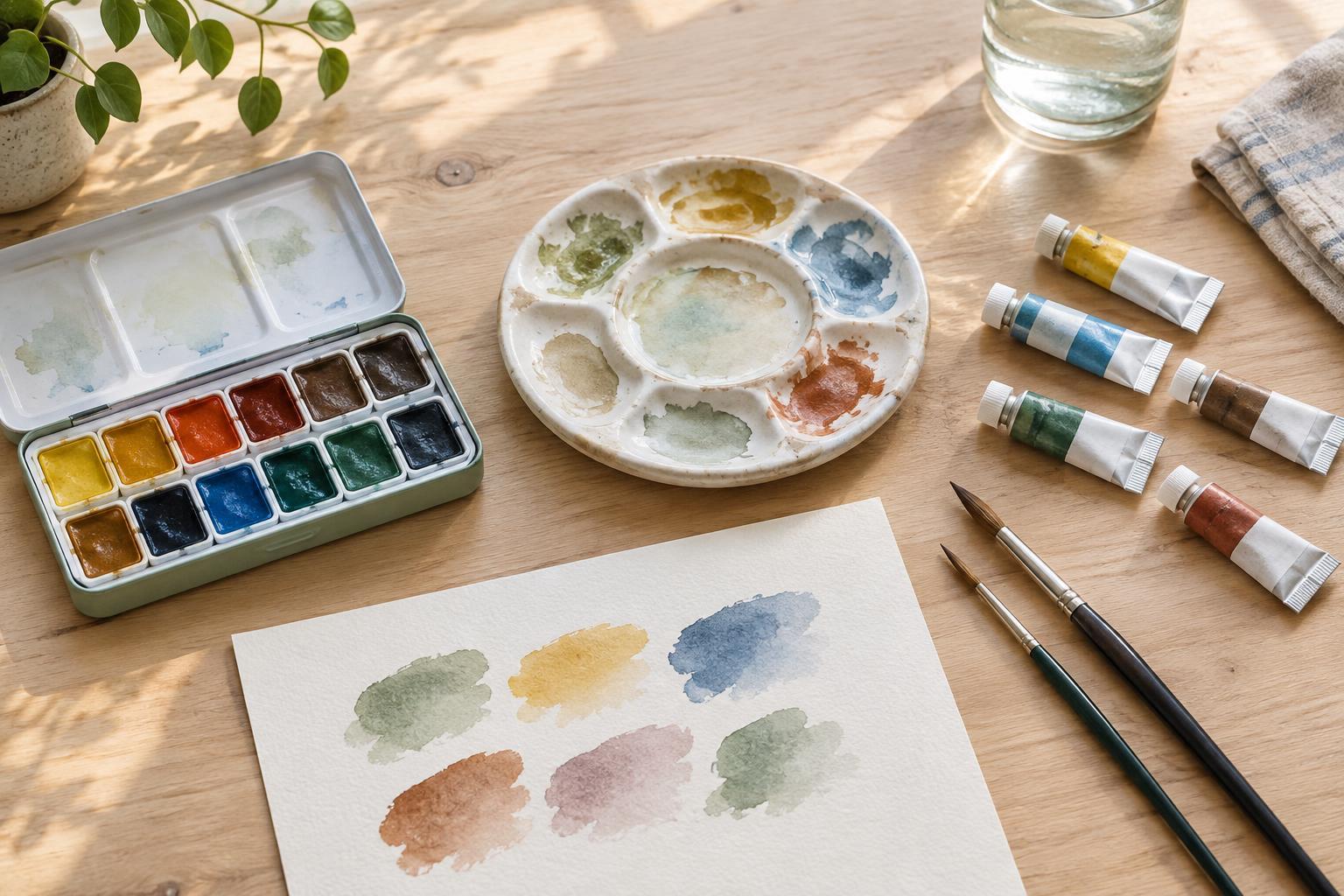
Watercolor pans are small blocks of dried paint. To use one, wet your brush, touch it to the pan, and work the surface until the color lifts. Tube watercolor has a soft, paste-like consistency. You squeeze some onto a palette, add water, and mix it to the strength you want. Both are watercolor paints, and both need water to move across the paper.
The format affects how you get paint onto your brush more than it determines what your finished painting will look like. Color strength, transparency and texture also depend on the paint itself, the amount of water you use, your brush and your paper. A pan is not automatically pale, and tube paint is not automatically bold. Either can produce a light wash or a concentrated mark.
Why pans often feel simpler at first
For a beginner who wants to sit down and paint without much preparation, pans have an immediate advantage. A compact set keeps the colors together, often with space for mixing in the lid. There is no tube to squeeze and little risk of dispensing more paint than you need. When you finish, you can let the set dry before closing it and putting it away.
Pans are also convenient for sketchbooks, small desks and painting away from home. Their main limitation is that it can take time to activate enough color for a broad, strong wash. If you are filling a large area, repeatedly working your brush over a small pan may interrupt your rhythm. A brief drop of clean water on a pan can soften its surface while you arrange your paper and brushes, though the exact time needed varies by paint.
Where tubes can make painting easier
Tubes are useful when you want to mix a generous pool of color before touching the paper. Squeeze a modest amount onto a palette, add water gradually, and you can prepare enough paint for a larger shape or a series of related washes. That consistency can be helpful if you are learning to keep a background or sky relatively even: you are less likely to run out of your mixture halfway through.
The trade-off is managing how much you dispense. A small squeeze goes further than it may appear to, especially for a quick study. Fresh paint can also spread across a palette if you do not give each color its own space. Many tube watercolors can be left to dry in a palette and reactivated later, so leftover paint need not be discarded. Check how a particular paint behaves before making a large batch, as some colors may rewet more readily than others.
Cost, cleanup and mixing
Neither format is always the cheaper choice. A pan set may be an accessible way to try a selection of colors, while tubes can be practical if you regularly use larger amounts of a few favorites. Prices and quantities vary widely. Rather than comparing the number of colors alone, consider whether you will use them: a small set with a yellow, red and blue, plus a few colors you enjoy, gives you plenty of room to practice mixing.
Both formats involve similar cleanup. Rinse your brush between colors, change your water when it becomes murky, and wipe the mixing area if you want a clear starting point next time. In a pan set, a dirty brush can carry one color into another; a gentle wipe with a clean, damp brush can tidy the surface. With tubes, keep the nozzle and cap reasonably clean so the tube closes without a buildup of dried paint.
A practical choice for your first setup
Choose pans if you mainly plan to make small paintings, paint in a sketchbook, or keep your supplies easy to carry and store. Choose tubes if you expect to paint larger sheets or want to prepare substantial mixtures before you begin. If you are unsure, a small pan set is a straightforward starting point. You can add a tube of a color you use frequently later without replacing everything.
Whichever format you choose, give yourself a simple test: paint one light wash, one darker shape and one mixture made from two colors. Notice how much water you need and how quickly you can prepare enough paint. These observations will tell you more about your preferred way of working than the packaging will. The easier option is the one that helps you spend less time managing supplies and more time looking, experimenting and painting.