What gesso adds to a surface
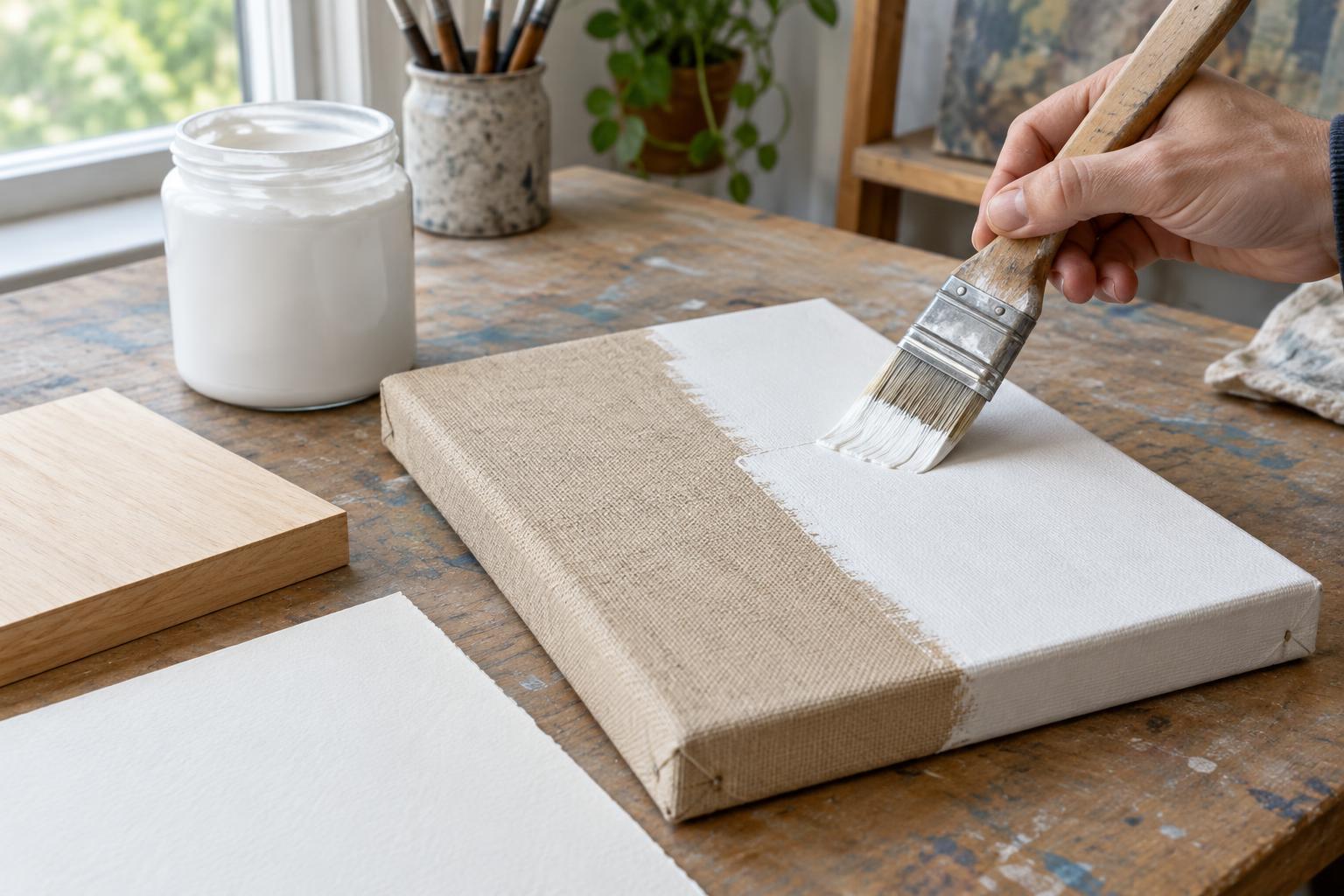
Gesso is a preparatory coating that sits between a painting support and the paint. Most products sold as gesso for contemporary painting are acrylic-based mixtures containing a binder and fine solid particles. Once dry, they create a surface with some tooth: a slight texture that helps paint grip. They can also make an uneven or highly absorbent support behave more consistently from one area to another.
White gesso provides a bright starting point that can make transparent colors appear more luminous. Black and clear versions offer different starting surfaces, though clear gesso may still change a material’s appearance or texture. Gesso is not a repair for a loose canvas, a crumbling board, or a greasy surface. For it to work well, the support beneath it needs to be sound.
Priming is often worth considering because it changes how painting feels, not simply because it follows a rule. On a very absorbent surface, a brushstroke may sink in and look dull. On a prepared one, paint may move more freely and retain a more even appearance.
Priming and sizing are not quite the same
Artists sometimes use “priming” to describe all preparation before painting, but sizing and priming serve different purposes. A size is a layer used to reduce the support’s absorbency or separate it from later layers. A primer provides the working surface for the paint. Some products and preparation methods perform more than one function, so the distinction is useful without being absolute.
The difference matters especially with oil paint. Oil should not be applied directly to ordinary raw canvas: the oil can soak into the fibers, which may weaken them over time. Use a canvas or panel prepared for oil painting, and check the primer’s label for compatibility. Many acrylic gessos can be used beneath oil paint when applied as directed, but not every surface preparation is interchangeable.
Traditional gesso, made with a glue binder and chalk, differs from the flexible acrylic product commonly sold under the same name. It is generally associated with rigid supports rather than flexible stretched canvas. If you are following a technique that specifies traditional gesso, substituting acrylic gesso may produce a different surface.
When canvas benefits from gesso
A pre-primed canvas is usually ready to paint on once it is clean and dry. You can add another coat of compatible gesso if you want a smoother, brighter, or less absorbent surface, but it is not automatically necessary. A quick test brushstroke in an inconspicuous area can tell you more than the canvas’s appearance alone.
Raw canvas presents a different choice. For acrylic painting, some artists deliberately leave it unprimed to let diluted color soak into the fabric. That effect can be appealing, but it offers less control over absorption and may make later layers behave differently. If you want more predictable brushwork and a clearer separation between fabric and paint, prepare the canvas with products suitable for that support and medium.
For oil painting, do not treat raw canvas as ready to use. Choose an appropriately prepared canvas or follow a compatible sizing and priming method. Preparation is also a chance to decide how much of the woven texture you want to keep: thin, even coats preserve more of it, while additional coats can reduce its prominence.
What about wood, paper, and other supports?
Wood panels can make sturdy painting supports, but bare wood may absorb moisture and paint unevenly. Depending on the panel and the paint you plan to use, it may need sealing before priming. Check the preparation guidance for the specific panel and primer; coating the edges and back may also help limit uneven moisture movement. Gesso adds a paintable face, but it cannot prevent every panel from warping.
Paper is not automatically a candidate for gesso. Watercolor paper is designed to work with water-based washes as supplied, and many papers intended for acrylic painting can be used without further preparation. Applying gesso to paper changes its absorbency and feel, which may be exactly what you want for a particular effect. Heavy applications, however, can cause lighter sheets to curl. For oil paint, choose paper specifically prepared for oil painting or use a preparation method intended for that purpose.
Very smooth surfaces, such as some metals or plastics, may need cleaning, abrasion, or a specialized primer. Ordinary gesso alone may not adhere reliably. When in doubt, test the full combination of support, preparation, and paint on a small sample.
A simple way to decide and apply it
Begin with three questions: What is the support, what paint will you use, and what surface feel do you want? If the support is already prepared for your paint and you like how it handles, you may not need to add anything. If paint sinks in unpredictably, the support needs protection, or you want a different texture or ground color, priming may help.
Before applying gesso, remove dust and make sure the support is stable and dry. Follow the product’s instructions for compatible surfaces, application, and drying. Several thin, even coats are often easier to control than one heavy coat. Let each coat dry as directed before adding another. If you sand between coats for a smoother finish, keep dust out of your work area and avoid breathing it in.
Finally, try a small paint test after the preparation has dried. The best ground is not necessarily the whitest or smoothest one; it is the one that supports the marks you want to make.