Start with the shelf and the view
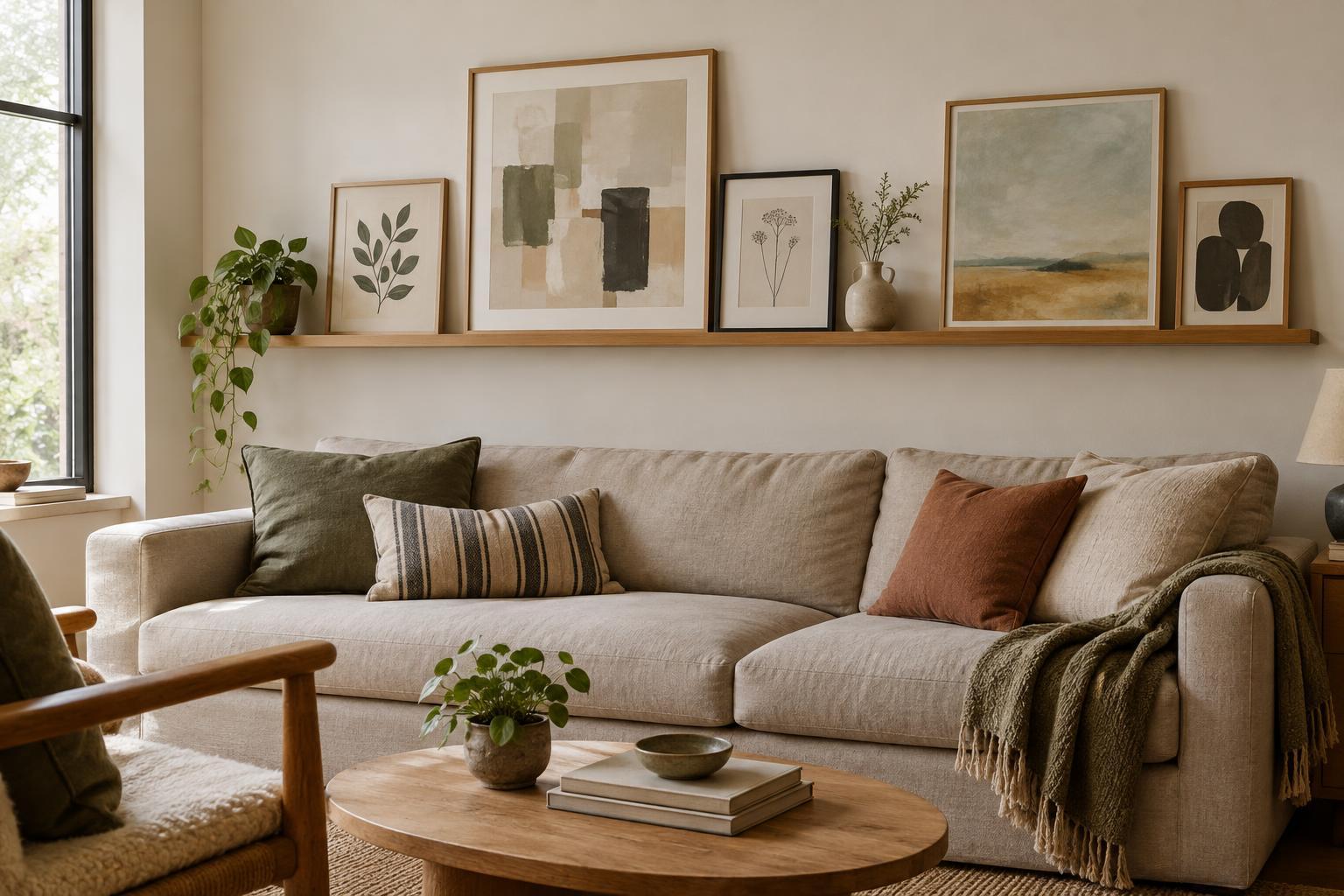
Before choosing artwork, look at the shelf itself. A narrow picture ledge gives frames a defined place to rest, while a deeper bookshelf may also hold ceramics, books or small objects. Check how much usable depth you have and whether frames can stand securely without projecting into a walkway. If the shelf needs to be installed, follow its mounting instructions and use fixings suitable for the wall and the weight you plan to display.
Stand where you will usually see the arrangement: from the sofa, across a hallway or while sitting at a desk. This helps you judge whether the art will be easy to enjoy at that distance. A small print can invite a closer look beside a reading chair, but it may disappear on a long ledge viewed from across the room. Think of the display as part of the space rather than an isolated collection of frames.
Choose a loose visual connection
Artwork does not have to match to belong together. You might start with a shared color, a similar subject or a repeated shape. A blue drawing, a print with a small blue detail and a photograph in a cool-toned frame can feel connected without looking identical. If you prefer variety, choose one piece as the anchor and let the others relate to it in quieter ways.
Frames contribute to the composition as much as the images do. Mixing wood, metal and painted finishes can add interest, especially when one finish appears more than once. Alternatively, similar frames can give very different works a common rhythm. Gather possible pieces on the floor before placing them on the ledge. This quick trial makes it easier to notice whether one dark frame or vivid image draws more attention than you intended.
Build balance without making everything symmetrical
Place the largest or most visually prominent work first, slightly off center if you want a relaxed arrangement. Add smaller pieces around it, paying attention to the outline formed by their upper edges. A display can feel balanced even when its two sides are different: one tall frame on the left might be offset by two shorter frames and a small object on the right. Step back between adjustments rather than judging each addition from directly in front of the shelf.
Leave some open space so individual works remain visible. On a long ledge, several small groups may be easier to read than one continuous row. On a short shelf, two or three pieces can be enough. There is no need to fill every available inch; the empty area helps show where one shape ends and another begins. If an arrangement feels crowded, try removing a piece before searching for a different one.
Layer frames with care
Layering gives a shelf display depth. Set a larger frame at the back and place a smaller one partly in front, allowing enough of both artworks to remain visible. Varying frame heights can create a gentle rise and fall across the shelf. You can also place a small object beside the frames to break up the rectangles, provided it has a stable base and does not make the arrangement feel cramped.
Check that each frame rests firmly against the wall or shelf back and cannot easily slide forward. Avoid precarious overlaps, particularly on shelves that may be bumped by doors, pets or people passing by. A suitable ledge lip or discreet frame support can help keep pieces in place. For heavy, fragile or valuable work, consider a more secure display method rather than relying on a narrow shelf.
Let the display change with the room
Notice how daylight and room lighting affect the artwork at different times of day. Glare on glass can obscure an image, while prolonged direct sunlight may fade some materials. Moving a piece a short distance, changing its angle or choosing a less exposed spot may improve both visibility and care. Keep works on paper and other delicate materials away from damp areas or places where they might be splashed.
One pleasure of a picture ledge is that the arrangement can evolve without becoming a new decorating project. Swap a print with one from another room, bring a small sketch forward or remove an object to give the art more breathing space. Change one or two elements at a time and see what feels better. A successful shelf display need not look permanent; it simply makes the work enjoyable to live with today.