Start with the mark and the paper
Choosing an eraser is less about finding the strongest one than matching its behavior to the job. A faint construction line on smooth drawing paper calls for a different approach from a dark graphite patch on textured paper. Consider what made the mark, how much of it you want to remove, and whether the paper can tolerate rubbing. An eraser can lift drawing material, but repeated pressure may also flatten texture, leave a shiny patch, or disturb the paper surface.
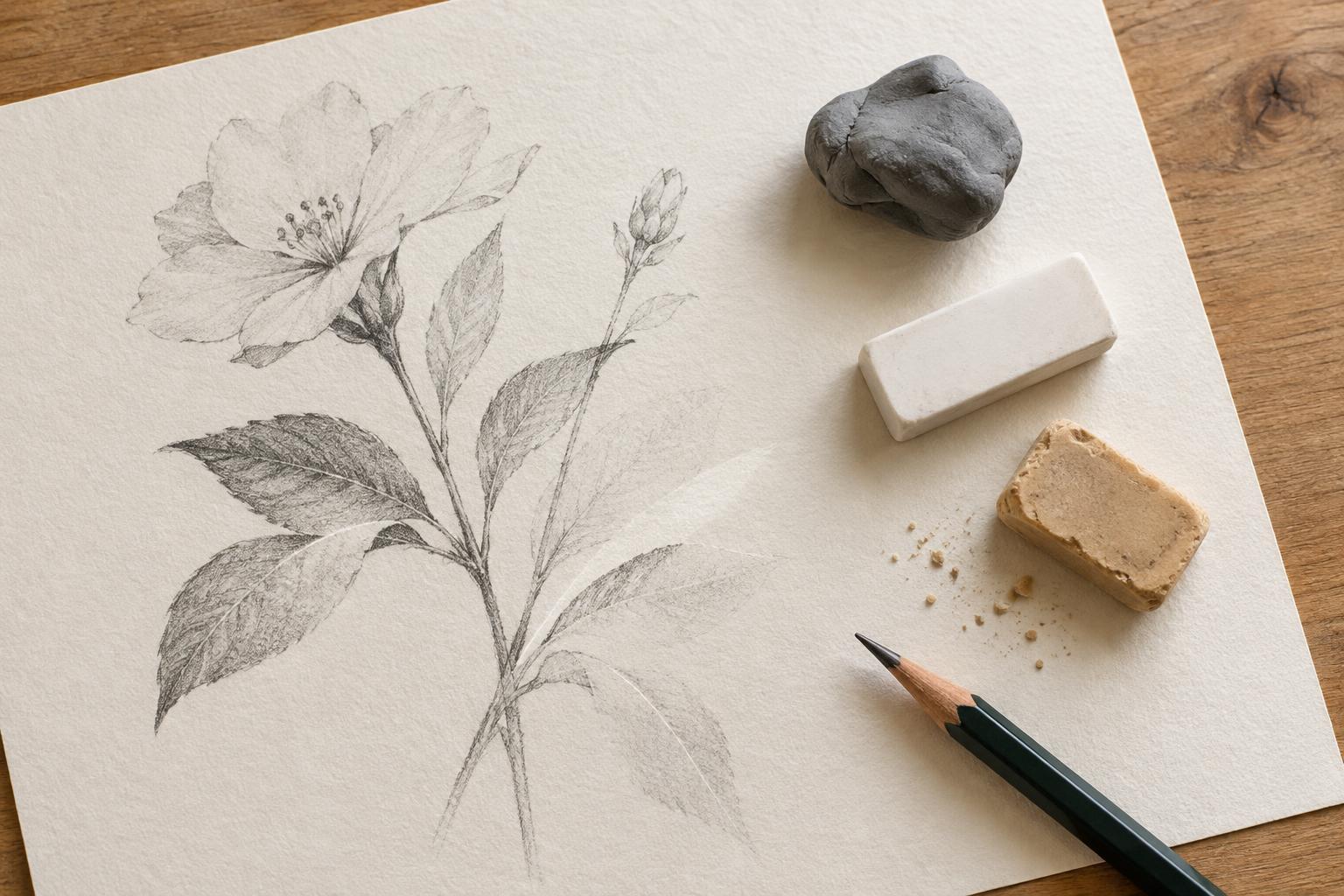
Kneaded erasers are soft and moldable, vinyl erasers are firm and precise, and gum erasers are soft blocks that shed crumbs as they work. It is useful to keep more than one nearby: you can lighten a mark first and remove what remains only if needed. Before working on an important drawing, test your choice on a spare piece of the same paper with the same pencil or charcoal.
Use a kneaded eraser to lighten and shape
A kneaded eraser lifts particles when pressed against a drawing. Rather than scrubbing, dab it over an area to reduce the darkness of graphite or charcoal in stages. This makes it useful for soft highlights, corrections within shading, and underdrawings that should remain barely visible beneath later work. You can pinch it into a point for a small accent or flatten it to cover a wider area.
Fold and stretch the eraser between uses to expose a cleaner surface. A dirty spot can deposit material back onto the page, especially when you are working with dark marks. Kneaded erasers are less effective when you need to remove a firm line completely, and a pointed tip can lose its shape as you use it. Work gently on loose charcoal or pastel: a dragging motion can smear the surrounding marks. When the eraser stays dirty or becomes stiff and difficult to shape, replace it.
Choose vinyl for clean edges and stubborn pencil lines
A vinyl eraser is a good choice when you want a more complete correction, particularly on graphite lines. Its firm edge can remove a narrow mark beside a shape or tidy an outline that has grown too heavy. Some vinyl erasers can be cut into a fresh edge for detailed work, although a blunt corner is often safer on fragile paper. Use short, light strokes and check your progress rather than rubbing continuously.
Vinyl erasers may also remove some colored-pencil marks, but the result depends on the pencil and paper. Color can remain embedded in the paper, so do not assume a bright area can be restored to untouched white. Too much pressure can polish smooth paper or damage a textured surface, making that spot behave differently when you draw over it. Clear away eraser debris gently before adding new marks; debris left under your hand can drag across the drawing.
Reach for gum when you want a softer rubbing action
A gum eraser is a crumbly, relatively gentle option for lifting light graphite marks over a broader area. As it wears, the eraser breaks into small pieces that carry away some of the drawing material. It can be handy for reducing a cluster of planning lines when pinpoint accuracy is not essential. Use light strokes and let the eraser do the work rather than pressing down to speed things up.
The crumbs are also its main drawback. They can collect among textured marks or across a large sheet, and rubbing them with your palm may transfer graphite. Tip the paper to let loose pieces fall away, or use a soft, clean brush. A gum eraser is not usually the best tool for crisp highlights or a single line close to finished detail; a shaped kneaded eraser or the edge of a vinyl eraser offers more control.
Make erasing part of the drawing process
For a shaded graphite drawing, try lifting the tone with a kneaded eraser before reaching for vinyl to remove a remaining line. For a lightly sketched layout, a gum eraser can soften multiple guide marks, while vinyl can handle individual lines that still stand out. If you are working on thin or heavily worked paper, begin with the least rubbing possible and stop when the surface starts to change. A faint mark is often preferable to a damaged patch.
No eraser reliably returns every medium to a blank page. Ink, deeply pressed pencil grooves, and some colored-pencil or pastel pigments may remain visible even after the surface color is lifted. Keeping your erasers clean, working in small steps, and testing unfamiliar combinations will help you make corrections without treating the paper as disposable. Sometimes the best use of an eraser is simply to make a mark quiet enough for the rest of the drawing to carry on.