Start with the display you already have
Rotating artwork is easier when you treat each display spot as a reusable home rather than planning a new arrangement from scratch. Walk through your rooms and notice which pieces hang from a single hook, which sit on furniture and which share a wall with other works. A framed print above a desk might be simple to exchange; a tightly arranged gallery wall may need more planning. Choose one or two easy spots for your first rotation.
Before taking anything down, photograph the wall and note the frame dimensions and hanging points. Two frames that look alike from the front may have their wires or hooks at different heights. If you want a replacement to sit in exactly the same place, matching the outside frame size and the position of its hanging hardware matters more than matching the size of the artwork inside.
Use frames and mats as a flexible system
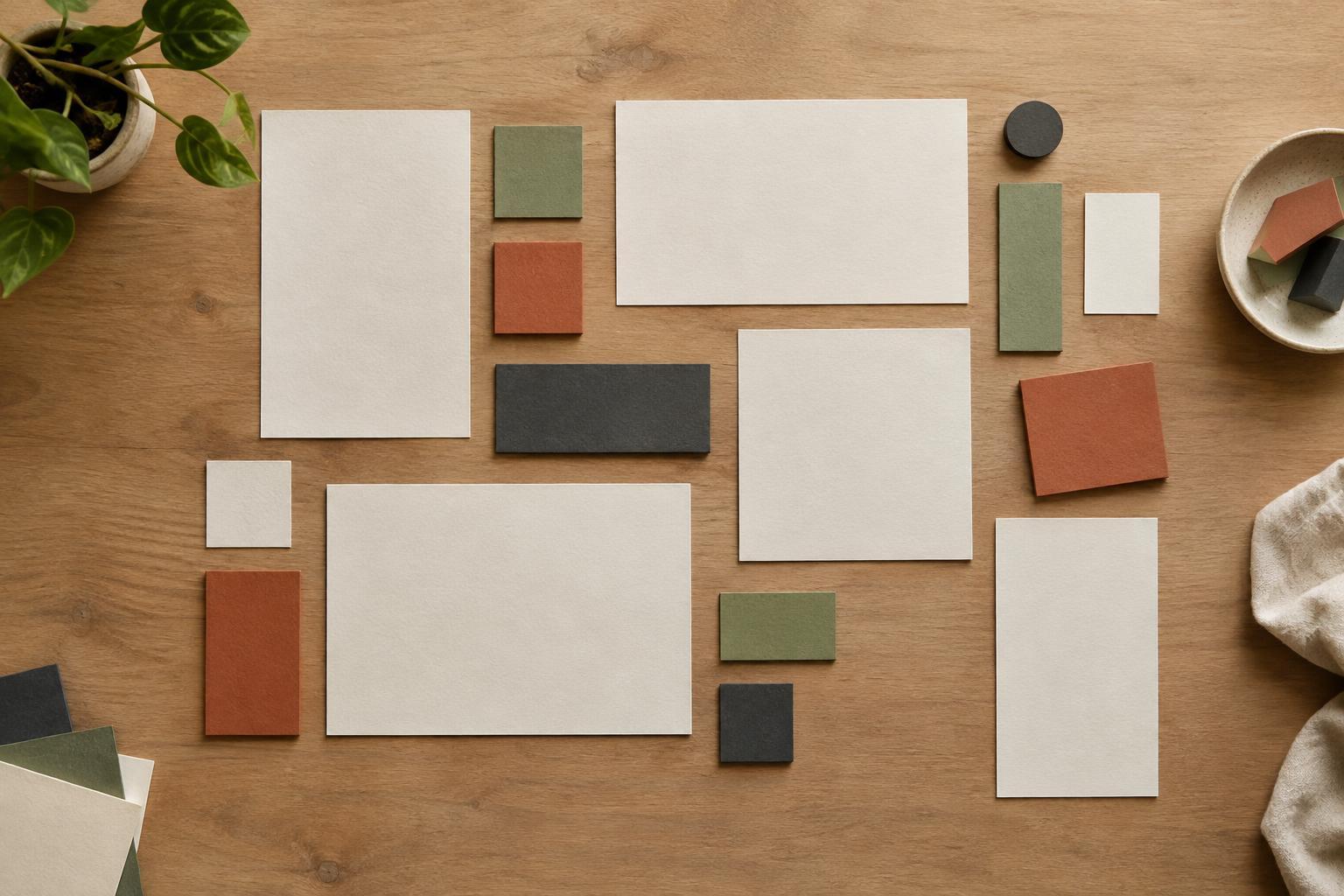
A small set of frames in consistent sizes lets you exchange art without moving wall hooks. Instead of buying a new frame for every print or drawing, keep several pieces that fit the same frame or mat opening. A mat can give a smaller work room to breathe inside a larger frame, while allowing the frame itself to stay in its usual spot. Measure the work, the mat opening and the frame before making a swap; nominal sizes do not always tell you how much of an image will remain visible.
For works on paper, choose a frame that opens without forcing or bending the contents. Handle the artwork with clean, dry hands and avoid placing tape directly on its surface. If a piece is fragile, unusually valuable or difficult to remove from its current mount, leave it as it is and rotate another work instead. The goal is a display routine you can enjoy, not a risky project each time you want a change.
Create places where art can move freely
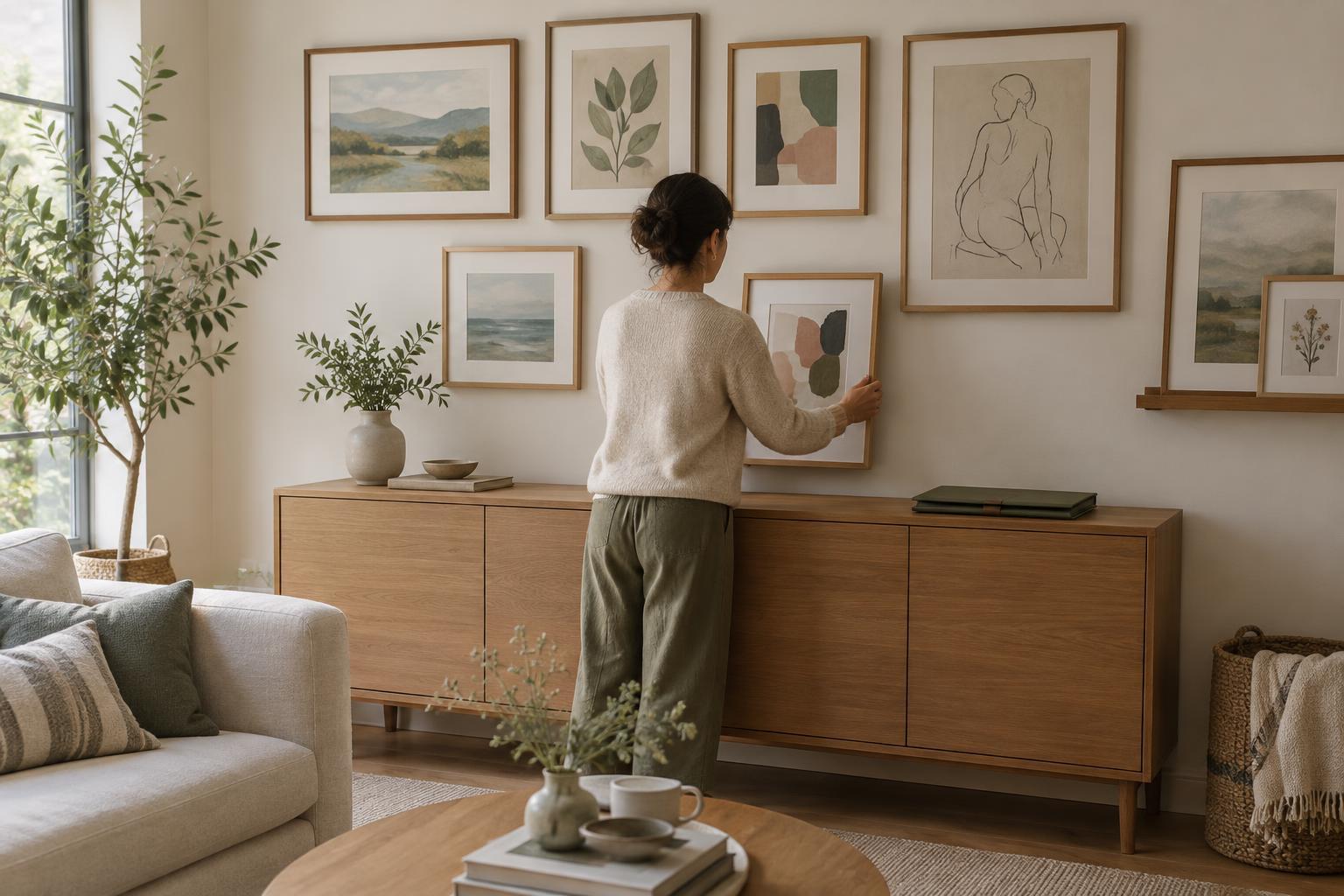
Not every artwork needs to hang on a hook. A picture ledge can hold several framed pieces while letting you rearrange their order and overlap without adding holes for each change. You can also lean a suitably sized frame on a sturdy shelf, mantel or sideboard, keeping it away from edges where it could be knocked over. If children or pets can reach the display, favor secure placement over a casual leaning arrangement.
A corkboard or rail can serve as a changing space for postcards, sketches and inexpensive prints. Use clips suited to the material, and place a protective sheet behind delicate paper if the display surface might mark it. These informal spots are useful for works you want to see for a few weeks before deciding whether they belong in a frame. They also leave the more permanent parts of a room undisturbed.
Refresh a gallery wall one piece at a time
A gallery wall can change noticeably even if its overall layout stays fixed. Keep the outer frames in place and exchange only their contents, or replace one frame with another of the same size and hanging configuration. Begin with the piece that draws the eye first, then see whether nearby colors, subjects or shapes still feel balanced. A single new image can shift the mood of the whole group.
You do not need every work to match. Try repeating one visual element, such as a warm color, a broad mat or a simple line, across a few pieces. Varying subject matter within that loose connection can make the wall feel lively rather than rigid. Step back and look from the places where you usually sit or enter the room; an arrangement that works up close may feel crowded from across the space.
Make the next rotation easy
Give off-display artwork a clear storage place. Keep flat works in protective folders or sleeves appropriate to their size, and store framed pieces upright with padding between them so surfaces do not rub. Avoid stacking weight on top of unframed paper. A simple note on the storage container—what is inside and which frame it fits—can save time when you next want a change.
As you rotate, consider where each work will spend its time. Strong direct sunlight may fade some materials, while damp or steamy areas can be hard on paper and frames. Moving a piece away from those conditions may be more useful than changing it on a schedule. Rotate when you feel like looking at something different: an easy exchange of one or two works is enough to make a familiar room feel newly noticed.