What makes a brushstroke look dry?
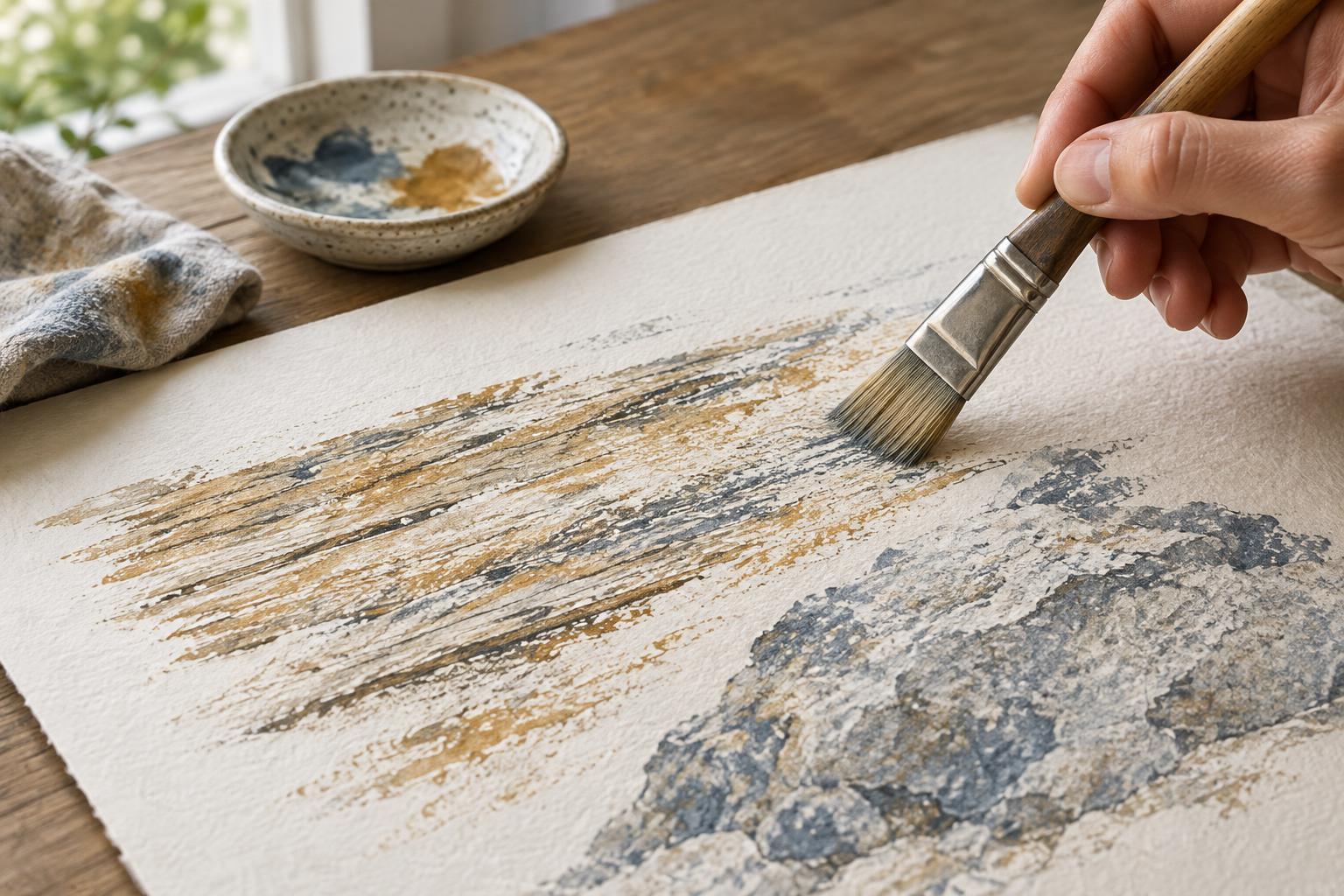
Dry-brush painting uses a brush carrying little paint and, usually, little added water. Instead of flowing into a smooth, continuous mark, the paint catches on parts of the surface and leaves small gaps. Those gaps let the paper, canvas or earlier paint layer show through. A single stroke can suggest the unevenness of bark, stone, worn plaster or a patch of grass.
“Dry” describes how the brush behaves, not a rule that every trace of moisture must be removed. Watercolor needs enough water to move from brush to paper; acrylic needs enough paint to remain workable. The aim is a controlled, broken mark rather than a brush so empty that it scratches without leaving color.
Choose a surface and prepare the brush
Surface texture plays a large part in the result. Rough or cold-pressed watercolor paper has raised areas that can catch pigment while lower areas remain lighter. Textured canvas can create a similar broken edge with acrylic paint. Smooth paper or a slick painted surface will produce fewer gaps, though you can still make short, irregular strokes there. Test your materials on a spare corner or scrap before working on a finished piece.
A flat or filbert brush is useful for broad scuffs, while a small round brush can make narrow, broken lines. Stiff bristles tend to leave distinct marks; softer bristles can give a gentler effect. Neither is automatically better. Avoid grinding a delicate brush against a rough surface, and use an older or sturdier brush if you plan to work with firm pressure.
Load the brush lightly, then wipe or dab it on a cloth or scrap paper. Try a stroke on your test surface. If it deposits a solid stripe, remove a little more paint or reduce pressure. If it leaves almost nothing, pick up a small amount of paint. Adjusting the load is usually easier than trying to correct a heavy mark after it lands.
Build texture with pressure and direction
Begin with a light touch and pull the brush across the surface rather than pressing it into every recess. A broad stroke can create a scattered patch of color; the edge of a flat brush can make finer streaks. Change direction to match what you are painting. Horizontal marks might suggest weathered boards, while short upward flicks can suggest tufts of grass.
Keep the marks varied. Repeating the same stroke at equal intervals can look like a pattern rather than a natural texture. Leave some areas quiet, cluster others, and occasionally change the length or angle of a stroke. Step back between passes: broken marks often read more clearly from a little distance than they do when you examine each gap up close.
For a simple exercise, paint or choose a plain mid-tone background and let it dry. With a lightly loaded brush, add a lighter color in a few uneven passes. Add a darker color sparingly where you want deeper cracks or shadows. Let each layer dry before judging whether it needs more. The visible background helps tie separate marks into one surface.
Adapt the method to watercolor or acrylic
With watercolor, the paper often provides the lightest part of the texture. Use a brush that is damp enough to carry pigment but not so wet that the stroke spreads into an even wash. Work gently over dry paper, especially if you want the raised texture to catch the color. Repeated scrubbing can disturb earlier layers or roughen the paper, so a few considered passes are often more effective than many corrections.
With acrylic, wait until an underlying layer is dry if you want its color to remain distinct. A small amount of paint on a relatively dry brush can skim across canvas texture or a painted surface. Acrylic may dry on the bristles as you work; rinse the brush before the paint hardens, dry it again, and reload lightly. If a mark becomes too dense, let it dry before deciding whether to soften it with another layer.
Know when to stop
Dry brushing is most useful where texture adds information. A few broken strokes along the edge of a stone may suggest its roughness more convincingly than covering the whole stone with marks. Smooth areas nearby give the eye a place to rest and make the textured areas stand out.
If the effect looks dusty or disconnected, check whether the colors relate to the rest of the painting and whether the strokes follow the form you want to show. You can also try a different brush size or surface instead of simply adding more paint. The strength of dry brushing lies in what it leaves visible: earlier layers, small gaps and the character of the surface itself.