Start with the sofa, not the empty wall
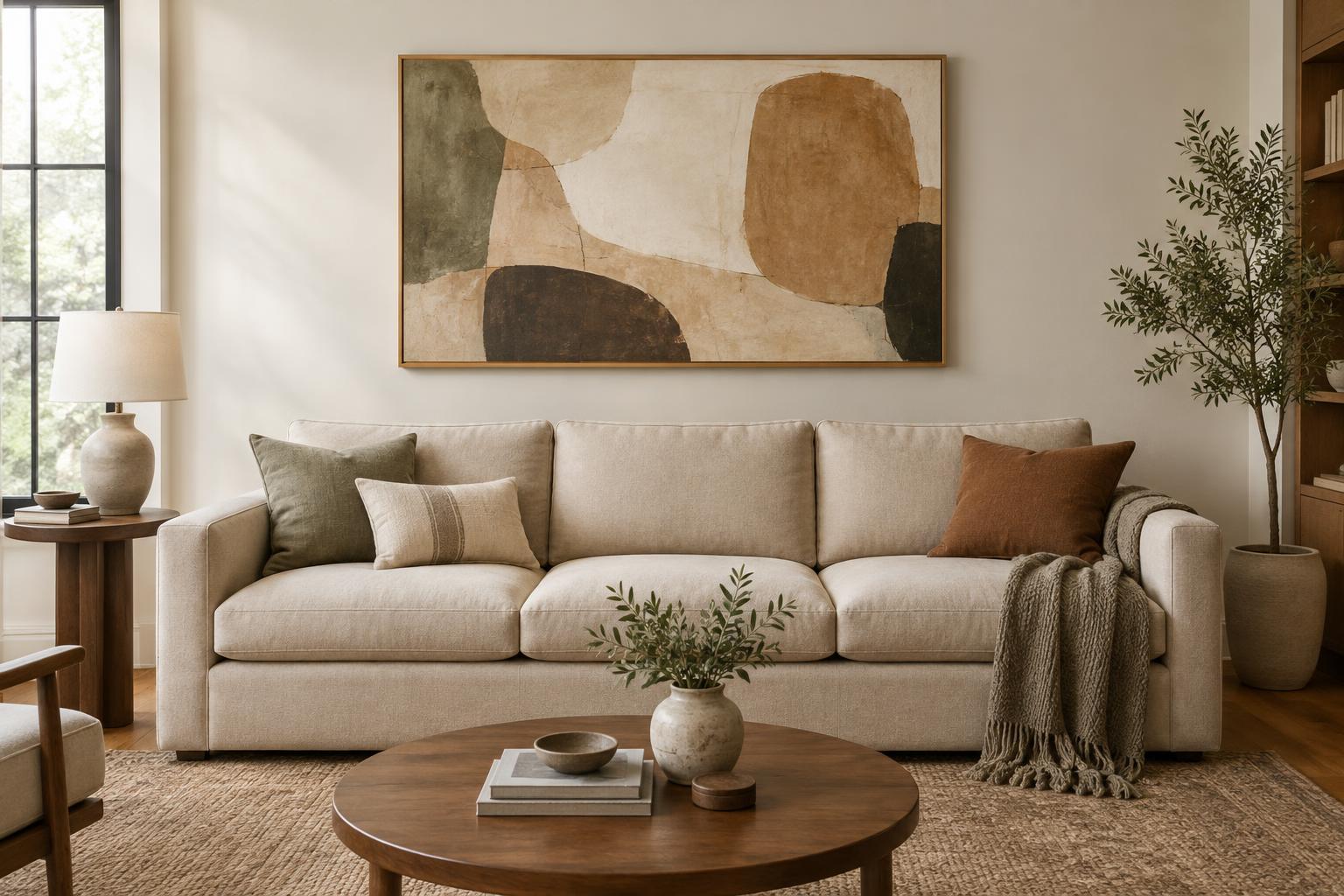
A broad wall can make a modest picture look smaller than it really is. When artwork hangs above a sofa, the sofa is usually the more useful reference point: the two should read as a connected arrangement, even if the wall extends far beyond the furniture. Measure the sofa’s width, including its arms, before deciding what to hang.
As a starting point, try artwork that spans roughly two-thirds to three-quarters of the sofa’s width. This is a guide, not a requirement. A bold piece with strong color or a substantial frame may feel large enough at a narrower width, while a quiet drawing with a generous pale border may need more space to make an impact. Step back and consider the artwork’s visible presence, not just the dimensions on its label.
Consider height as well as width
The right width will not help if the artwork seems to float too far above the sofa. A gap of about 6 to 10 inches (15 to 25 centimeters) between the top of the sofa and the bottom of the frame is a useful place to begin. You can adjust it for a high sofa back, tall cushions or the proportions of the room. The aim is to leave breathing room while keeping the picture visually tied to the seating area.
Look at the artwork’s shape, too. A wide, shallow piece can echo a long sofa, but it may leave a tall wall feeling empty. A taller work can give the arrangement more presence, provided it does not crowd a low ceiling or nearby shelf. When judging height, include the frame and mat. They change both the overall dimensions and the amount of image the viewer sees.
Treat several pieces as one arrangement
If one large work is not available or does not suit the room, two or three smaller pieces can occupy the same visual space. Measure the full arrangement from its left edge to its right edge, including the gaps between frames, and compare that span with the sofa’s width. Consistent spacing helps separate pieces feel intentional; close gaps generally make a group read more like a single composition.
For a varied gallery arrangement, choose an outer boundary before hanging anything. Lay the pieces on the floor or trace their outlines on paper and place the templates on the wall. You can then move them around without making extra holes. A shared centerline, similar frame finish or repeated color can provide a sense of order, even when the works are different sizes.
Check the view from the room
A measurement that looks sensible on paper can feel different in the space. Mark the proposed artwork’s outline with removable tape or paper, then look at it from the doorway and from the places where people usually sit. Center it over the sofa rather than automatically centering it on the wall. If the sofa sits beside a lamp or side table, check whether the artwork still feels balanced within that wider grouping.
Pay attention to nearby features. A low pendant, a floor lamp or a window may compete with a tall frame or make a wide arrangement feel cramped. Leave enough clearance that the artwork does not appear squeezed between obstacles. Before settling on a position, check that people can sit back comfortably without their heads approaching the frame.
Make the final choice flexible
There is no single correct size for every sofa. A compact room may benefit from one clearly defined piece rather than many small frames, while a large room may give a grouped arrangement space to breathe. Frame thickness, contrast with the wall and the artwork’s subject all affect how large it feels. Use suggested proportions to narrow the options, then trust a full-size mock-up more than a number alone.
Once the position feels right, choose hanging hardware suited to the frame’s weight and the wall material, and follow its instructions. Taking time to secure the work matters especially above a place where people sit. The result should feel comfortable from the sofa and convincing from across the room: artwork that belongs to the space rather than merely filling it.