Begin with the arrangement
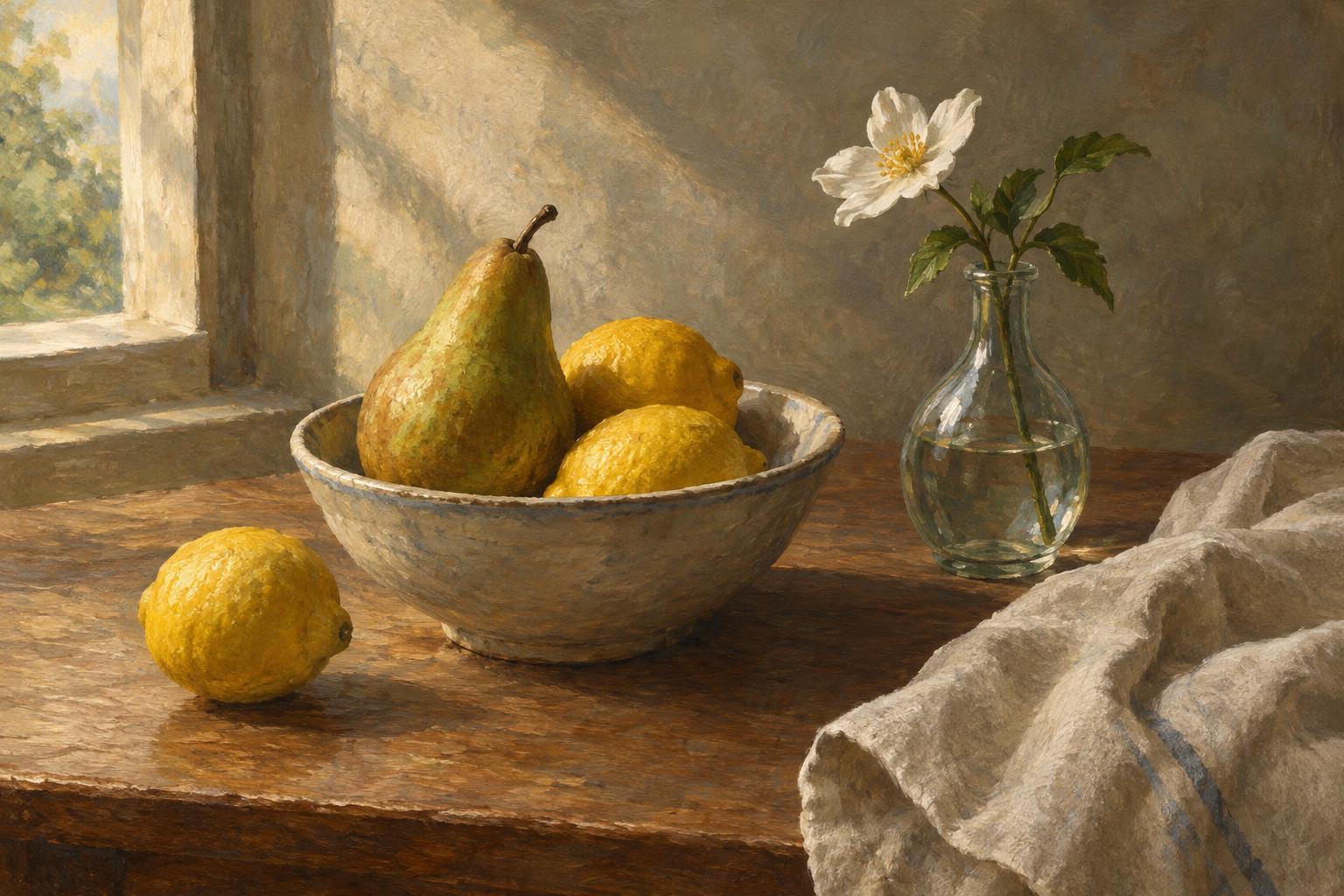
A still life painting shows objects that have been arranged for the artist to observe or imagine. Fruit, flowers, dishes and books are familiar subjects, but the interest often lies less in the objects themselves than in their relationships. Before trying to identify everything, notice where your eye goes first. Is one object larger, brighter or more isolated than the rest? Then follow the path your gaze takes across the picture.
Look at the spaces between things as carefully as the things themselves. A narrow gap between two vessels can create tension; a wide stretch of empty tabletop can make a small object feel important. Notice overlaps, too. When one form partly hides another, the painter suggests depth and gives the arrangement a sense of order. Ask what would change if an object were moved or removed.
Follow the light and shadows
Light helps give painted objects their shape. Find the brightest area and see whether it suggests a window, a lamp or a less specific source. Watch how light falls across curved and flat surfaces: a pear may shift gradually from light to dark, while the edge of a box may change more abruptly. These differences can make a scene feel solid even when the brushwork is loose.
Shadows deserve a slower look. A shadow on an object helps describe its form, while a shadow cast onto the table can show where the object sits in relation to its surroundings. Some shadows have crisp edges; others fade gently. Neither approach is automatically more realistic or more successful. What matters is how the painter uses them to build space, guide attention or establish a quiet or dramatic mood.
Notice what color is doing
Start with the broad color impression rather than counting individual hues. Does the painting feel warm, cool, muted or vivid? A limited range of browns and greens can draw attention to a small red accent. A group of similarly colored objects may instead encourage you to notice their different shapes. Color can organize a still life even when the objects seem casually scattered.
It also helps to distinguish the color you expect an object to have from the colors actually painted. A white cloth might contain blue, gray, cream or violet where it folds into shadow. A lemon may have touches of green or orange. These shifts need not mean the artist was trying to reproduce every detail exactly; they may help the objects sit together in the same light or give the picture its particular rhythm.
Look closely at surfaces and marks
A still life gives a painter many surfaces to explore: dull pottery, reflective glass, soft fabric or fruit with a slightly uneven skin. Compare how each is handled. A sharp highlight can suggest shine, while broken or softened edges can make a surface seem less reflective. You may find that two objects with similar outlines feel entirely different because of the way their surfaces are painted.
If you can see the painting up close, look at the marks themselves. Are strokes smooth and blended, or distinct enough to follow with your eye? Do some areas contain careful detail while others are only suggested? Step back again and see how those marks work together from a distance. What looks like a simple patch of paint nearby may become a convincing reflection when you view the whole picture.
Make room for your own reading
Objects can carry associations beyond their appearance. A worn cup might suggest daily use; a cut flower might bring the passage of time to mind. Such responses can enrich your experience, but you do not need to settle on one symbolic meaning. A painting may invite several readings, and its visual choices remain worth exploring even if you know nothing about the artist or the objects’ history.
To finish, spend a moment with one detail you initially overlooked: a rim, a crease, a reflected shape or an empty corner. Then return to the whole arrangement. Has your sense of its mood changed? Looking at a still life in this way turns a familiar scene into a series of small discoveries. The same habit can follow you beyond the painting, making the objects on your own table newly interesting.