What do “staged” and “documentary” mean?
A staged photograph begins with choices made before the shutter is pressed. The photographer might select a location, arrange objects, direct a person, design lighting or repeat an action until it produces the desired image. A documentary photograph is generally made in response to a situation the photographer has not set up for the camera. Its subject may be a person, place or event encountered as part of an ongoing project or an ordinary day.
These are useful descriptions, not sealed categories. A portrait made for a documentary project may involve asking someone to stand near a window. A staged image may use a real home, familiar clothes and natural light. Both approaches involve decisions about where to stand, what to include and when to take the picture. The difference is less about whether a photograph has been shaped at all and more about how much of the scene was arranged for the image.
How each approach builds a composition
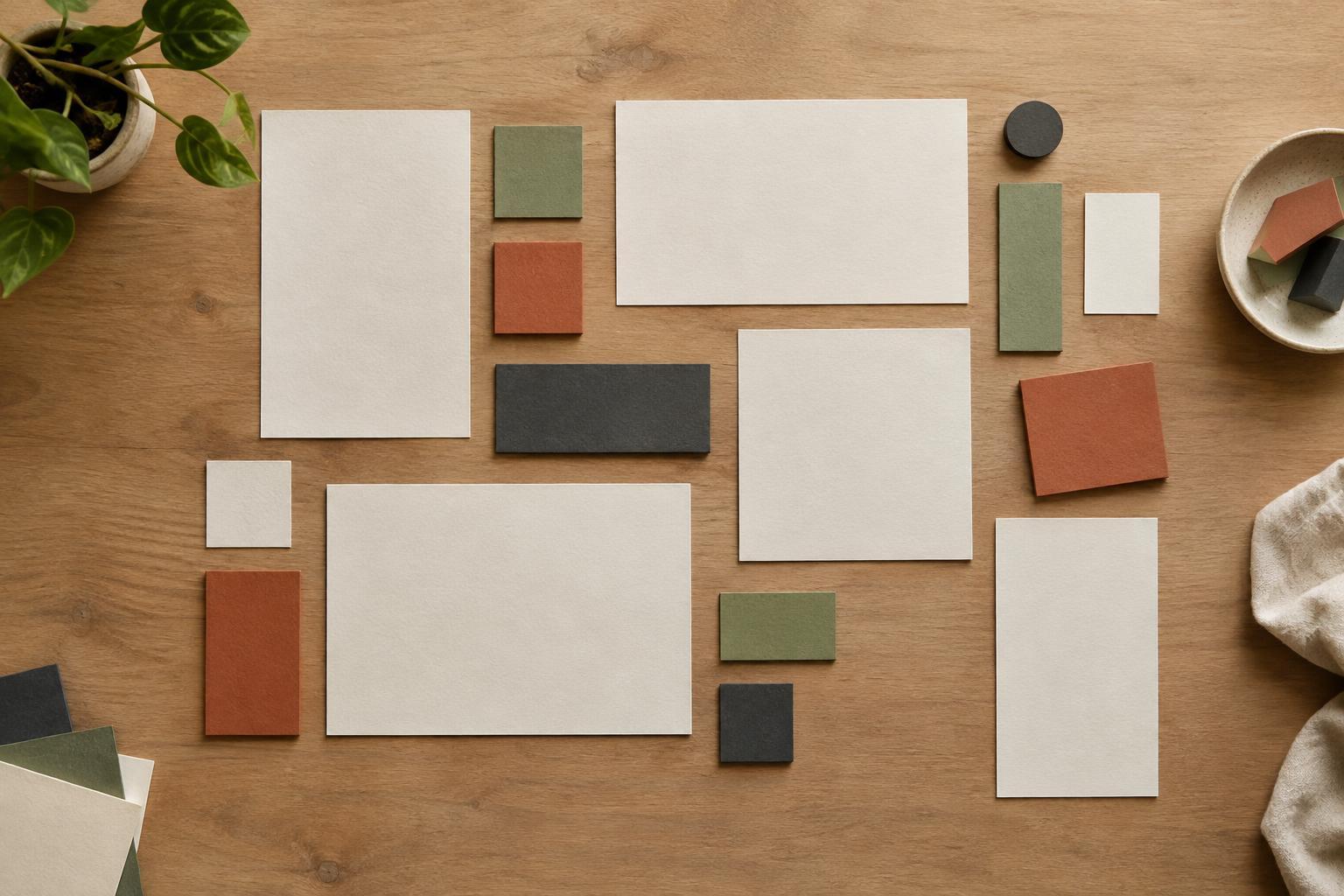
Staging lets a photographer develop a composition piece by piece. A pale wall can make a bright object stand out; a doorway can frame a figure; a gesture can direct the viewer’s eye across the picture. Because the elements can often be moved or repeated, the photographer can test how changes in color, spacing and light affect the mood. An image might feel theatrical, quiet or deliberately strange, even when it shows familiar objects.
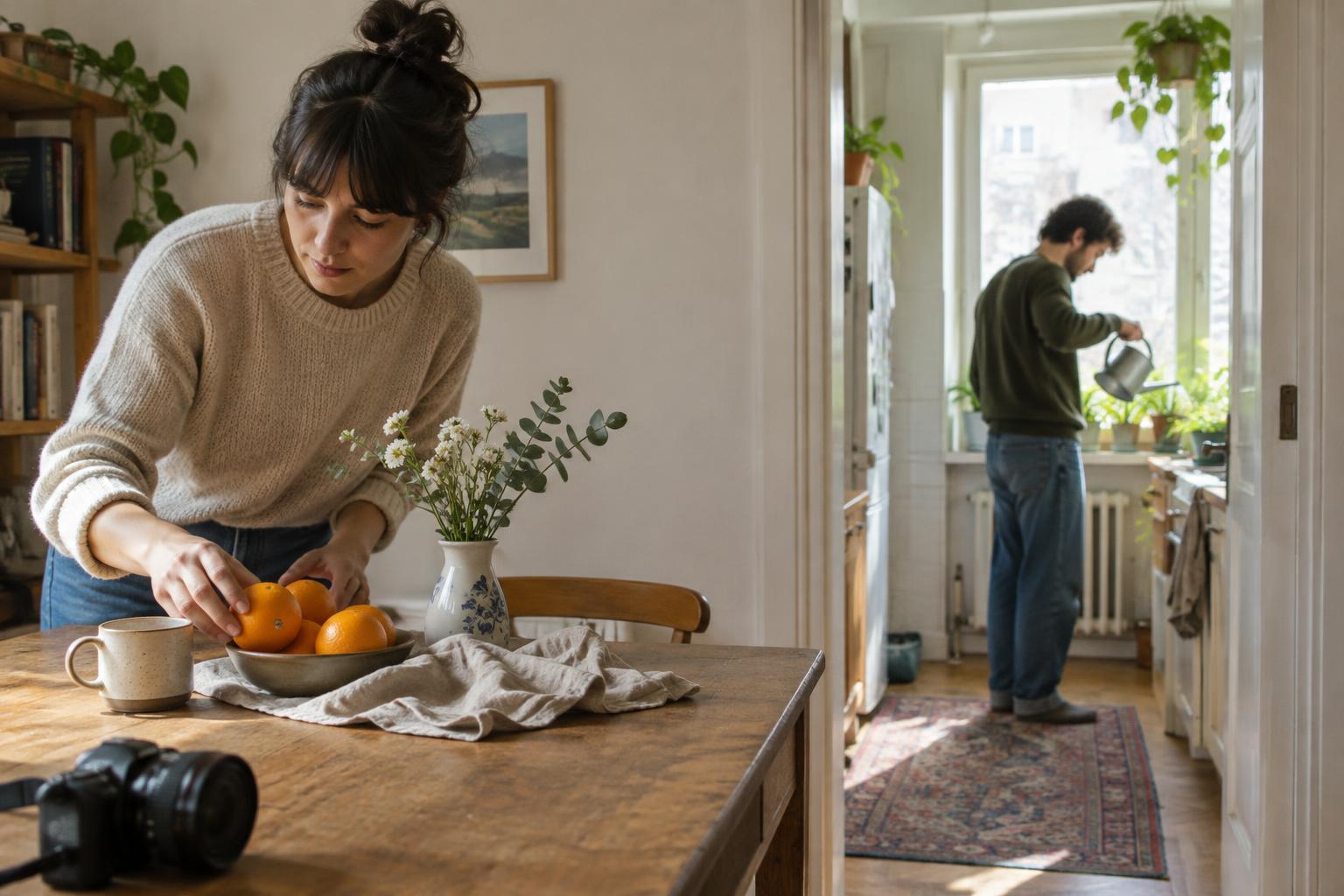
Documentary work often calls for a different kind of attention. The photographer may wait for people to move into a frame, notice a brief change in light or shift position to separate a subject from a busy background. The scene continues whether or not a picture is made. That constraint can give the image a sense of immediacy, while still leaving room for strong formal choices. A careful crop or a low viewpoint can turn an everyday encounter into a composition with rhythm, contrast and tension.
Neither method guarantees a more compelling picture. A highly controlled scene can feel lifeless if every detail says the same thing. An unplanned moment can feel confusing if the viewer cannot find a point of attention. In either case, composition helps turn what the camera records into something worth looking at closely.
Why a photograph’s context matters
A staged image can invite us to read a scene as a suggestion, a question or a fictional moment rather than a record of something that happened exactly as shown. An empty chair beside a set table, for example, might suggest absence without identifying a particular event. Knowing that the scene was arranged does not make its feeling less real; it changes the kind of question we ask about it.
A documentary image often carries an implied connection to lived circumstances. Viewers may look for clues about where the photograph was made, what was happening beyond the frame and whose perspective it represents. Yet a single frame cannot tell the whole story of a person or place. Captions and surrounding images can add useful context, while a missing caption may leave an important detail uncertain. It is worth noticing the difference between what an image shows and what we infer from it.
Presentation can also shift our reading. The same photograph may feel intimate as a small print, imposing as a large one or more explanatory when placed in a series. Sequence matters: an image of a crowded room followed by an empty one may suggest a passage of time, although the pictures alone may not establish when either was taken.
Look beyond the staged-or-real question
When viewing photography as art, try starting with what you can see. Where does your eye go first? What lies near the edge of the frame? Are light and color guiding you toward a subject, or making several parts of the image compete for attention? Then ask how the photographer’s approach may have affected those choices. Could the scene have been adjusted and photographed again, or did its arrangement depend on a passing moment?
It also helps to consider how people are represented. A photograph can be visually striking while leaving open questions about a subject’s privacy, participation or portrayal. Those questions are especially useful when an image invites viewers to make assumptions about someone’s life. You need not settle them from the photograph alone; recognizing what you do not know is part of looking carefully.
Try both approaches with an everyday subject
Choose one familiar subject, such as a kitchen table, a bus stop or a shared workspace. First, make a staged photograph: decide what belongs in the frame and adjust only what you are free to change. Think about the distance between objects, the direction of the light and the feeling you want to create. Then photograph the same place without rearranging it. Move yourself rather than the objects, and watch for a composition that appears as the space is used.
Compare the results without treating one as the more honest or artistic version. Which details became visible when you planned the scene? Which appeared only when you paid attention to what was already there? Staged and documentary photography offer different ways to explore a subject. Both can reward a viewer who looks at how the image was made, what it communicates and what remains outside the frame.