Two water-based paints, two ways to see the paper
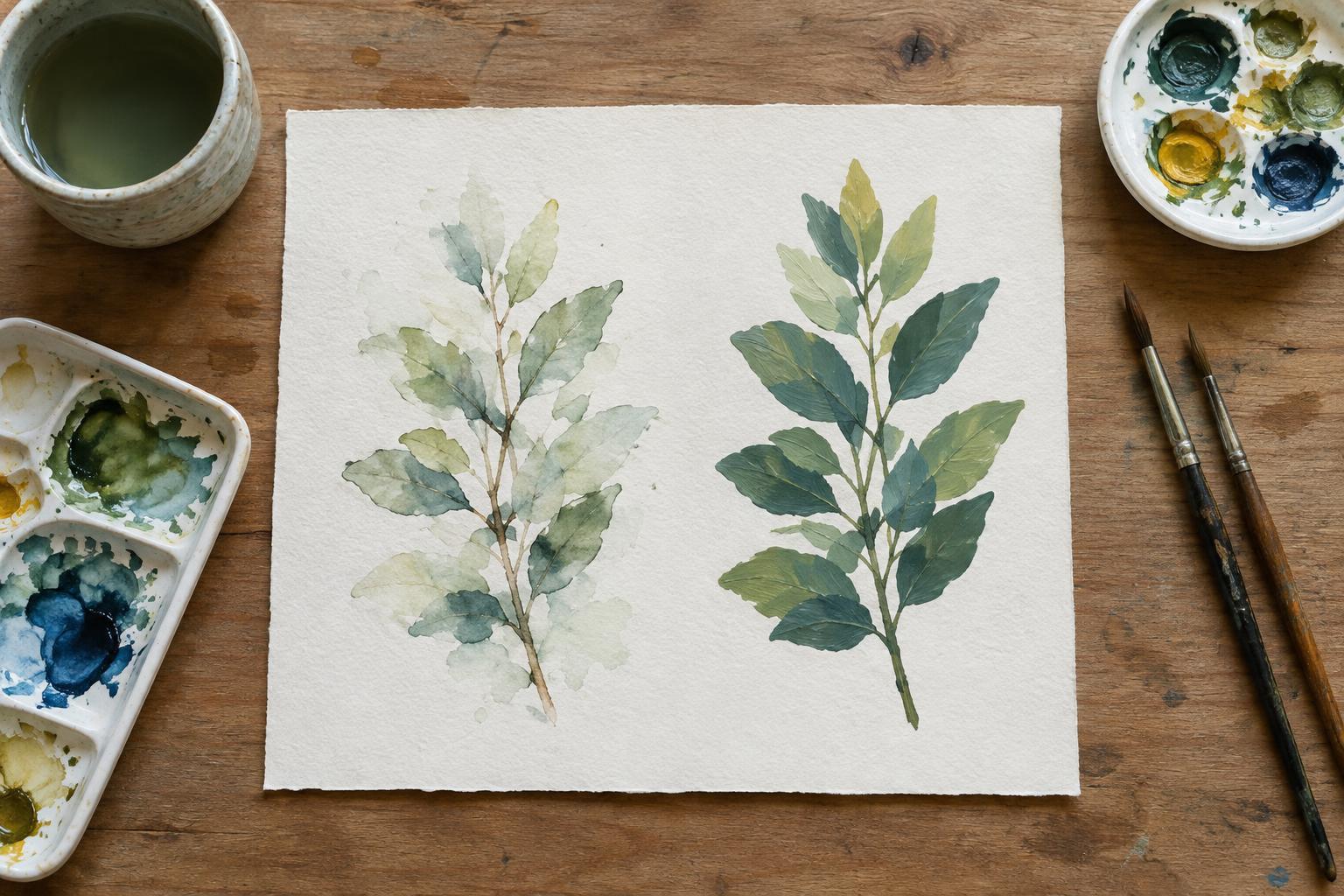
Watercolor and traditional gouache are both mixed with water and can be applied with similar brushes. Their most noticeable difference is what happens after a stroke reaches the paper. Watercolor is commonly used in transparent layers: light passes through the paint, reflects from the paper, and gives a wash much of its brightness. Gouache is usually formulated and applied to cover more of the surface. An opaque stroke can hide the paper color and, to some extent, a dry layer underneath.
That distinction is useful, but it is not an absolute rule. A thin wash of gouache may look translucent, while some watercolor pigments leave a dense or cloudy mark. The amount of water, the pigment, and the paper all affect the result. Rather than treating the paints as opposites, think of them as offering different levels of control over how much paper remains visible.
What happens when water meets the page
A wet watercolor stroke tends to spread across a damp area and settle into the paper’s texture. On dry paper, its edge is usually easier to contain; on wet paper, colors can flow into one another. Adding more water generally makes the color paler because more of the white paper shows through. This makes watercolor well suited to gradual washes, soft transitions, and effects that leave room for chance.
Gouache can also be diluted into a wash, but it is often used with less water for a more solid mark. At that consistency, brushstrokes can form flat-looking shapes and sharper edges. Too much water may make a gouache layer streaky or reveal the surface beneath it. Too little can make it drag across textured paper. A small test stroke helps you find a consistency that moves smoothly without losing the coverage you want.
Both paints can disturb earlier work if you brush repeatedly over it. With traditional gouache, a dry layer can often be softened again with water, so a new wet stroke may pick up the color below. Watercolor can also lift or move, though some pigments stain the paper more strongly than others.
Layering light and dark colors
In transparent watercolor, painters often preserve light areas by leaving the paper unpainted or working around them. Darker values can then be built with additional washes once earlier layers have dried. A pale wash over a dark passage will not usually restore the original white of the paper. Planning a few highlights before you begin can therefore save frustration.
Gouache offers another route. Once a dark shape is dry, you can place a lighter, sufficiently opaque stroke over it. This makes it handy for adding lettering, small highlights, or changes to a composition. The new layer may still mix with the old one if the brush is very wet or passes over the same spot repeatedly. Letting each layer dry and using a gentle stroke helps keep colors distinct.
Gouache can change in appearance as it dries, so a patch that looks right while wet may need adjustment later. Try checking large areas after they dry before mixing every neighboring color to match.
Why paper choice matters
Paper affects both paints because water can make a thin sheet buckle, while its surface texture changes the marks a brush leaves. Watercolor paper is a practical starting point for either medium, especially if you plan to use broad washes. A smoother sheet makes fine gouache details and even-looking shapes easier to paint. A more textured sheet can add character to watercolor washes but may interrupt an opaque gouache stroke.
The paper’s surface treatment, often called sizing, also influences how quickly paint sinks in and how readily it can be moved or lifted. Vigorous scrubbing may roughen the surface, even on sturdy paper. If you are unsure how a sheet will behave, paint a small swatch, let it dry, then add a second layer and try lifting one corner with a damp brush. That quick test tells you more about your particular materials than the paper’s label alone.
A simple side-by-side exercise
Divide one sheet of watercolor paper into two areas. In each, paint a pale wash, a dark shape, and a second color crossing the first after it dries. Use watercolor on one side and traditional gouache on the other. Then try a light mark over the dark shape and a damp brush over a small dry patch. Notice which layers show through, where edges soften, and how easily the dry color moves.
Keep the paper, brush size, and subject the same so the differences are easier to see. You do not need to decide that one paint is better. Watercolor may appeal when you want luminous washes and visible paper; gouache may suit bold shapes and the freedom to add lighter details later. Both reward a little testing before a larger piece. If your paint is labeled acrylic gouache, check its instructions separately: unlike traditional gouache, it generally becomes water-resistant when dry.