What the grades tell you—and what they do not
The labels “student-grade” and “artist-grade” describe broad product ranges, not strict standards shared by every paint maker. Student-grade acrylics are generally designed to keep costs manageable. Artist-grade ranges generally place greater emphasis on pigment selection, color strength and detailed labeling. Both use acrylic binder, and both can make satisfying paintings. Neither label guarantees that a particular color will behave exactly as you expect.
Acrylic paint is a mixture of pigment, acrylic binder and other ingredients that affect its texture and handling. A lower-priced range may use less expensive pigments, a different pigment mixture or more fillers to achieve a consistent price across colors. An artist-grade range may contain more costly pigments and offer a wider choice of individual colors. These are tendencies rather than rules: compare the specific tubes you plan to buy, especially if you care about how a color mixes or covers.
Color strength matters most when you mix
A useful test is to mix a small amount of each paint with the same quantity of white. A paint with strong tinting strength will influence that mixture noticeably; a weaker one may produce a paler result. Stronger is not automatically better, but it can make color mixing more predictable and let a tube go further when you are building a palette from a few colors.
Pigment information can matter as much as strength. A tube marked with a single pigment may give you a clearer sense of what will happen when you combine it with other colors. A paint made from several pigments can still be beautiful, but complex mixtures may become dull more quickly when you add yet another color. If learning to mix is your goal, try a small palette and note the pigment codes on the labels. You need not buy an entire artist-grade set to see a difference: upgrading the colors you mix most often can be more useful.
Coverage, texture and finish are separate questions
Artist-grade paint may offer stronger coverage in some colors, but pigment type also affects opacity. Certain pigments are naturally transparent, even in a premium range. Check an opacity marking if the maker provides one, then test a stroke across a dark line or contrasting patch. That quick trial tells you more about your planned technique than the grade printed on the tube.
Grade does not tell you whether a paint is thick, fluid, matte or glossy. A student-grade heavy-body paint and an artist-grade fluid paint will feel very different under the brush because they are made for different handling. Choose texture for the marks you want: thick paint can hold brushstrokes, while fluid paint may suit smooth layers or fine lines. If two paints feel unlike each other, look at the product type before attributing the difference to quality.
When labels and permanence deserve attention
If you are making a piece you hope to keep or display, look for lightfastness information for each color. Lightfastness describes a pigment’s resistance to fading in light; it can vary within both student- and artist-grade ranges. Not every label supplies the same level of detail, so a clearly identified pigment and a stated lightfastness rating can be useful reasons to choose one tube over another. Display conditions matter too: avoiding prolonged direct sunlight is a sensible precaution for artwork regardless of paint grade.
Names alone can be misleading. Two tubes called “cadmium red hue,” for example, may use different pigment combinations, and “hue” generally signals a substitute for the named pigment rather than that pigment itself. A substitute may be exactly what you want, but checking the pigment listing helps you replace a favorite color later. If a label lacks the information you need, consider testing that paint before relying on it for a carefully planned piece.
A practical way to spend your paint budget
Student-grade acrylics make sense for exercises, sketches, underpaintings and projects where you will use generous amounts of paint. They give you room to experiment without making every stroke feel expensive. Artist-grade tubes may be worth considering for a small group of frequently used mixing colors, a transparent color you want to glaze with, or a pigment whose particular character you enjoy. Many painters can use both ranges in one workspace; the choice need not be all or nothing.
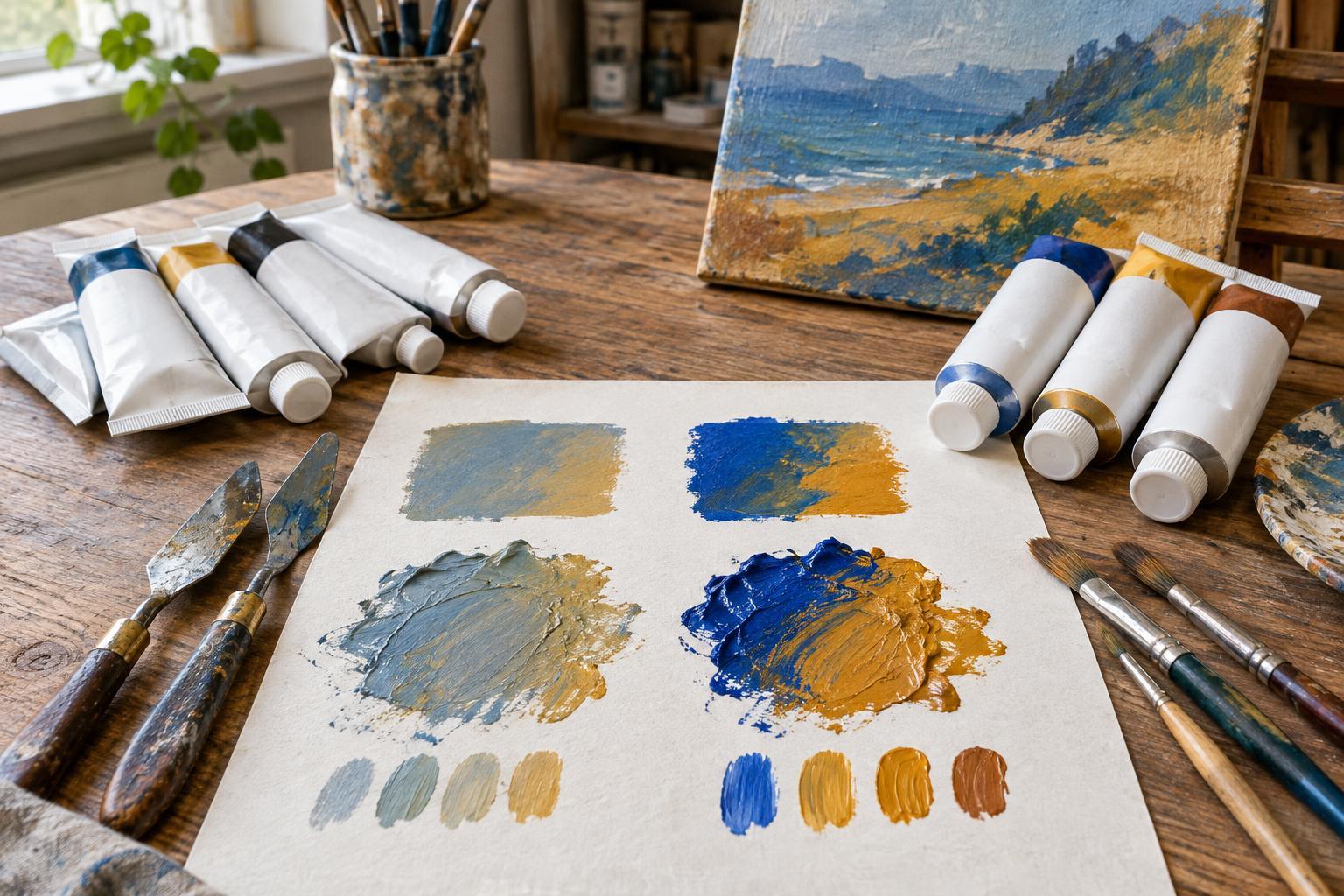
Before committing to larger tubes, buy one or two colors and make a simple test sheet. Paint each color thickly and thinly, mix it with white and a second color, and try it over both a light and a dark patch. Let the samples dry before comparing them, since acrylic color and sheen can shift as the water evaporates. Keep the sheet with the tube names and pigment codes. The most valuable paint for your purposes is the one whose behavior you understand and will actually use.