What do “wax-based” and “oil-based” mean?
A colored pencil core contains pigment, binding ingredients and other materials that help it hold together and leave color on the page. “Wax-based” and “oil-based” describe the binder a pencil is commonly associated with. They are useful shopping terms, but they do not divide colored pencils into two perfectly separate groups. Formulas vary by brand and range, and a pencil may contain both wax and oil.
For a beginner, the more useful question is how a particular pencil behaves in your hand. Does it put down color easily? Can you build several layers without the surface becoming too slick? Can you make the marks you want? Trying a few individual pencils often tells you more than choosing by binder label alone.
How they may feel on paper
Pencils sold as wax-based are often associated with a smooth, creamy feel and quick color coverage. A softer core can leave a strong mark with relatively little pressure, which can make filling an area satisfying. It may also wear down faster, so a fine point needs more frequent sharpening. These are tendencies, not guarantees: softness differs across pencil ranges.
Pencils sold as oil-based are often described as firmer. A firm point can be pleasant for fine lines, small shapes and controlled shading, while broad, saturated areas may take more passes. Again, the label alone will not predict every pencil’s feel. The texture of your paper and the pressure you use can make an equally noticeable difference.
Whichever type you try, begin with light strokes. Heavy pressure can flatten the paper’s texture, leaving less surface for later layers to grip. You can always add another pass of color, but it is harder to recover room for layering once the page has become smooth.
Layering, blending and the surface beneath
Colored pencils usually create rich color through layers rather than one forceful stroke. Try laying down a pale color first, then adding a second color with small, overlapping marks. Light layers let you adjust the hue gradually. For a smoother finish, change your stroke direction between passes or use gentle circular marks. Both wax- and oil-based pencils can be layered this way.
Paper matters here. A lightly textured drawing paper catches pigment and gives you room to build color. Very smooth paper may be useful for crisp details but can reach its layering limit sooner. Rough paper catches more color on its raised areas, leaving visible white spaces unless you spend time filling them. A small test on the paper you plan to use is more reliable than judging a pencil in isolation.
You can also test blending by overlapping two colors and then adding a lighter pencil on top. Notice whether the colors mix, whether the paper still accepts new marks and whether you like the resulting texture. There is no requirement to make every drawing perfectly smooth; visible pencil strokes can be part of its character.
Durability and finish: what the binder does not tell you
Wax bloom is a pale, cloudy film that can sometimes appear on heavily worked areas of some wax-rich pencil drawings. It is not inevitable, and it is unlikely to be the first issue you encounter while practicing. If a finished drawing develops a haze, it may be possible to remove it gently with a soft cloth. Test any treatment on a spare sample first, especially if you are considering a fixative.
Binder labels also do not tell you how well a color will resist fading. Lightfastness depends substantially on the pigments and the particular pencil, not simply on whether it is called wax- or oil-based. If you plan to display or give away a drawing, look for the manufacturer’s lightfastness information for the individual colors and keep finished work away from prolonged direct sunlight. If you are drawing for practice in a sketchbook, feel free to prioritize pencils you enjoy using.
A simple way to choose your first pencils
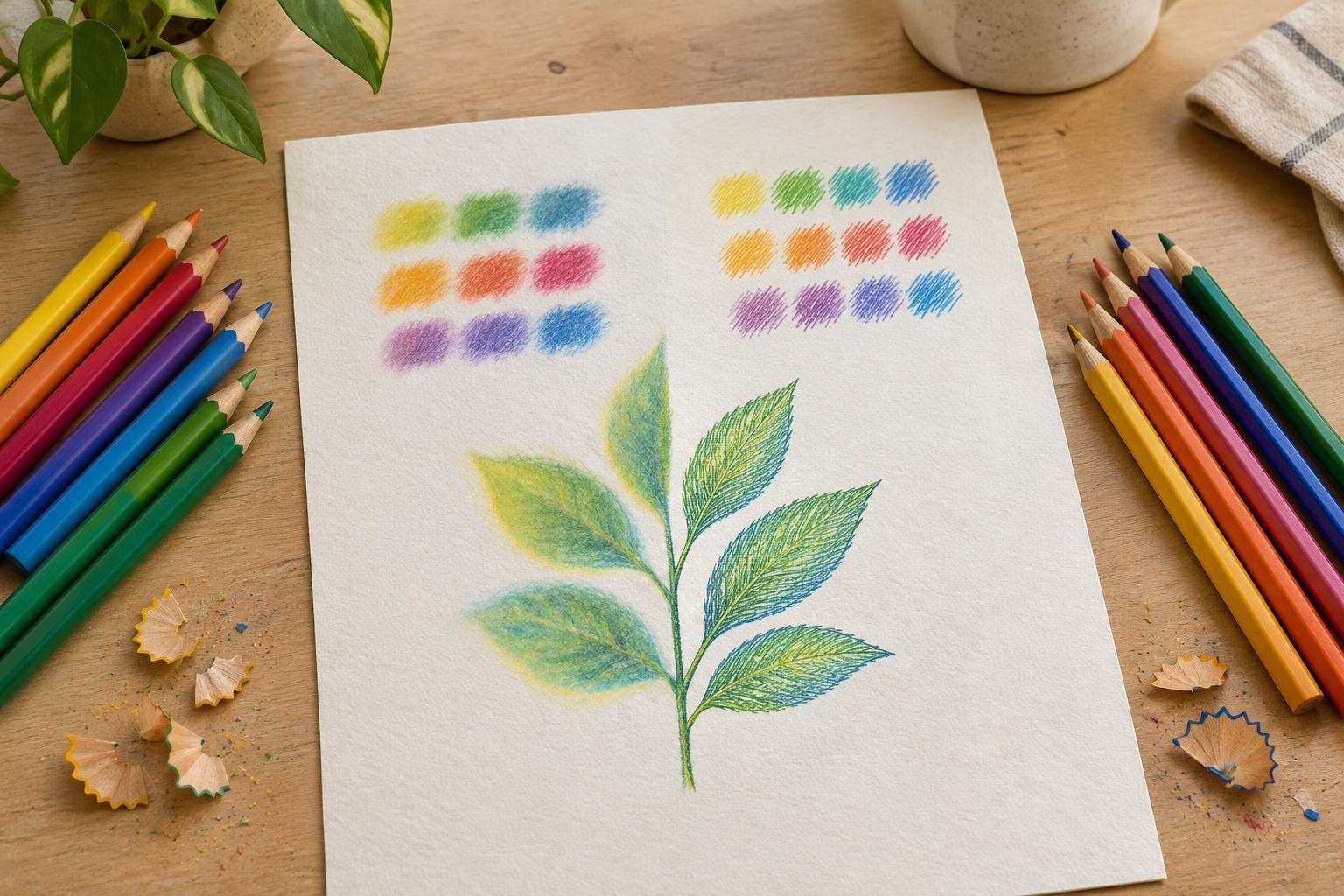
You do not need a large set to learn what you like. If possible, pick a few colors from one range and make a test page: draw a light line and a heavy line, shade a small square, layer two colors and sharpen each pencil to a point. Repeat on the kind of paper you expect to draw on. Notice which pencils feel comfortable rather than trying to declare one binder the winner.
Consider what you want to draw. If you enjoy quick color coverage and soft transitions, you may prefer a creamier pencil. If you favor precise edges and gradual shading, you may prefer a firmer one. You can use pencils with different binder labels in the same drawing, provided you test how they layer together. The best beginner choice is a manageable set that invites you to keep experimenting.