Start with the way you move through the space
A hallway is usually seen in motion. You might notice a picture first from the far end, then catch its details as you walk past. Before choosing what to hang, stand at each entrance and look down the passage. Notice where your eye naturally settles, which doors interrupt the wall and where people are most likely to pause.
Keep the walking route comfortable. Deep frames, projecting shelves and fragile objects can be awkward where people carry bags or turn into doorways. Flat or shallow-framed work is often easier to live with. If a wall is regularly brushed by coats or hands, consider placing delicate pieces on a quieter stretch rather than relying on their appearance alone.
Choose a clear visual rhythm
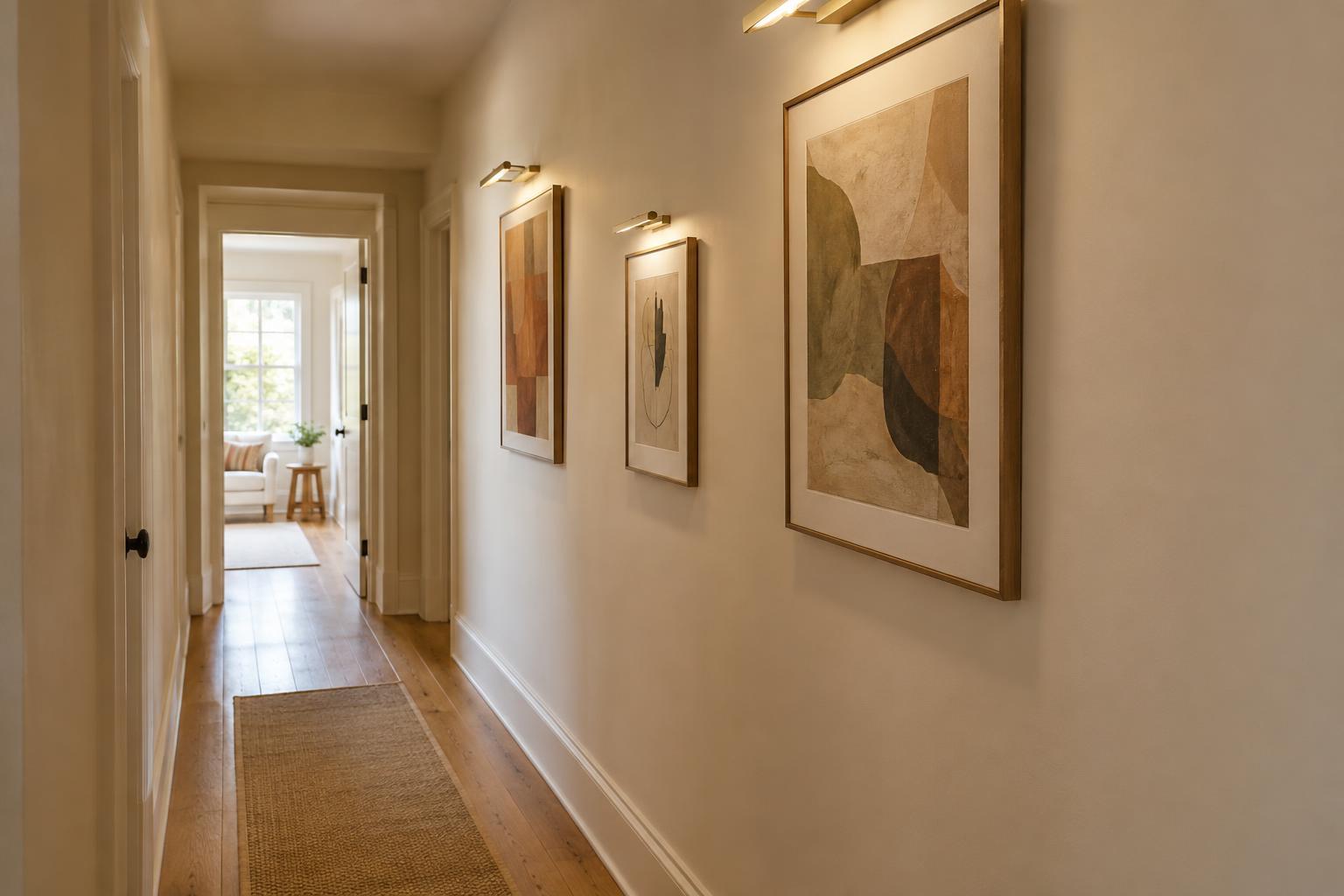
A narrow hallway gives art a strong direction: the walls lead the eye forward. One substantial piece at the end can create a destination, especially when it is visible from another room. Along a long side wall, a sequence of smaller works can make the journey feel engaging. Neither approach requires filling every available patch of wall; empty space helps each piece register.
For a group of pictures, choose one simple element to repeat, such as frame color, overall size or consistent spacing. The artwork itself can vary in subject and medium. To test an arrangement, lay the pieces on the floor or cut paper shapes to their sizes and temporarily position them on the wall. Step back to each end of the hallway before making holes. A grouping that looks balanced close up may feel uneven when viewed from a distance.
Use scale and color to support the space
In a tight passage, artwork does not have to be tiny. A single larger print or painting can give a short wall more presence than a cluster of small frames. On a longer wall, several modest pieces can establish a gentle pace. Let the available wall, rather than the hallway’s width alone, guide your choice: allow room around door trim, switches and corners so the display does not look squeezed in.
Color can connect the hallway to nearby rooms. You might repeat a hue from a rug, painted doorway or piece of furniture, or let one vivid artwork provide a deliberate contrast. Pale backgrounds and generous borders can feel airy, while dark or richly colored work can create depth and warmth. These are impressions, not rules; test your choices in the hallway itself, where the light and viewing distance may change how colors appear.
Plan for hallway light
Hallways often have uneven light. A picture may be bright near a doorway and difficult to see farther down the wall. Look at the space under the lighting you normally use, then consider which works remain legible. Bold shapes and clear contrasts can be satisfying when viewers have only a passing glance; quieter details may suit a spot where someone can stop.
Check framed work for reflections before settling on a position. Glass opposite a window or light fitting may show glare instead of the image. Changing the hanging position or angle of a nearby light may help. If you add a picture light or other fixture, keep cords out of the route and use a suitable installation method. Works on paper can also be sensitive to prolonged direct sunlight, so a sunnier stretch may call for a less vulnerable piece.
Make the display easy to live with
The best hallway arrangement holds up to everyday use. Hang frames securely with fixings appropriate to the wall and the weight of each piece, and check that doors can open freely. In a busy household, consider sturdy frames and avoid hanging anything easily knocked loose at shoulder or bag height. If you rent, check what changes are permitted before using hooks or other mounting methods.
Leave yourself room to change the display. A small set of works can rotate over time, giving familiar pieces a fresh setting without adding clutter. Once everything is in place, walk through the hallway at your usual pace. If you can enjoy the art without navigating around it, the passage is doing both of its jobs: connecting rooms and offering a moment to look.