Start by judging what can be lifted
Lifting means removing some paint from watercolor paper after it has been applied. It can bring back a glint on a glass, soften a cloud edge, or lighten a patch that has become too dark. It does not always return the paper to its original white. The result depends on the pigment, the paper, and how firmly the paint has settled into the surface.
A wash that is still damp is usually easier to lift than one that has dried. Some pigments also stain the paper more readily than others. Paper with a sturdy, well-sized surface generally tolerates gentle reworking better than delicate paper, but repeated scrubbing can damage either. Before touching an important area, try the method on a spare piece of the same paper with the same paint if you can.
Lift paint while the wash is still damp
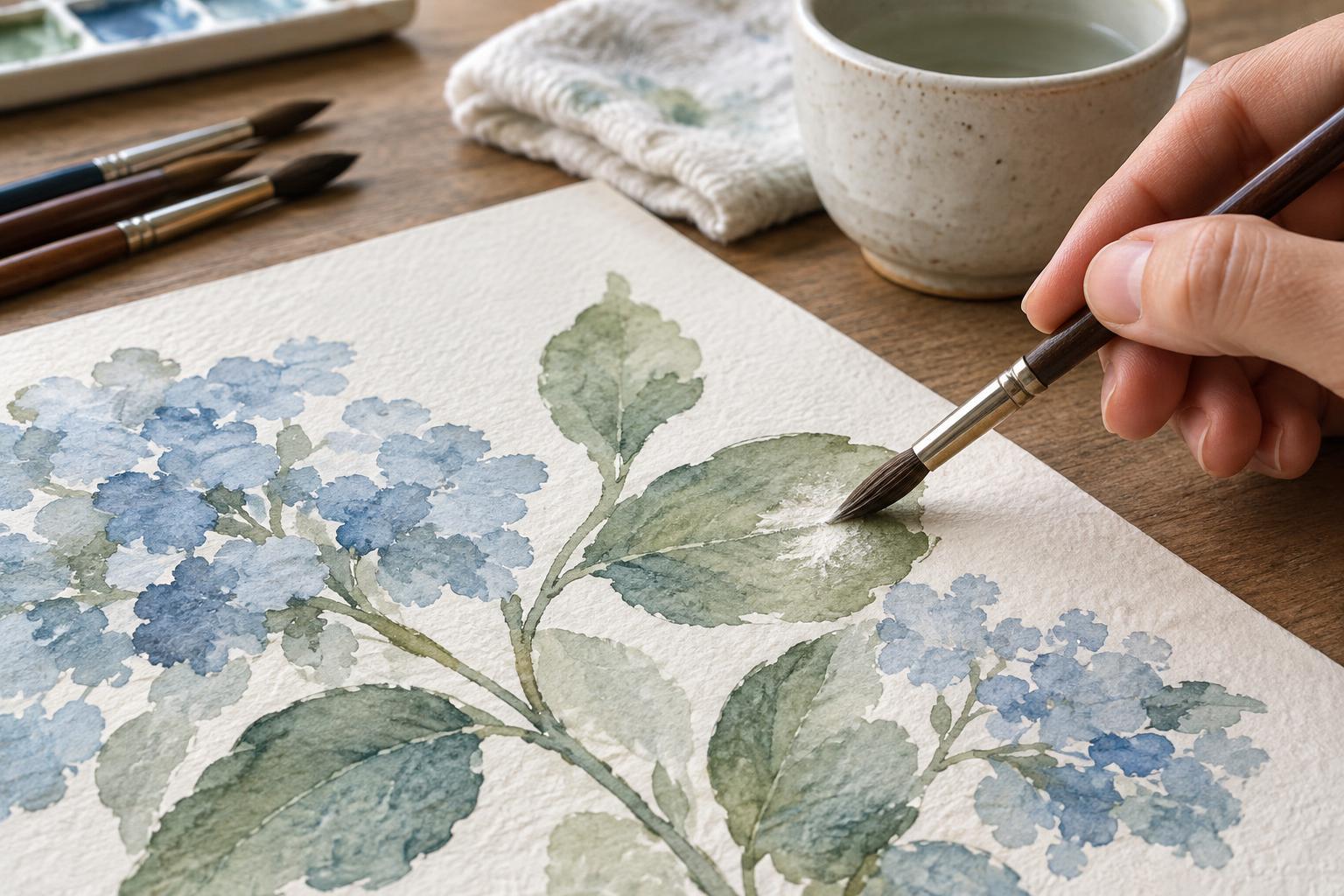
For a soft highlight in a fresh wash, rinse a clean brush, blot it until it is damp rather than dripping, and draw it lightly across the area you want to brighten. Rinse and blot the brush after each pass so it carries paint away instead of depositing it elsewhere. A soft, clean brush gives you more control than a stiff one.
For a smaller, brighter mark, touch the damp paint briefly with the corner of a clean tissue or a dry cotton swab. Let the material absorb the color; avoid rubbing it back and forth. The timing matters. If the wash is very wet, paint may flow straight into the lifted space. If it has begun to dry unevenly, added water may leave a hard-edged mark. When the wash is behaving unpredictably, let it dry completely before trying again.
Rewet a dry area with restraint
To lift a dry passage, first make sure the painting is fully dry. With a clean, slightly damp brush, moisten only the area you want to lighten. Give the water a moment to loosen the paint, then blot gently with a clean tissue or lift the color with the brush. Rinse the brush often. Work in short passes and allow the paper to dry between attempts so you can judge the result.
For a narrow highlight, the tip of a damp brush or cotton swab may be enough. For a broader patch, use the side of a soft brush and lift gradually to avoid a conspicuous pale spot. Stop if the surface begins to look rough, fuzzy, or unusually absorbent. Those are signs that further rubbing may harm the paper, even if color remains.
Choose the edge you want to leave behind
A recovered highlight is not just a lighter area; its edges affect how it reads. A crisp mark can suggest a sharp reflection, while a softened edge can suggest light fading across a rounded form. For a softer transition, use a barely damp brush to ease the edge of the lifted area into the surrounding color. Keep the brush clean and use as few strokes as possible.
It helps to think about the lightest value you need before trying to remove every trace of paint. A highlight on a cheek, leaf, or cloud may only need to be lighter than its surroundings. Trying to force it back to white can create a damaged patch that draws more attention than the original dark wash.
Know when to change the plan
If the paint will not lift cleanly, consider working with the color that remains. You might darken a nearby passage slightly to increase contrast or adjust the shape of the highlight so it fits the painting. If your approach allows opaque materials, a small touch of white gouache can provide a bright accent, though it will have a different surface quality from untouched paper.
For future paintings, reserve the most important whites from the start. Sketch their shapes lightly, paint around them, or use masking fluid on paper suited to it, following the product’s instructions and testing first. Lifting is most useful as a flexible adjustment, not a guarantee. A little patience and a light touch give you the best chance of recovering the light without sacrificing the paper beneath it.