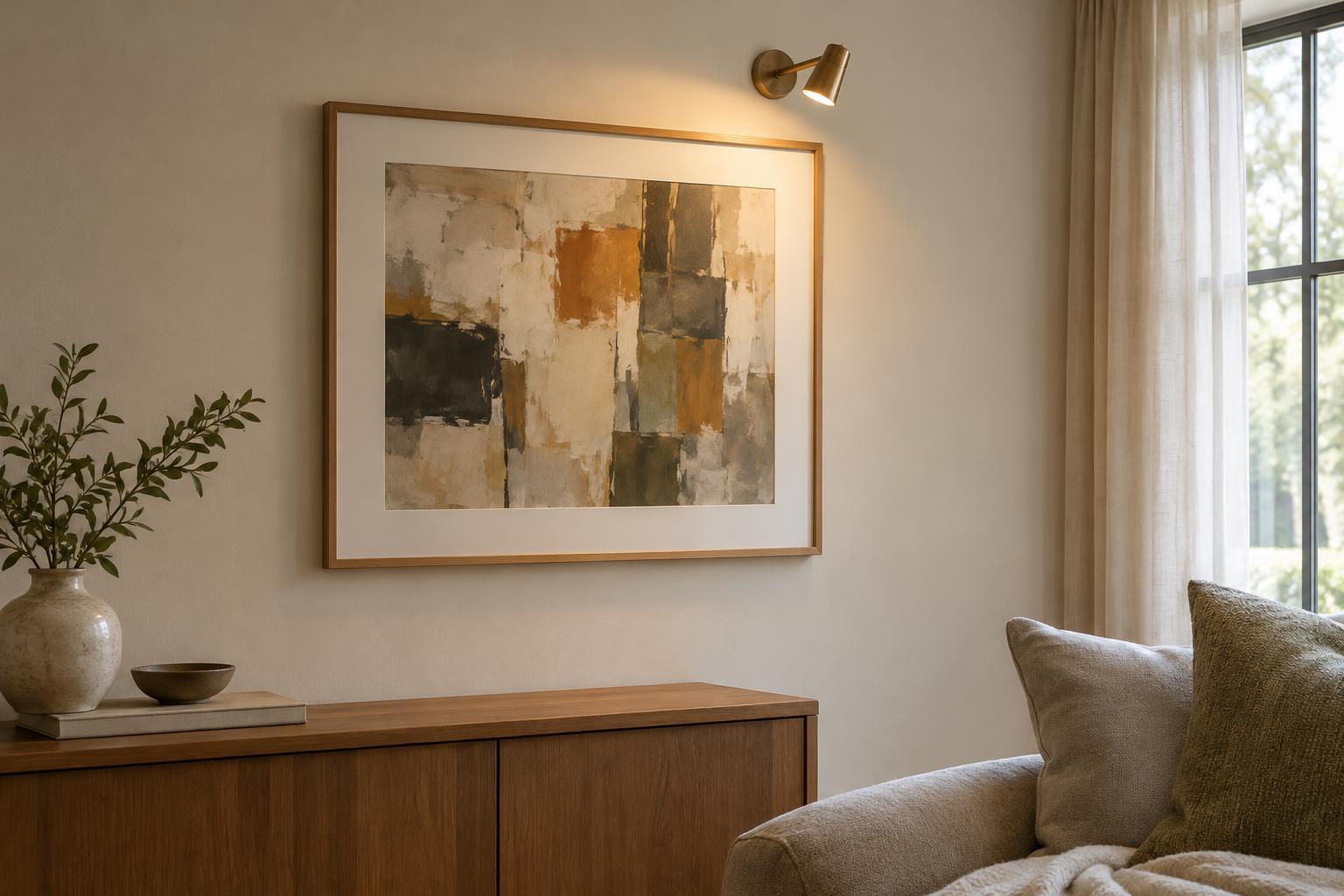
Start by finding the reflection
Glare is light that reaches your eyes instead of helping you see the artwork. On a framed print, it may appear as a bright patch on the glass. On a glossy painting, it can make the darker colors hard to see. Even an unframed work can be uncomfortable to look at if a bare bulb is visible beside it.
Before changing any equipment, stand where you normally view the piece. Notice what appears in its surface: a window, a ceiling fixture or a lamp across the room. Then move a step to either side. If the bright patch shifts with you, its position is a clue to the light source causing the problem. This quick check is more useful than making the artwork brighter without knowing where the glare comes from.
Aim the light across the artwork, not at your eyes
A movable lamp or adjustable ceiling fixture gives you room to experiment. Begin with the light above and slightly in front of the artwork, aimed toward its center. View the piece from your usual chair or standing position, then change the lamp angle a little at a time. If you see a bright spot on the surface, try moving the light farther to one side or changing its aim rather than increasing its brightness.
Consider the whole viewing path, not just one perfect spot. A picture in a hallway may be seen while walking in both directions; one above a sofa may be viewed from several seats. Check those positions before settling on an angle. A shade or fixture that hides the bulb from direct view can also make the room feel more comfortable, even when the artwork itself is not reflective.
Textured work needs a different balance. Light from one side can reveal brushstrokes, woven fibers or relief, but a steep sideways angle may produce distracting shadows. Small adjustments often work better than a dramatic spotlight.
Use daylight deliberately
Windows can provide pleasant, broad light, but their position changes the viewing experience throughout the day. A window directly opposite glazed art often appears as a reflection. If you can, place the artwork on a wall where the window lights it from the side instead. Curtains or blinds can soften a bright window without making the room dark.
Watch for direct sun falling on the artwork. Beyond making it difficult to see, prolonged exposure can affect some papers, pigments, photographs and textiles. Moving a vulnerable piece to a wall out of direct sun is a sensible first step. You do not need to eliminate daylight from the room; the aim is to keep harsh light off the work while leaving enough ambient light to enjoy it.
Choose a gentle, adjustable artificial light
For evening viewing, start with the lighting you already have. A shaded table lamp, adjustable wall light or ceiling fixture may be enough if you can direct it away from reflective surfaces. A dimmer or a lamp with several brightness settings helps you find a level that makes details visible without creating a harsh bright spot. Try to avoid a large contrast between a brightly lit artwork and an otherwise dark room.
LED lamps are a practical option for many homes because they are available in a range of brightness levels and light appearances. A warm or neutral-looking light often feels comfortable in a living space, but preference and the colors in the artwork matter more than a single prescribed setting. Compare the work under a couple of lamps if possible: light that looks pleasing on a wall may change how you perceive subtle colors.
Keep fixtures from touching artwork or frames, and follow the fixture maker’s placement and heat guidance. For delicate or valuable pieces, use a gentle lighting approach and seek specialist guidance before installing lighting close to the work.
When positioning is not enough
Glass and acrylic protect many artworks, but their smooth surfaces can reflect the room. If you have tried changing the viewing angle, lamp position and window light, ask a framer about lower-reflection glazing. Options vary in appearance, cost and protective properties, so it helps to look at samples with an artwork similar to yours. Avoid removing protective glazing from a work on paper simply to solve a reflection.
Finally, remember that lighting is part of the room. A small shift in where a picture hangs, an angled lamp or a softer window covering may do more than buying a dedicated picture light. Make one change at a time and return to your usual viewing spot. The best arrangement is the one that lets you notice the art, not the light illuminating it.