Two ways a sculpture occupies space
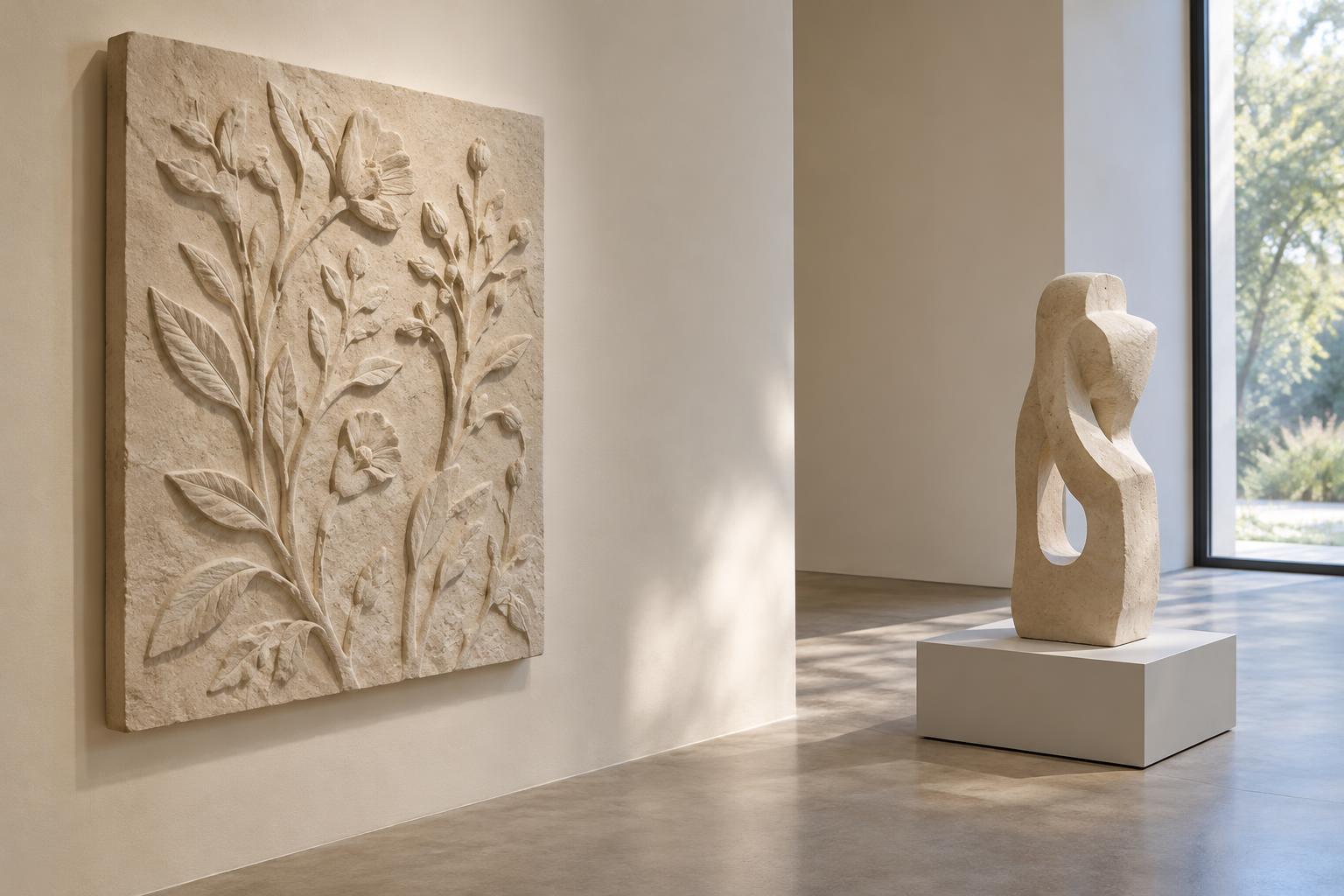
Relief sculpture projects from a background surface. Its forms may rise only slightly, as in a shallow carving on a panel, or stand out strongly while remaining connected to the surface behind them. Freestanding sculpture, sometimes called sculpture in the round, is shaped as an object with multiple sides. It does not need a backing surface to hold its image together.
That structural difference changes the role of the viewer. A relief often offers a primary direction from which to see its subject, much like an image on a wall. A freestanding work invites a shifting view: its outline, details and apparent proportions can change as you move. Neither type requires just one way of looking. Relief can reward a glance from the side, while a freestanding work may have a front that the artist emphasizes.
How viewpoint guides attention
When you face a relief, begin with its overall arrangement. Notice which forms overlap and which project farthest. A figure in the foreground may be carved more deeply than a distant one, creating a sense of depth within limited physical space. Turning slightly to one side can reveal how the sculptor used that depth, though the main image may become harder to read from a sharp angle.
With a freestanding sculpture, try circling it slowly if the space permits. Pause at several points rather than treating the walk as a quick inspection. From one position, two shapes may line up; a few steps later, a gap may open between them. The empty areas around and within a sculpture are part of its visual effect. Looking from a lower or higher position, when practical, may also change how you perceive its balance and weight.
Light and shadow tell different stories
Light helps make relief legible. On a shallow surface, even a small change in shadow can bring out a line, fold or texture. Strong side lighting may emphasize raised edges, while softer light can make the transitions between levels seem gentler. A deep relief can cast pronounced shadows that give the surface a changing rhythm. The same work may appear quite different as light shifts across it.
Light also shapes a freestanding sculpture, but it can reach different sides and reveal or conceal forms as the viewer moves. One side might show a smooth plane; another might expose a rough tool mark or a deep recess. Rather than asking which view shows the sculpture correctly, consider how its surfaces work together. In either type, take care not to confuse a cast shadow with a carved line: moving your head slightly can help you tell them apart.
The setting changes what you notice
Relief is often closely tied to its setting. A carved doorway, wall panel or decorative object may frame the way you approach it. Its height and surrounding surface affect whether you see it as an intimate detail or part of a larger composition. Look at the boundary between the raised forms and their background. Is the background an unobtrusive support, or does it help organize the subject?
A freestanding sculpture can shape the space around it as well as occupy it. A pedestal may encourage you to look upward; a work placed near the floor may feel closer to your own scale. Nearby walls, other objects and the amount of room available to walk all affect the experience. Some works cannot be viewed from every side, and access should never be forced. The views available to you are still enough to compare how the sculpture meets its surroundings.
A simple way to compare them
Next time you encounter both kinds of sculpture, give each the same small exercise. First, look from a comfortable distance and describe its silhouette and main shapes to yourself. Then move, if allowed, and notice what changes. Does a relief reveal its layered construction? Does a freestanding work form a new outline or opening? Finally, look at where the darkest shadows fall and whether they clarify the form or make it less obvious.
You can try the comparison at home with a raised design on an everyday object and a small object that can be viewed from all sides. The aim is not to rank one type above the other. Relief concentrates depth against a surface; freestanding sculpture makes changing position especially important. Paying attention to those differences can turn a brief look into a more active encounter.