A motif is a recurring visual element
A visual motif is an element that appears repeatedly in an artwork or across several works. It might be a recognizable object, such as a window, or something less literal, such as a looping line, a cluster of small circles, or a strong diagonal dividing a scene. What makes it a motif is not simply that it appears once, but that its recurrence invites you to connect one part of a work with another—or one work with the next.
A motif does not have to be the main subject. In a painting of a crowded room, the subject may be the gathering, while a repeated checkerboard pattern quietly links the floor, a tablecloth, and someone’s clothing. Across an artist’s work, that pattern might return in a drawing or print with a different role. Sometimes a motif carries an association for the viewer; sometimes its chief effect is visual rhythm. You can notice the repetition without deciding immediately what it means.
Look beyond repeated objects
Objects are a useful place to begin. If you keep seeing doors, birds, bowls, or hands in a group of works, ask how each appears. Is the door open or closed? Is the hand reaching, resting, or holding something? A recurring object may change scale, color, placement, or level of detail. Those changes are often more revealing than the fact of repetition alone.
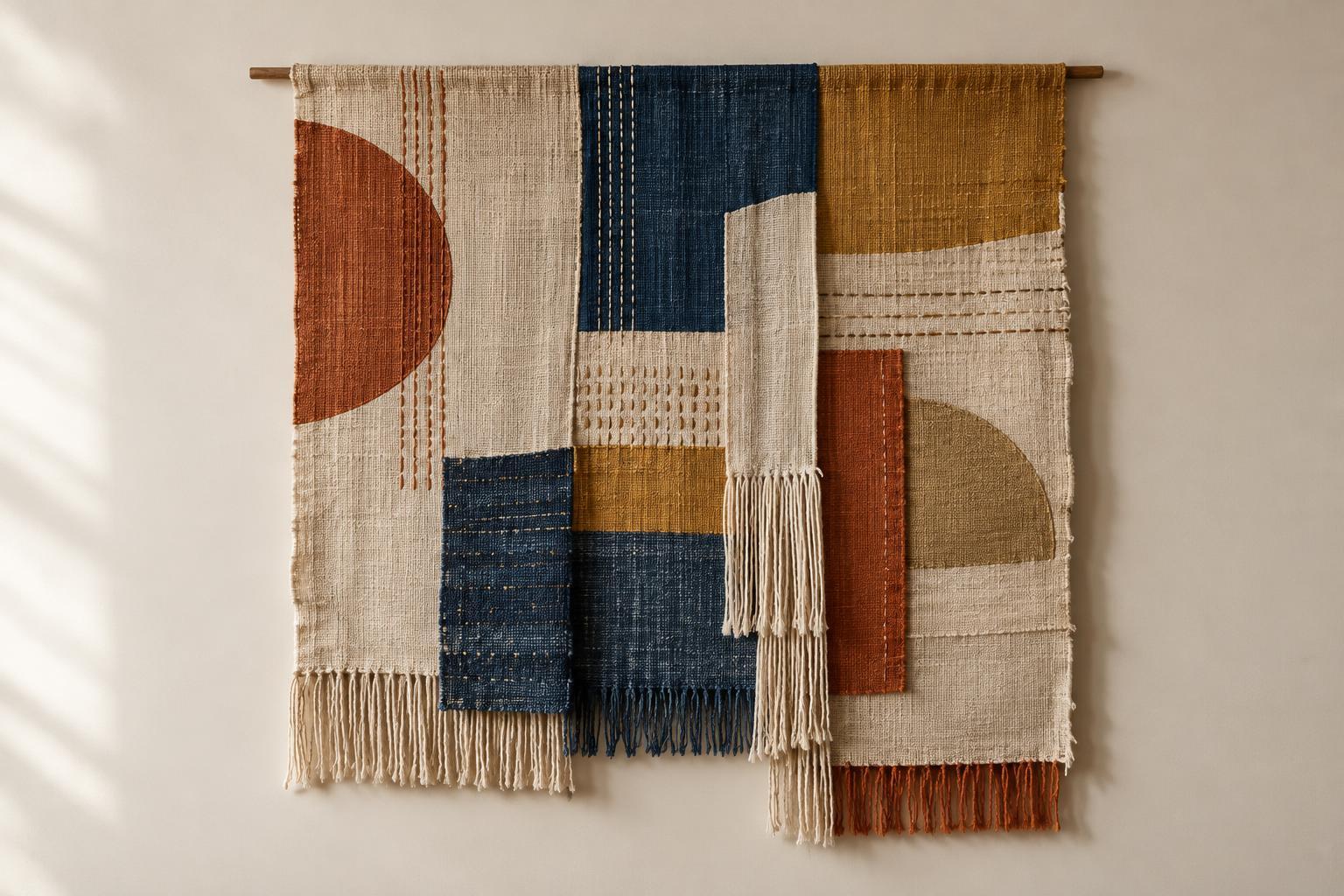
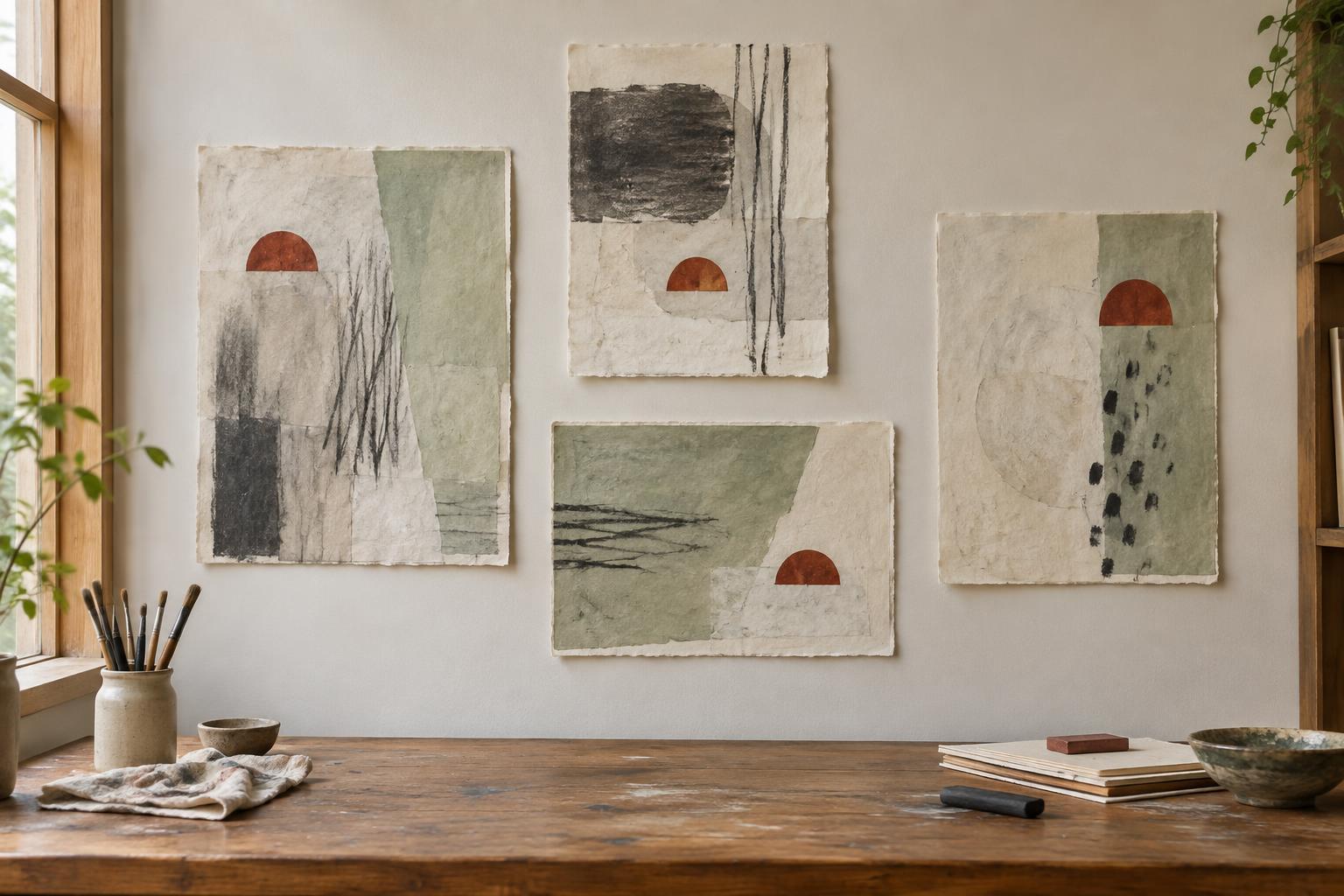
Motifs can also be formal rather than representational. Look for repeated shapes, color pairings, borders, textures, or ways of arranging space. An artist might return to narrow vertical forms even when one work shows trees and another shows buildings. A series of images might repeatedly place a small bright shape against a broad dark area. The subjects differ, but the visual relationship feels familiar.
It helps to distinguish a motif from an artist’s general style. Broad brushwork, for example, may characterize many pieces without functioning as a particular recurring element. A spiral that appears in the brushwork, in depicted objects, and in the layout of several compositions is a stronger candidate for a motif. The boundary is not always sharp; the point is to identify what, specifically, you see returning.
Compare a small group of works
To spot a motif across an artist’s work, begin with three to five pieces you can view clearly. Spend a moment with each one before comparing them. Note the subject, the most noticeable shapes, and where your eye tends to go. Then ask what repeats across the group. You may find an exact match, such as the same flower, or a looser connection, such as rounded forms tucked into corners.
Next, test your first impression. Is the element present in more than one work, and does it seem visually distinctive in each? Does it change while remaining recognizable? Compare both its appearance and its job: a circle might frame a figure in one image, become a tabletop in another, and appear as an empty space in a third. Those differences can make the recurrence worth exploring.
Be cautious about treating every similarity as intentional. Some elements are common features of a subject or medium; many city scenes, for instance, contain windows. A window becomes a more useful observation when you can describe a particular way it recurs, perhaps always near an edge or repeatedly set against an otherwise enclosed space. Even then, you do not need to claim you know why the artist used it.
Notice what changes around the motif
A motif is easier to understand when you pay attention to its surroundings. Ask whether it appears beside the same kinds of forms each time or moves into new settings. Does it grow larger, become harder to recognize, or shift from background detail to focal point? Repetition can create continuity, while variation can keep a group of works from feeling identical.
Medium matters too. A shape made with pencil may look tentative and open; the same shape cut from paper may feel crisp and solid. Rather than assuming both versions communicate the same idea, describe what each version does visually. This approach works whether you are looking at paintings, prints, photographs, textiles, or a mixture of formats.
Use motifs as a way into the work
Try making two short lists while you look: one headed “What repeats?” and the other “What changes?” Write down observations rather than interpretations first. “A curved blue line appears near the bottom of four images” gives you something to check. “Blue means sadness” is a possible reading, but it needs more support from the works if you want to pursue it.
A motif offers a route through an artist’s work, not a secret code that unlocks a single correct answer. Following one recurring element can draw your attention to composition, materials, and small differences you might otherwise miss. If your interpretation changes as you look at more pieces, that is part of the pleasure: the motif has helped you keep looking.