Start with what each person wants to keep
One person loves spare abstract prints; another prefers expressive paintings, family photographs or handmade objects. In a shared living space, those preferences do not have to compete for a single winning style. Begin by asking each person to choose a few pieces they genuinely want to see. Talk about what matters about them: the image, the memory, the color or simply the pleasure of having made or found something.
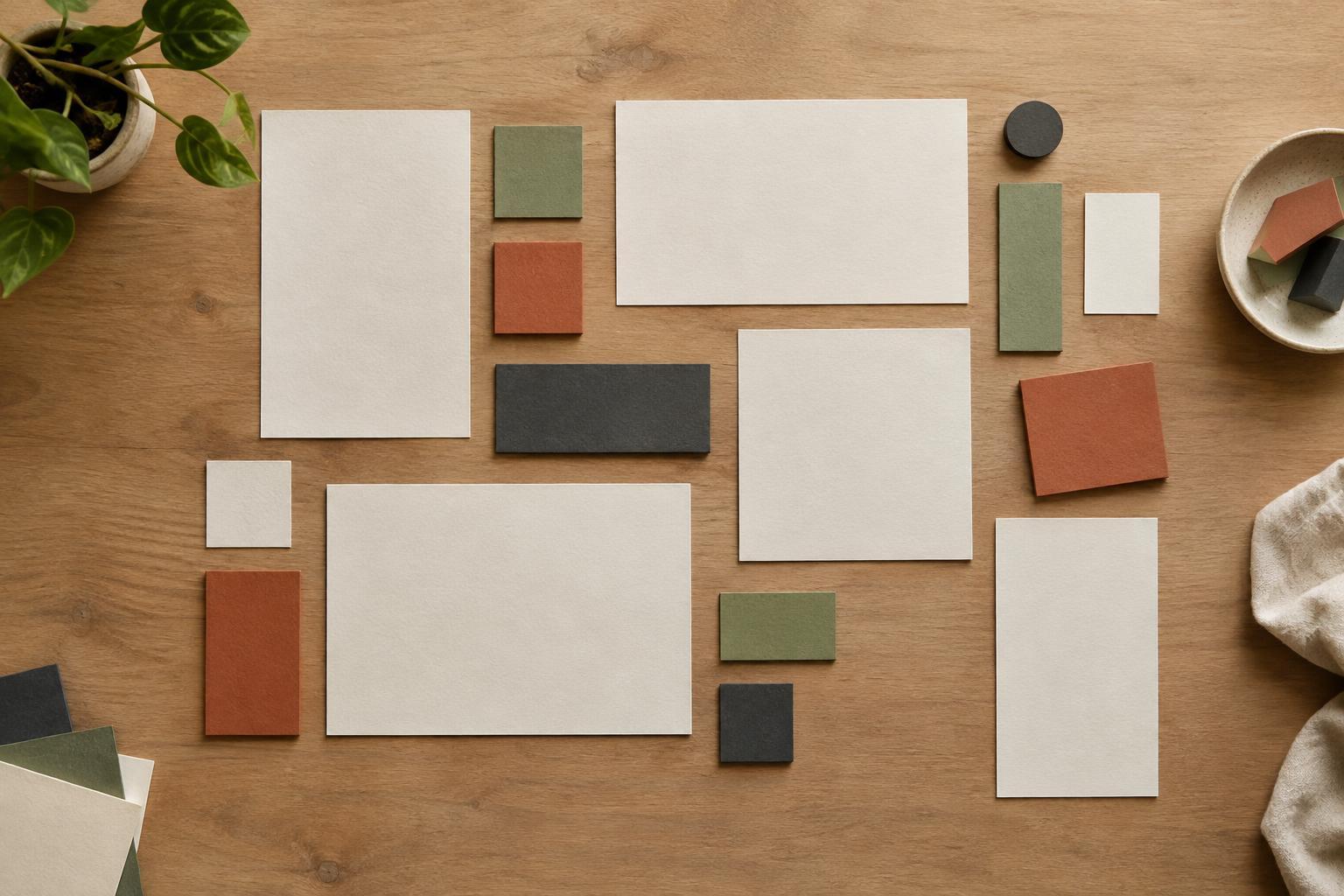
Set aside the question of where everything will go until you know what you are working with. Lay smaller pieces on a table or the floor, or make a simple list of larger ones. Look for connections that are easy to overlook. A photograph and a drawing might share a quiet mood; a bold print and a ceramic vase might repeat the same curved shape. These connections offer a starting point without asking anyone to give up their taste.
Give the room a few visual anchors
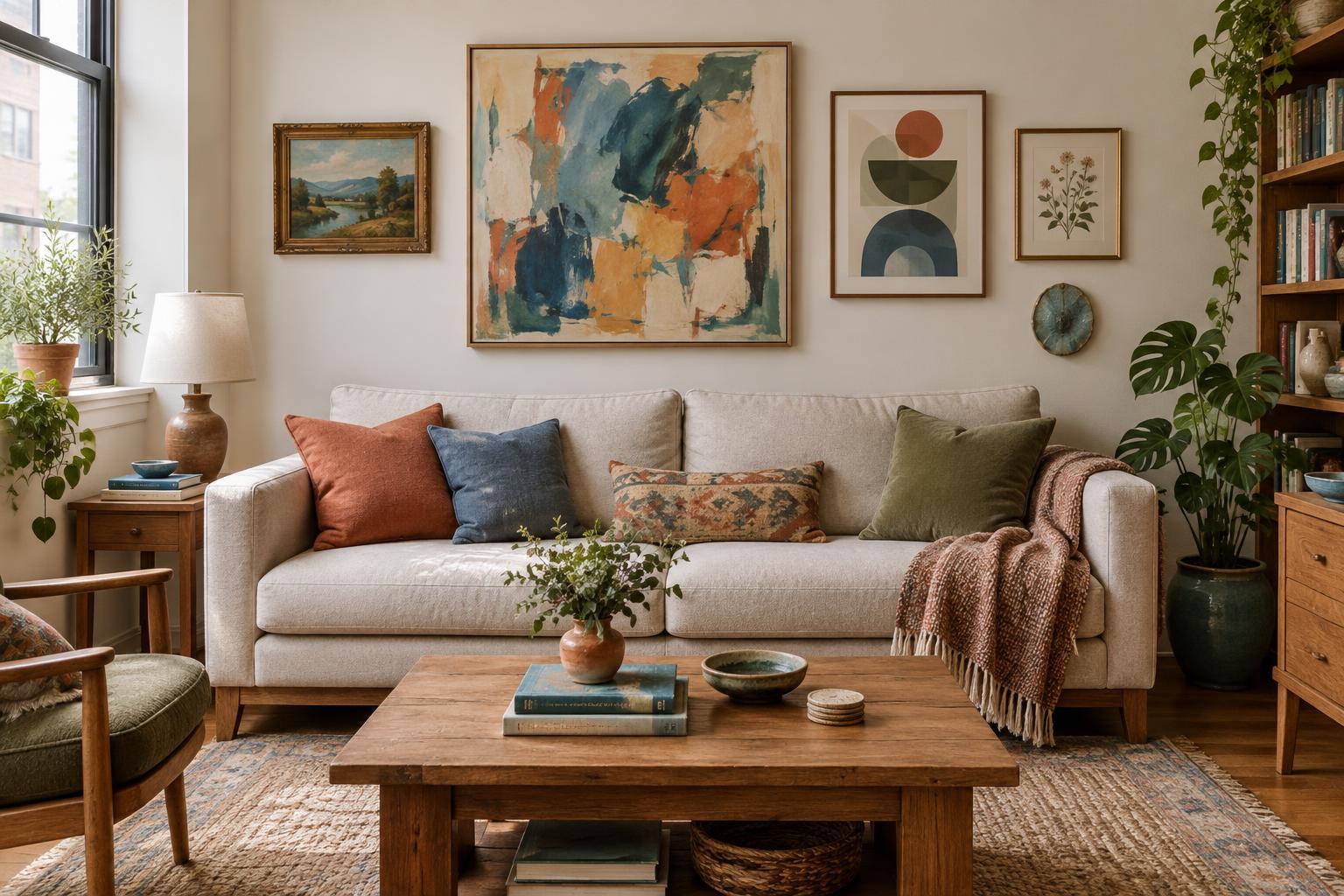
An anchor helps varied art feel deliberate rather than scattered. It might be one large piece above a sofa, a consistent frame color or a recurring tone that appears in several works. The anchor does not need to match every object. Its purpose is to give the eye somewhere to settle before it moves among different styles.
Pay attention to scale as well as subject matter. If every piece has equal visual weight, a busy room can feel restless. Try allowing one work or group to be the focal point, then place smaller or quieter pieces nearby. A vivid abstract painting, for example, may sit comfortably with fine-line drawings if the drawings have some breathing room. Leaving part of a wall empty can be just as useful as filling it.
Frames can create a connection, but identical frames are not required. Repeating a material, such as pale wood, across a few pieces may be enough. Alternatively, keep the frames varied and use a shared mat color or a consistent gap between works to bring order to the arrangement.
Arrange for conversation, not perfect matching
A mixed collection often looks most inviting when pieces seem to respond to one another. Pair a detailed image with a simpler one, or place an angular work near a softer form. These contrasts give each piece room to be noticed. You can also connect unlikely neighbors through color, texture or subject: the blue in a landscape might echo a shape in an abstract print, even though the works belong to different styles.
Before making holes in the wall, test an arrangement by setting pieces against furniture or marking their outlines with paper. View the grouping from where people usually sit and enter the room, not only from directly in front of it. A composition that looks balanced up close may feel crowded from across the space.
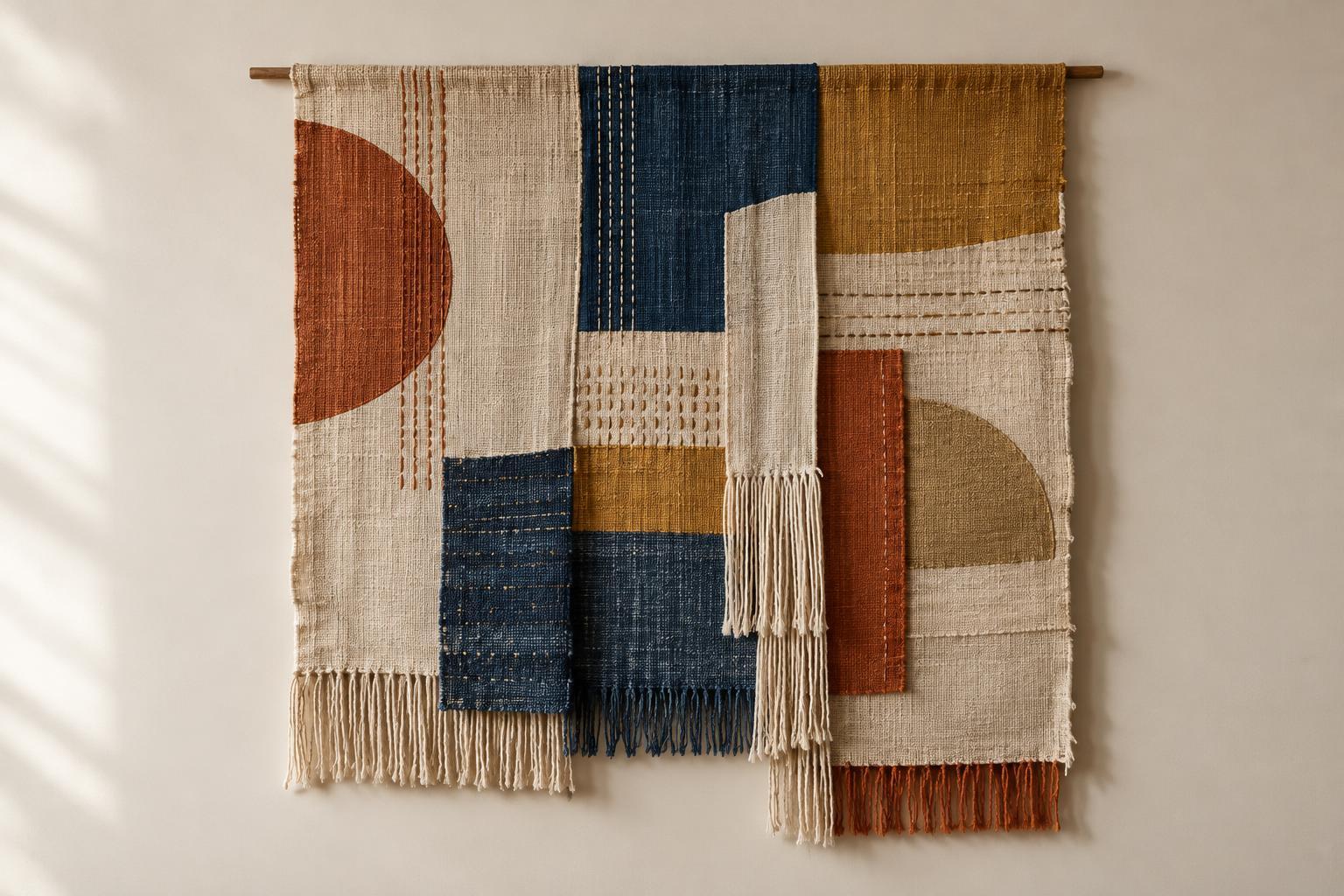
Art does not need to live only on a gallery-style wall. A small sculpture on a shelf, a textile over a chair and a framed print above a desk can carry varied tastes through the room. Spreading pieces across several surfaces may work better than trying to fit every favorite into one display.
Make practical choices that support the art
Consider the conditions around each piece before choosing its spot. Strong direct sunlight may fade some materials over time, while moisture and heat can be hard on works made from paper, fabric or other sensitive materials. A place that is easy to reach also makes sense for an object that needs occasional dusting or adjustment. If you are unsure how a particular work should be cared for, choose a more sheltered location.
Lighting changes how colors and textures appear. Check an arrangement in daylight and under the lamps you use in the evening. If a piece disappears into a dark corner or catches distracting glare, moving it a short distance may help more than changing the artwork. The aim is a room people can live in comfortably, not a display that works only from one angle.
Leave space for the collection to change
Shared spaces evolve as people make, collect and part with things. Instead of treating the first arrangement as final, choose a few places where art can be rotated easily: a picture ledge, a shelf or a wall reserved for changing small works. This gives less prominent favorites a turn without making every new addition a decorating dilemma.
It can help to agree on simple decisions together. Perhaps each person chooses a piece for a particular corner, while larger shared walls are planned jointly. Review the room after living with an arrangement for a while: which pieces draw people in, and which spots feel crowded? Combining art styles is less about finding a formula than making room for different attachments. When the arrangement reflects the people who use the space, its differences become part of its character.