Start with the feeling you want
A restful bedroom is not defined by one palette or style. For some people, a quiet landscape feels calming; for others, an expressive print or a familiar photograph brings comfort. Before choosing a piece, notice what you already enjoy seeing in the room. Do you want a gentle focal point when you wake up, or would you rather keep the walls understated? That question is more useful than a rule about which subjects belong in a bedroom.
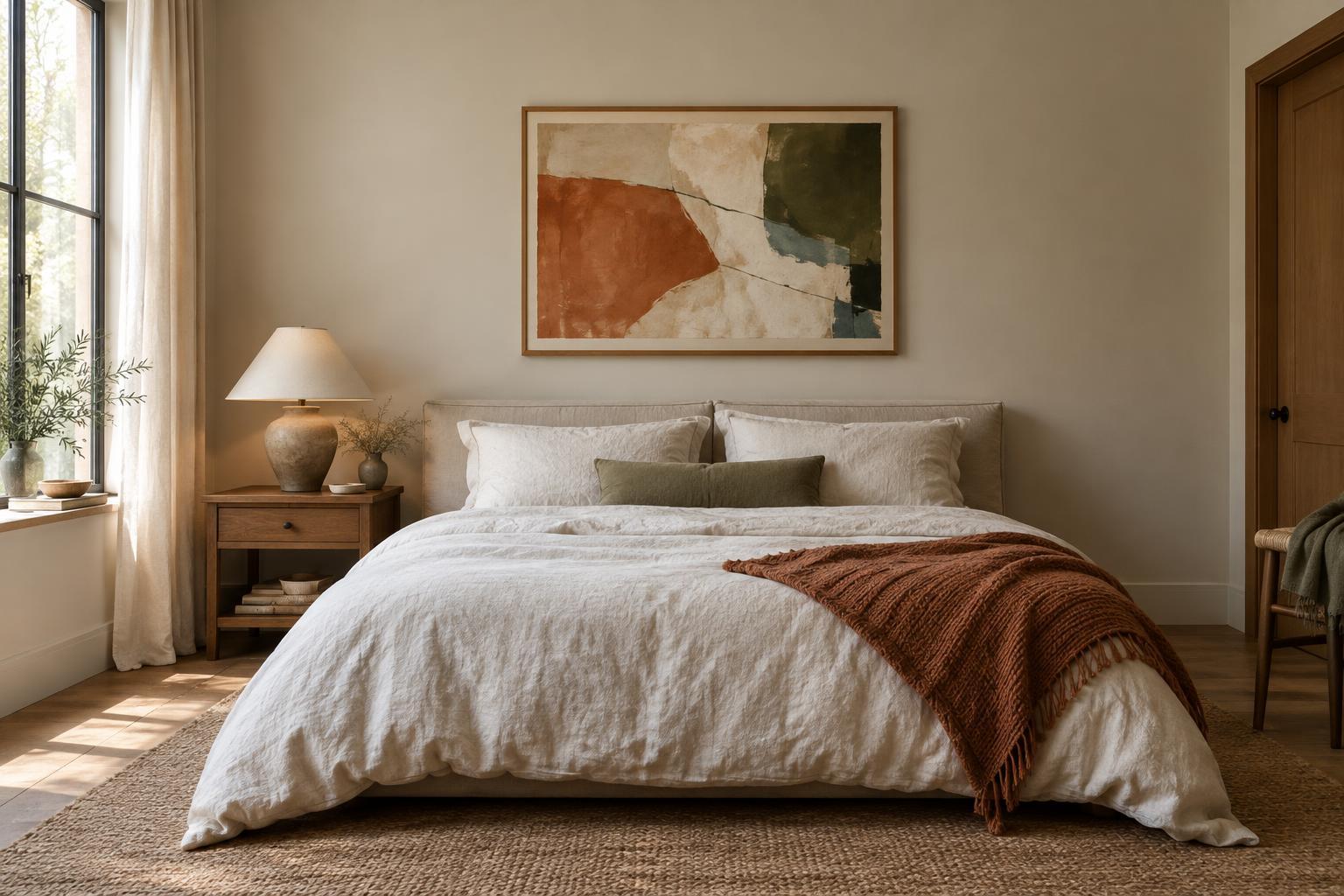
Look at the room in daylight and again under the lamps you normally use. Bedding, curtains, furniture and wall color all affect how an artwork feels. A piece that looks lively against a blank wall may feel balanced beside simple linens, while several detailed works can make a small space feel busy. You do not need to match every color. Repeating one tone from the art in a cushion, throw or frame can create a connection without making the room look overly coordinated.
Choose a scale that suits the wall
Think of the bed, dresser or reading chair as a visual anchor. Art above a wide piece of furniture often looks more settled when it is narrower than the furniture beneath it, rather than stretching beyond its edges. A small work can also be effective, especially if it has generous space around it. What matters is that the relationship looks intentional from the doorway and from the places where you usually spend time.
Before committing to a size, mark a possible outline on the wall with removable painter’s tape or hold up a paper template. Step back and check it at different times of day. This simple test can reveal whether the work will feel lost on a large wall or crowded beside a window or wardrobe. If one large piece feels too dominant, try a pair of modest works with a clear gap between them. Leave enough open wall that your eye has somewhere to rest.
Place art where you can enjoy it comfortably
The wall above the bed is an obvious location, but it is not the only one. A piece opposite the bed may be the first thing you see in the morning. Art beside a reading chair can make that corner feel inviting, while a small work above a dresser can give an everyday routine a point of interest. Consider sightlines rather than filling every empty wall.
If you hang art above the bed, take extra care with weight and installation. Use hardware suited to the wall and the object, and follow the hardware maker’s guidance. If you cannot confirm that a heavy frame is secure, choose a lighter piece or place it elsewhere. In a rental or a room where drilling is not practical, a small framed work on a stable dresser may be simpler. Keep it away from edges where it could be knocked over.
Let materials and light support a quiet mood
Frames change the character of a work. A simple frame can give a colorful print a calm boundary, while a mat can add breathing room around a small image. You might choose a frame that relates to nearby furniture, but it does not have to match exactly. For a less formal look, mix a few related finishes, such as warm wood and muted metal, while keeping the spacing between pieces consistent.
Soft, indirect light usually makes bedroom art easier to enjoy than a harsh spotlight. Check for glare on glass from bedside lamps, particularly when you are lying down. If glare is distracting, try shifting the artwork, changing the lamp angle or considering a nonreflective glazing option when framing. Keep light-sensitive pieces out of sustained direct sun when possible; materials can change with exposure. If a wall is prone to dampness or condensation, choose another place for work you value.
Edit the room, then live with your choice
You do not have to finish the walls in one afternoon. Begin with one piece you genuinely like and see how the room feels for a week or two. Notice whether you enjoy looking at it from the bed, whether its colors work in evening light and whether it competes with anything nearby. Moving a piece a little lower, giving it more space or changing its frame may do more than buying another work.
A bedroom can hold personal art without becoming a gallery. A drawing made by a friend, a photograph from a meaningful trip or a print chosen simply because its shapes appeal to you can all belong there. The goal is not an empty room or a perfect arrangement. It is a space where the art feels welcome, the placement feels comfortable and your attention can settle.