A likeness is only the beginning
A portrait may help us recognize a person, but recognition is not the same as understanding who they are. Even a closely observed face appears within a set of choices: where the figure stands, what they wear, what is visible around them and which moment the artist chooses to show. Those decisions can direct attention toward a person’s work, relationships, mood or public role.
It helps to think of identity in a portrait as something presented rather than simply recorded. A person may want to appear approachable, powerful or contemplative. An artist may emphasize a different quality, while viewers bring their own expectations to the image. None of these perspectives necessarily reveals the whole person. Looking beyond likeness means asking what the portrait invites us to notice and what it leaves unknown.
Pose, gaze and expression shape an encounter
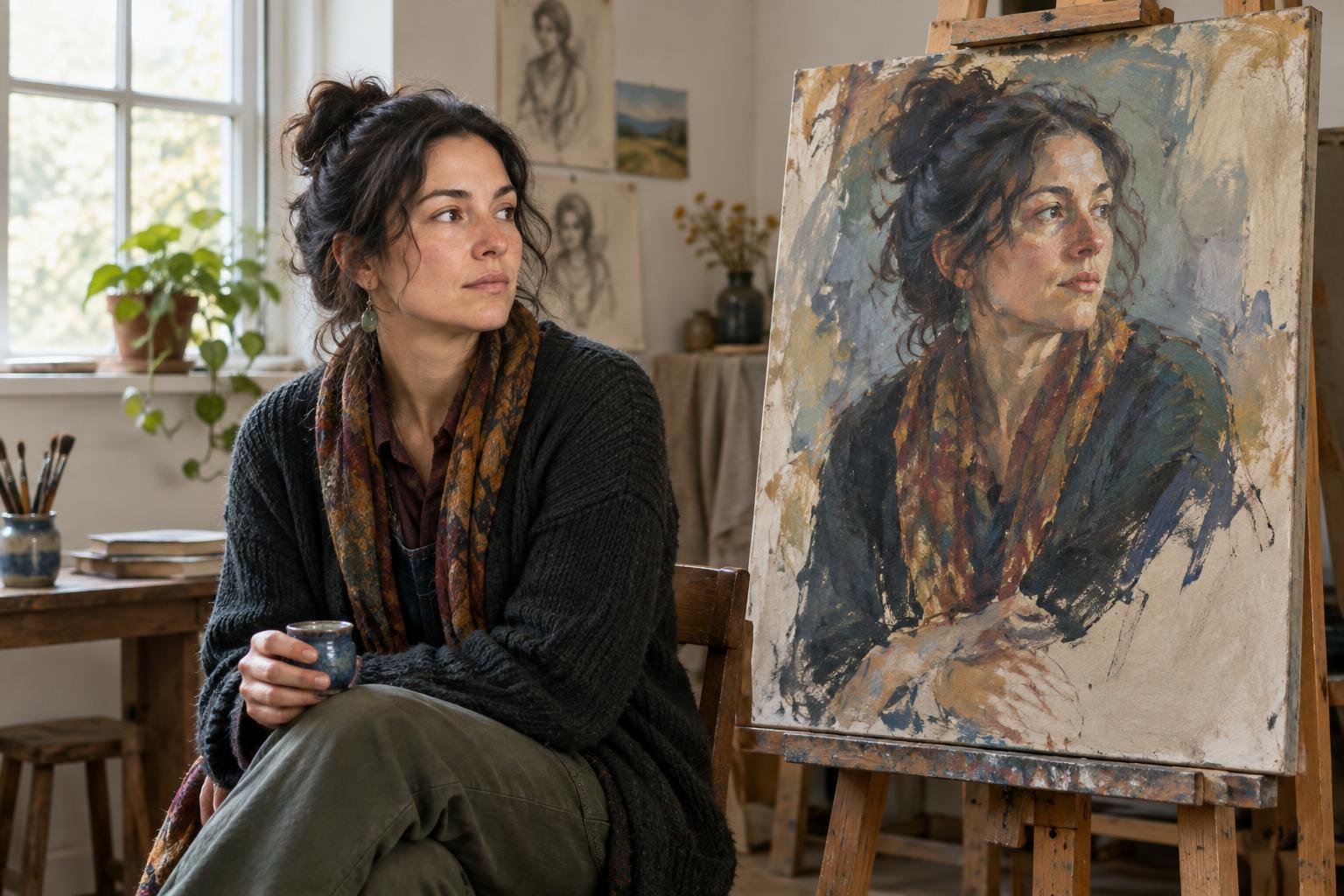
The position of a body can suggest how a subject relates to the viewer. A figure facing forward may seem to meet us directly; one turned away may invite us to observe without being acknowledged. An upright posture can appear formal, while a relaxed position may feel intimate. These are possibilities, not rules. A pose might reflect a fleeting moment, a familiar portrait convention or the practical demands of sitting for the artist.
Gaze changes the encounter too. When someone looks out of the image, viewers may feel addressed. When their eyes turn toward another person or object, our attention follows. Expression can seem revealing, yet a neutral face is not proof of a neutral inner life. Instead of treating a smile or frown as a diagnosis, notice how it works alongside the pose and gaze to create an impression.
Clothing, objects and settings offer clues
Clothing can communicate an occupation, a community connection, a personal preference or a wish to be seen in a particular way. The same is true of objects: a tool, book, instrument or keepsake may point toward an activity or relationship. Setting can add another layer. A room filled with familiar belongings feels different from a plain background, which gives the viewer fewer clues and places more emphasis on the figure.
These details need careful reading. A painted object might matter deeply to the subject, or it might have been chosen mainly for its shape or colour. A garment may hold meanings that are not apparent to an unfamiliar viewer. Ask what a detail does within the picture before deciding what it says about the person. Is it prominent or easy to miss? Does the subject touch it, use it or simply appear beside it?
Artistic choices affect the identity we perceive
Portraits also communicate through the way they are made. Soft edges can make a face feel gently observed, while sharp contrasts can give it a more forceful presence. Close framing may create a sense of intimacy; distance may make a figure seem part of a larger environment. Colour, scale, lighting and visible brushwork all influence the mood of an encounter, even when they tell us little that can be verified about the sitter.
Consider how different approaches might portray the same person. A carefully arranged, formal image may highlight a public role. A quick drawing might emphasize a gesture or an unguarded moment. Neither is automatically more truthful. Each selects and shapes information, and each asks the viewer to pay attention in a particular way. Looking at those choices helps separate what the image shows from the feelings it creates.
How to look without reducing a person to an image
When you meet a portrait, start with a description rather than a conclusion. Name a few things you can see: the direction of the gaze, the placement of the hands, the surrounding objects and the quality of the light. Then ask what each choice might suggest. This small pause makes room for more than one interpretation and helps you avoid turning an impression into a claim about someone’s personality.
Finally, consider what remains outside the frame. Who chose the pose and setting? Does the portrait seem intended for private remembrance, public display or another purpose? If a title or caption is available, compare it with your first impression rather than using it to erase what you noticed. A portrait can offer a rich encounter with identity while still keeping parts of a person’s life beyond our view.