What holds each pastel together?
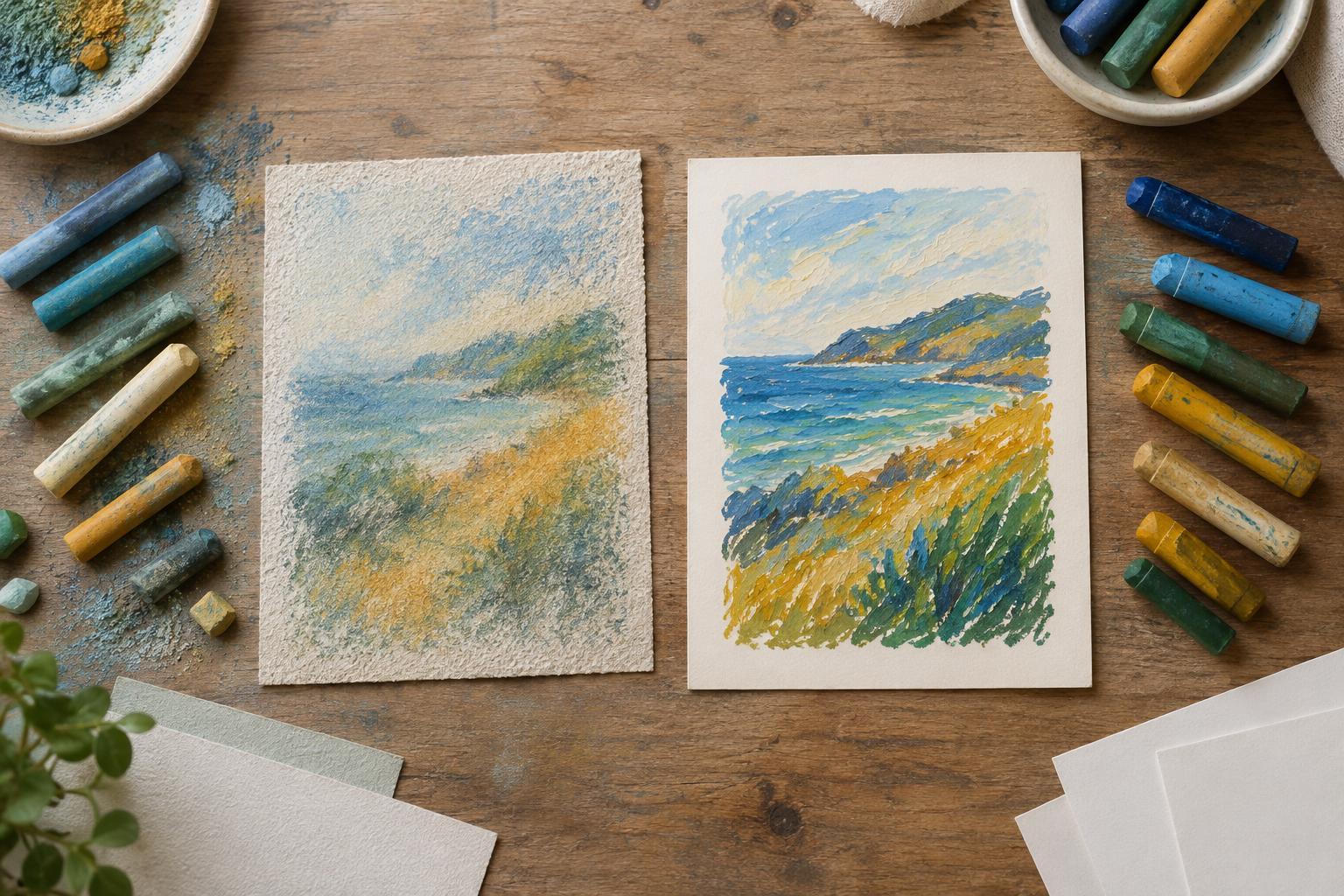
Soft pastels are sticks of pigment held together with a relatively small amount of binder. Depending on the product, they may also contain filler. They leave a dry, powdery mark that can look velvety and luminous. A light touch deposits color on the high points of a textured surface; firmer pressure pushes more material into its grooves. Because the color remains loose, it can be lifted, smudged or transferred by a hand brushing across the work.
Oil pastels combine pigment with an oily and waxy binder. Their marks feel denser and more cohesive, often with a slight sheen. They do not behave like oil paint simply because “oil” appears in the name: they are usually applied directly from the stick rather than handled as a paint that dries into a hard film. Formulations vary, so one brand may feel firm and precise while another feels soft and creamy. Neither type is inherently better; the useful distinction is how each meets the surface.
How do the marks blend and layer?
Soft pastel suits gradual shifts in tone. You can place one color beside another, lightly overlap them or blend with a finger or suitable tool. Blending can soften an edge, but repeated rubbing may flatten the texture and muddy neighboring colors. For stronger contrast, leave some marks unblended. Working from broad shapes toward smaller accents also helps preserve the paper’s texture for later layers.
Oil pastel encourages bolder, more tactile marks. Colors can be overlapped, pressed together or worked with a blending tool, but thick buildup may become slippery and resist further color. A thin first layer often leaves more room for adjustment than a heavy one. Scratching into a built-up passage can reveal a color beneath. If you want a sharp line over a thick area, test it on a scrap first: the upper stick may slide rather than grip. Both media reward small trials before a larger piece.
Which surfaces give soft pastels a grip?
Soft pastel needs tooth: a surface texture that catches and holds its particles. Pastel paper is a straightforward starting point, and its color can remain visible between marks as part of the composition. A textured or sanded pastel surface generally accepts more layers than a smooth sheet, though a rougher surface may use up sticks faster. On very smooth paper, the first marks may look appealing, but additional layers can have little to cling to.
Choose a surface with the kind of mark you want in mind. A fine texture favors delicate transitions; a pronounced texture can give broad strokes a broken, lively appearance. If you use a pastel ground on another support, check that the ground and support are suitable for the medium and let the preparation dry as directed. Try a few strokes in a corner or on a spare piece before committing to a drawing.
What works under oil pastels?
Oil pastels can make marks on many surfaces, including paper, board and suitably prepared canvas. Smooth paper allows easy gliding and crisp shapes, while textured paper interrupts the stroke and offers more grip. Heavy paper or a rigid board can be easier to handle when you plan to press hard or build up layers. A pale, dark or colored ground will also change the appearance of thinly applied marks.
For a piece you intend to keep, check whether the chosen paper or ground is recommended for oil pastels. The oily binder may leave visible staining on some unprepared papers over time. A suitable barrier or prepared surface can help separate the mark from the support, but compatibility depends on the products used. Make a test piece if you plan to combine oil pastel with paint, grounds or other drawing materials; a surface that takes the first mark well may still resist later layers.
How should you choose and care for a finished piece?
Start with the experience you want. Choose soft pastel for dry, airy color, subtle shifts and a surface that visibly participates in the image. Choose oil pastel for rich, direct strokes and areas of dense color. If you are unsure, draw the same simple subject with each medium on two suitable papers. Compare how easily you can add a second color, recover a light area and keep an edge distinct. The exercise will tell you more than the label on the box.
Care matters because neither surface welcomes casual rubbing. Keep loose sheets separated with appropriate protective paper and avoid pressing against the image. Soft pastel fixatives can alter color or texture, so use one intended for the medium and test it first, following its safety directions. Do not assume the same spray is suitable for oil pastel; check product guidance before applying any coating. For display, a frame that keeps glazing away from the artwork helps protect the marks without flattening them.