What makes sgraffito different?
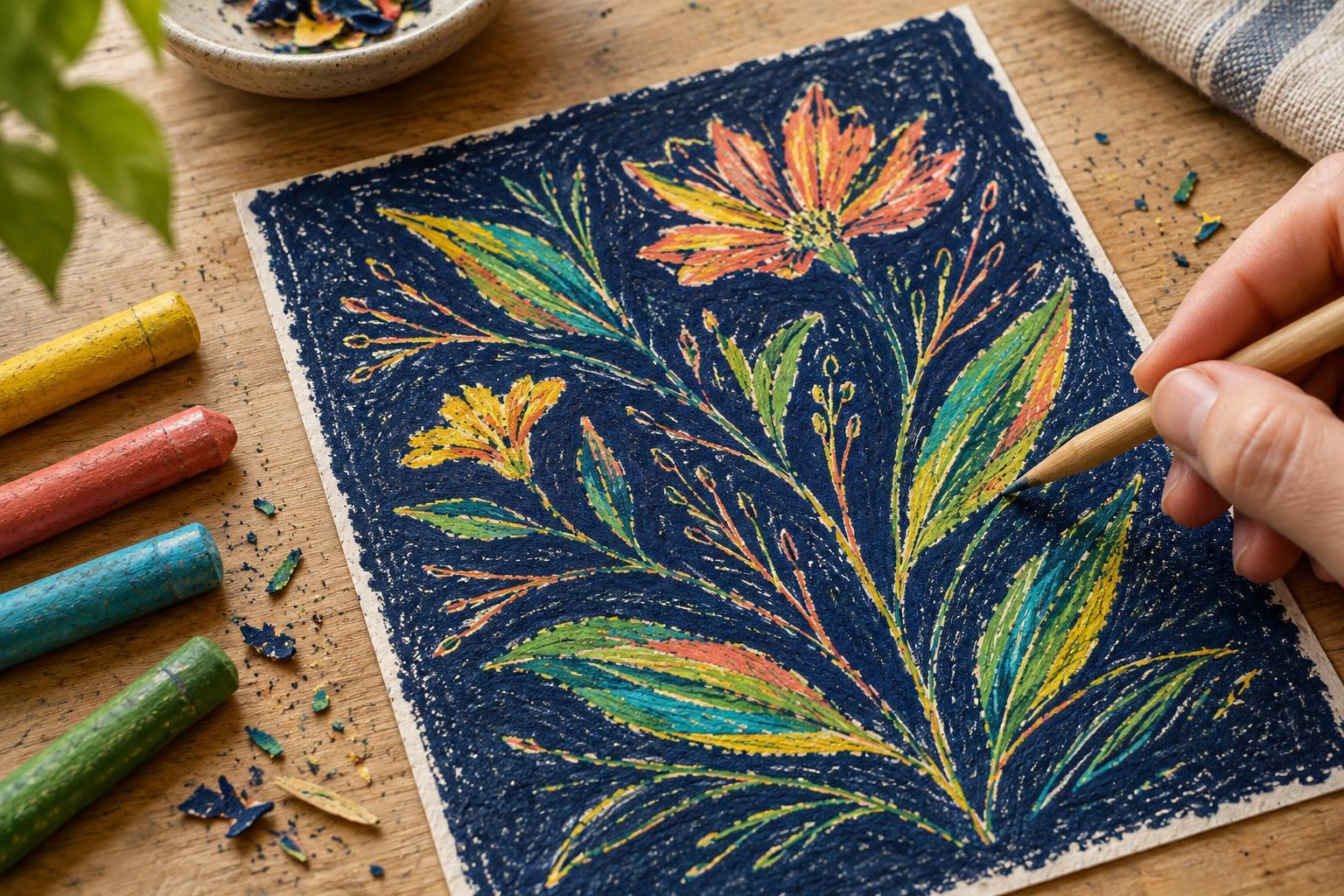
Sgraffito is a way of making marks by scratching through one layer to expose another. With oil pastels, the marks can reveal bright colors beneath a dark surface. Instead of adding a line with a pencil, you uncover it. This makes the technique especially inviting for patterns, night scenes, plant shapes and images with strong outlines.
The process has a useful constraint: you cannot erase a scratched line in the usual way. That need not make the work precious. Small changes in pressure and direction give the marks character, and a dense patch of scratches can become a texture rather than a mistake. Try a test sheet before starting a finished picture so you can see how your pastels and paper respond.
Prepare a surface that reveals color
Gather oil pastels, a sheet of sturdy paper, scrap paper to protect your table, and a blunt scratching tool such as a wooden craft stick. A toothpick can make finer marks, but use its point gently. Avoid sharp blades, which can cut the paper or your hand. Keep a tissue nearby for wiping pastel from your fingers and tool.
Cover the paper with a generous first layer of color. Place different colors side by side, filling gaps as thoroughly as you can. You might arrange them in broad bands for a landscape or scatter patches of warm and cool colors for an unpredictable reveal. Press firmly enough to deposit color, but not so hard that you flatten or damage the paper. White spaces left in this layer may show through later.
Add a second, darker layer over the colors. Black gives a striking contrast, but deep blue, brown or purple can create a softer effect. Move the pastel in several directions to cover the first layer. You do not need a perfectly uniform surface: slight variations can add interest. If the top color keeps picking up the colors below, use lighter strokes and make another pass rather than forcing one heavy coat.
Scratch with a plan, then follow surprises
Begin with a simple subject that can be recognized through lines alone: a leaf, a cluster of buildings, a fish or a winding path. You can make a small sketch on separate paper first. On the pastel surface, scratch a few main contours with the edge of your stick. Start lightly to learn how much pressure reveals the underlayer without tearing the sheet.
Vary the marks to give your image structure. A narrow tip works for veins, windows or short dashes. The wider edge of a craft stick can uncover broad highlights. Closely spaced scratches can make an area appear lighter, while untouched dark areas give the eye somewhere to rest. If every part of the surface is equally busy, the subject may be harder to see. Step back occasionally and look for the largest light and dark shapes.
The underlying colors will not always appear where you expect them, especially if you laid them down loosely. Let that guide some decisions. A revealed orange patch might become a lit window; a streak of green might suggest a stem. To change a line you dislike, try incorporating it into a nearby pattern. You can also cover a small area with more dark pastel and scratch again, though the repair may remain visible.
Try a small exercise and keep the result tidy
For a first exercise, fill a postcard-sized sheet with three or four colors and cover it with dark blue pastel. Scratch one large leaf shape in the center. Add a few veins, then use short marks around it to suggest movement or background texture. Limit yourself to two or three kinds of marks. This makes it easier to notice how line width, spacing and direction affect the image.
Oil pastel can rub off on hands and neighboring pages. Set the finished sheet somewhere it will not be touched while you clean up loose crumbs, and avoid stacking it directly against another drawing. If you want to store it, place a clean sheet of paper between surfaces. Photographing the piece before storage is another simple way to preserve its appearance.
Once you understand the basic reveal, experiment with a different top color or a more deliberate arrangement underneath. The most useful question is not whether you scratched perfectly, but whether the marks make good use of the colors you uncovered. Each small sheet can teach you something about contrast, pressure and where to leave space untouched.