Start with where and how you draw
A sketchbook can be a place to collect observations, practice a technique, or develop an idea over several pages. Before comparing paper, picture the moment when you are most likely to open it. Will you draw at a desk, carry it on walks, or use it for quick sketches while waiting? A book that suits that setting is more useful than one whose specifications sound impressive but make it awkward to carry or open.
Size changes the experience. A small book fits easily in a bag and makes a blank page feel less daunting, but it gives broad gestures and detailed studies less room. A larger book offers space to work, though it may need a table or firm support. If you are unsure, use a sheet of ordinary paper folded to the approximate size of a book you are considering. Make a few sketches on it to see whether your hand feels cramped or comfortable.
Choose a binding that supports your working style
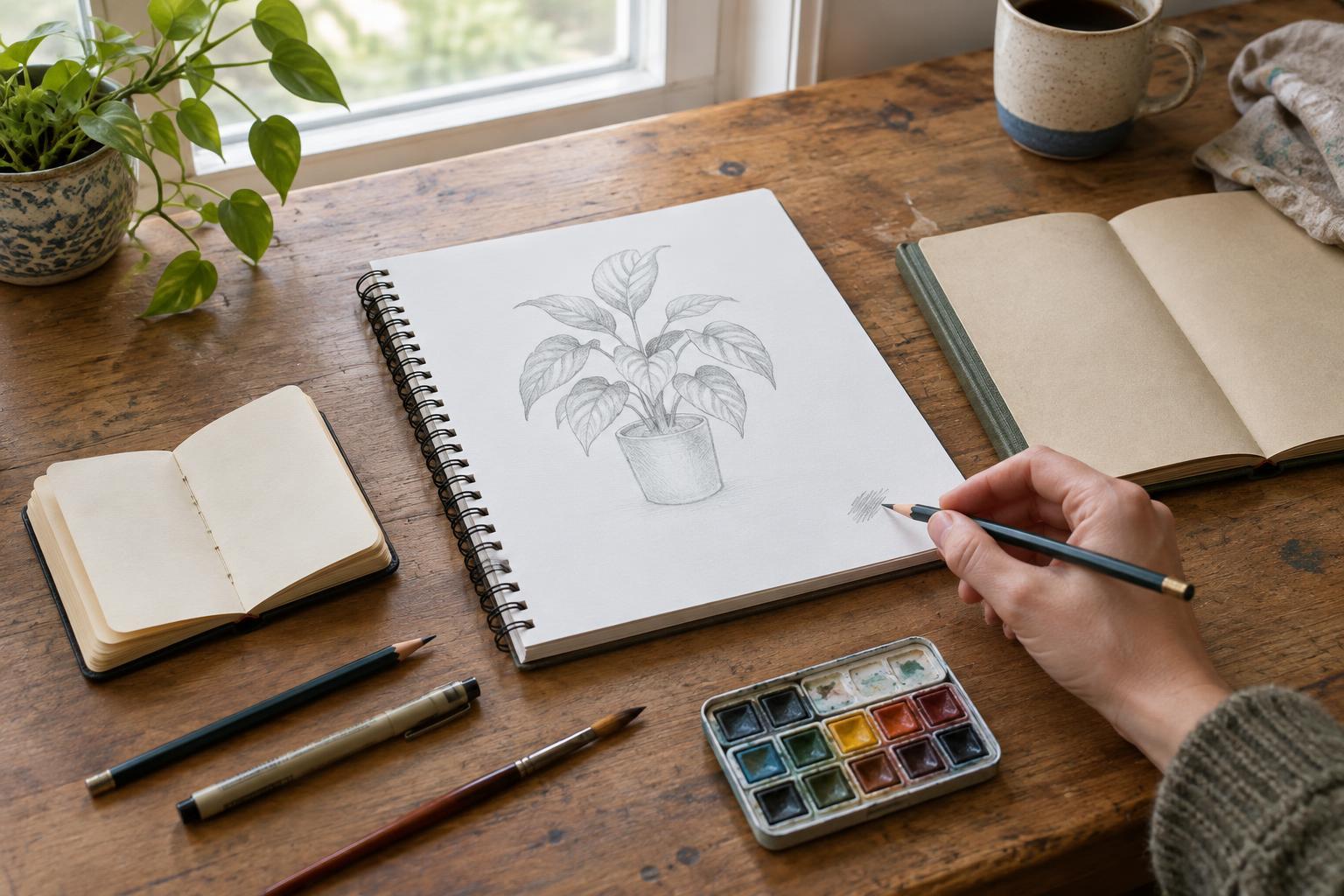
Binding determines how a sketchbook behaves in your hands. A spiral-bound book can usually fold back on itself, which is convenient when drawing in a tight space. Its coil may get in the way when you draw across both pages, and exposed pages can catch on items in a crowded bag. A stitched book often feels more compact and may make a two-page spread appealing, but some stitched books resist lying flat, especially near the beginning or end.
A glued or tear-out pad can be useful when you want to remove a drawing cleanly, share it, or work on separate sheets. It is less suited to keeping an intact record of your progress. If a bound sketchbook matters to you, open one near its front, middle, and back before choosing it. Notice whether you have to hold it down and whether the inner edge leaves enough room for your usual marks.
Match the pages to your materials
Paper labels can offer clues, but a simple mark-making test tells you more about how a page feels in use. Pencil and dry media can work well on many sketchbook papers. A smoother surface may favor fine lines, while a more noticeable texture can make shading look grainier. Neither is automatically better. If you like drawing on both sides of a sheet, check how much your marks show through when you turn the page.
Ink, markers, and wet paint call for closer attention. Some inks may feather, and markers may bleed through even when the front of the page looks good. Water can make lighter pages buckle; a book described as suitable for mixed media may handle light washes better, but results still depend on how much water you use. When trying a new book, reserve a back page for small tests of your favorite tools. Put a spare sheet behind the test page if a pen or marker might transfer to the next one.
Make the book easy to begin and easy to keep
Page color and format affect how inviting a book feels. White pages provide a bright starting point, while toned pages let you build both light and dark marks. Plain pages leave every layout decision to you; a faint grid or dots may help if your sketches include lettering, diagrams, or plans. A cover that protects the pages during your normal routine can matter more than a decorative finish.
You do not have to save a new sketchbook for finished work. Use its first page for material tests, a few loose lines, or a drawing of something nearby. If you regularly switch between dry drawing and wet media, two modest books may serve you better than one intended to do everything. The right sketchbook is one you can comfortably open, use without worrying about every page, and return to when the next idea appears.